Problem
In late 2024, posters with a QR code for HIBA went up in displacement centers in Lebanon. On November 4, 2024, the UN’s humanitarian office (OCHA) counted 872,808 people displaced inside Lebanon, citing the International Organization for Migration, and an estimated 1.3 million displaced in Lebanon or into neighboring countries (OCHA, Lebanon Flash Update #41). In December, AUB’s Faculty of Health Sciences described HIBA as “a private and secure channel” for health information for people in those centers.
Reliable health information was hard to get in Lebanon long before the war. People who read with difficulty, people whose language health messages rarely use, and people asking about topics that carry stigma all hit walls, and refugees and displaced families often face several of these at once.
General AI chatbots can look like an easy answer. Aline Germani, who directs AUB’s Center for Public Health Practice, warns that a wrong answer can lead people to look after themselves or their families badly, or to worry for no reason. Across many users, she says, such errors add to an “infodemic” that makes good guidance harder to find.
AI solution
HIBA (Health Information Bot Assistant) lives on WhatsApp, an app many people already use. People type a question or record a voice note, and HIBA replies in text or audio, so those who read with difficulty can listen. It covers everyday topics such as infectious diseases, chronic illness, mental health, reproductive health and maternal and child health. It supports 28 languages, including Arabic dialects.
The team also decided what HIBA would not do. It does not give diagnostic or treatment advice. In AUB’s words, it is “designed to provide health information, not medical advice,” and its sources are “curated and limited.”
It uses a method called retrieval-augmented generation. Think of a librarian who may only answer from one shelf of trusted books. When a question arrives, the system first finds the most relevant passages in a library of health material from WHO, IFRC and UNICEF. Then a large language model (GPT-4) writes a reply based on those passages. This reduces the risk of made-up answers but does not remove it. AUB says the design aims to “minimize inaccuracies and hallucinations.” Voice notes are turned into text with a speech recognition model (Whisper V3), and replies can be read aloud with a voice tool from ElevenLabs.
How it works
- 01 Ask A person types a question or records a voice note on WhatsApp. Voice notes are turned into text.
- 02 Find The system finds the most relevant passages in a library of WHO, IFRC and UNICEF health material.
- 03 Answer GPT-4 writes a reply based on those passages, sent back as text or audio. No diagnosis or treatment advice.
Before building anything, AUB ran a context assessment in Lebanon and Jordan with the International Federation of Red Cross and Red Crescent Societies (IFRC), the Lebanese Red Cross and the Jordan Red Crescent, involving front-line workers, youth volunteers and healthcare providers. The content drew on health topics raised in community focus groups. Public health staff then checked the answers.
Impact
HIBA is a pilot, and its results so far are early and self-reported.
The ITU entry describes testing in stages. The team first checked answers to a set of 165 common health questions for accuracy, clarity and cultural fit. Six community members tried an early version in a workshop. Then 20 community health workers and Red Cross volunteers in Lebanon used the WhatsApp version for five days, and 50 people from vulnerable communities in Lebanon and Jordan used it for two weeks. A last phase promoted HIBA in one Lebanese city through NGOs, schools and parishes, then moved on to displacement centers (ITU, AI for Good Innovate for Impact Report 2025, pp. 95-101). AUB has called its first evaluations “promising” and user engagement high, but has not published the numbers behind either claim.
AUB announced the public launch on November 4, 2024. A month later, its health sciences faculty wrote that “the full impact of HIBA on health behaviors is yet to be assessed.” No source says how many people have used HIBA.
The newest figures come from June 2026. “In ongoing testing,” AUB reported, HIBA’s answers were rated “good” 75% of the time and “acceptable” 22% of the time. Imad Elhajj, who led the grant, added: “In our evaluation, less than 3 percent of the responses needed editing. That’s small, but even that percentage is significant, because it shows that monitoring has to be ongoing.” The team has not said how many answers were rated, by whom or when.
No public source explains what HIBA does when a message describes an emergency, such as chest pain or thoughts of self-harm; detecting user distress is listed as future work. HIBA’s current status is also unclear. AUB called the grant project “completed” in late 2024, while the ITU entry describes it as active with ongoing deployment, and the team spoke of “ongoing testing” in June 2026. On October 25, 2026, the public WhatsApp link on AUB’s pages returned an error to a web request; WhatsApp may block such requests, so the error does not show whether the service itself is down.
People
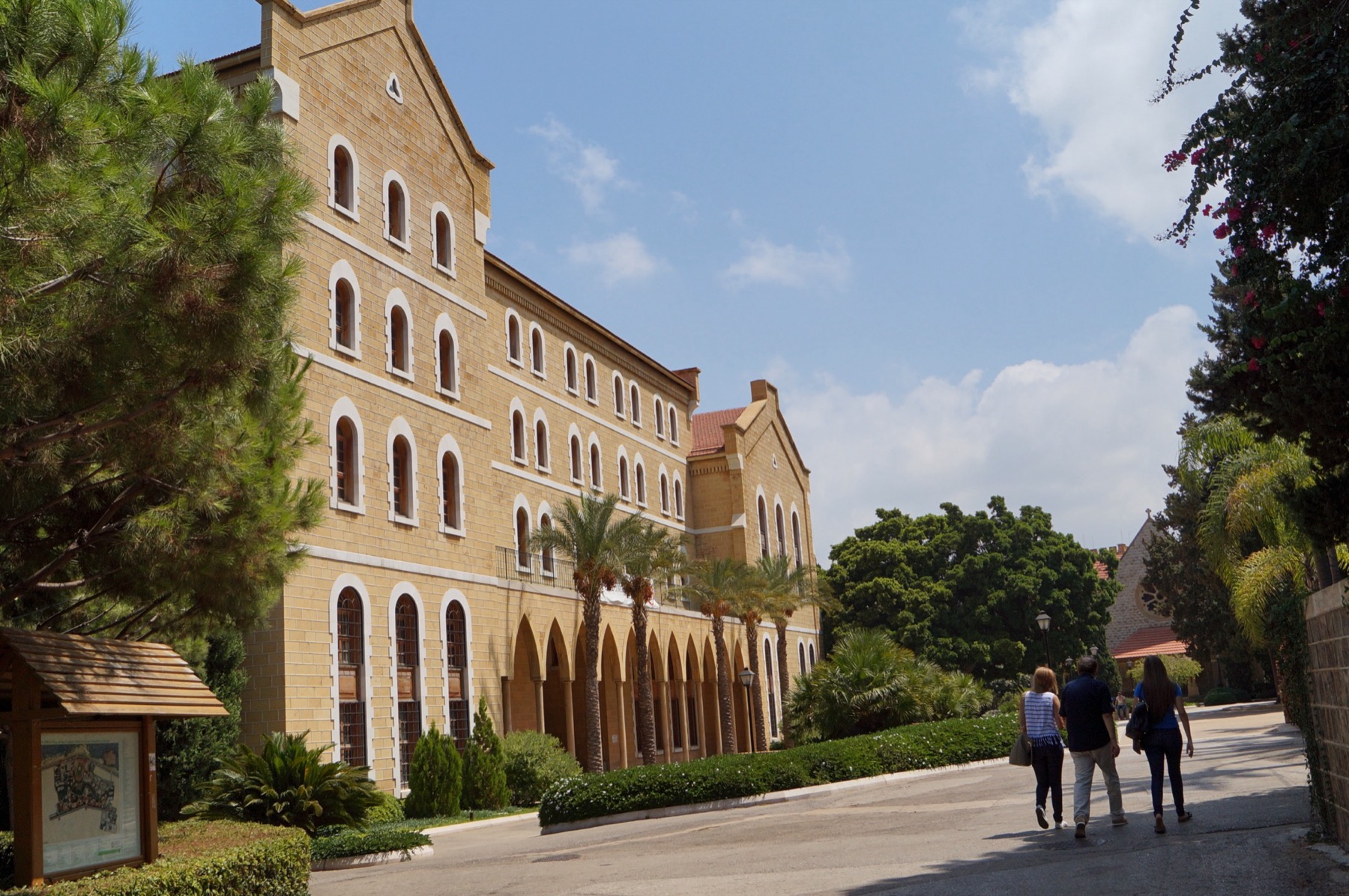
HIBA comes from AUB’s Humanitarian Engineering Initiative, a partnership between the engineering faculty and the Faculty of Health Sciences. The core team included Imad Elhajj, professor of electrical and computer engineering; Aline Germani, director of the Center for Public Health Practice; Christopher Farah, consultant and primary developer; and Michelle El Kawak, project manager.

The Gates Foundation funded the work through a Grand Challenges grant on July 26, 2023, with Elhajj as principal investigator. It was one of nearly 50 grants chosen from more than 1,300 proposals, AUB reported.
“HIBA was created with a local audience in mind,” Germani said. On quality, she added: “Also, the public health team was involved in validating the responses. That allowed us to provide quality control from a public health perspective.”
Elhajj’s advice to other builders starts with limits. “The first step is to define the scope,” he said. “Developers need to decide what the tool is meant to do, how it will structure answers, and, importantly, what kinds of questions it should refuse.”
Why it matters
More people now ask AI about their health: a 2026 KFF poll cited by AUB found that about one-third of US adults had used an AI tool for health questions in the previous year. HIBA tests a more careful design: a narrow scope, trusted sources, public health review and a clear line between information and medical advice. If the team publishes its results, other groups building health chatbots can learn from them.
What we could not confirm
- We could not confirm that HIBA is live. The latest public update we found, from June 2026, describes “ongoing testing”; AUB called the grant project “completed” in late 2024. Its WhatsApp link returned an error to a web request on October 25, 2026.
- No source says how many people have used HIBA.
- The 75%, 22% and under 3% figures come from the team, with no published method.
- No public source explains how HIBA responds to an emergency or crisis message.
- The ITU entry lists de-identified interaction logs among its data, but we found no public policy on what HIBA stores.
Questions people ask
What is HIBA?
HIBA (Health Information Bot Assistant) is a WhatsApp chatbot built by the American University of Beirut's Humanitarian Engineering Initiative. It answers general health questions by text or voice in 28 languages, using curated WHO, IFRC and UNICEF material.
Does HIBA give medical advice?
No. AUB says HIBA gives health information only, with no diagnosis or treatment advice.
How does HIBA avoid wrong answers?
It answers only from a curated library of trusted health content, and public health staff reviewed its answers. In the team's own June 2026 figures, 75% of answers were rated "good" and 22% "acceptable."
Can people use HIBA today?
We could not confirm it. AUB's public WhatsApp link returned an error to a web request on October 25, 2026, which may only mean that WhatsApp blocks such requests. The latest public update, from June 2026, describes "ongoing testing."
This story supports
Sources (10)
AUB HEI, HIBA recognized among top AI innovations in the 'AI for Efficiency' call, March 10, 2025
OCHA Lebanon, Lebanon: Flash Update #41, Escalation of hostilities in Lebanon, as of 4 November 2024
AI for Kind, availability and publication check of the HIBA WhatsApp link, October 25, 2026
Fact-checked against sources on October 25, 2026. Spot an error? Tell us.