Problem
In late September 2024, as fighting between Israel and Hezbollah escalated, people in southern Lebanon and parts of Beirut received evacuation warnings by text message and recorded phone calls, which an Israeli military spokesman urged residents to heed. Radio broadcasts were also hacked to carry them, Al Jazeera reported.
Within days, anonymous warnings claiming to come from the Israeli military were arriving by SMS, WhatsApp and phone, often from disguised numbers. Lebanese authorities arrested people suspected of sending some of the fake ones. A Lebanese cybersecurity consultant, Roland Abi Najem, told the Beirut newspaper L’Orient Today that he believed “around three-quarters” of these messages were fake, and that each had to be judged case by case.
Real warnings could be hard to catch too. In October 2024, Amnesty International said some Israeli military warnings came at very short notice, in the middle of the night and via social media, “when many people would be asleep, offline or not following media reports.” By 4 November 2024, 872,808 people were displaced inside Lebanon, according to the UN’s humanitarian office (OCHA), citing the International Organization for Migration.
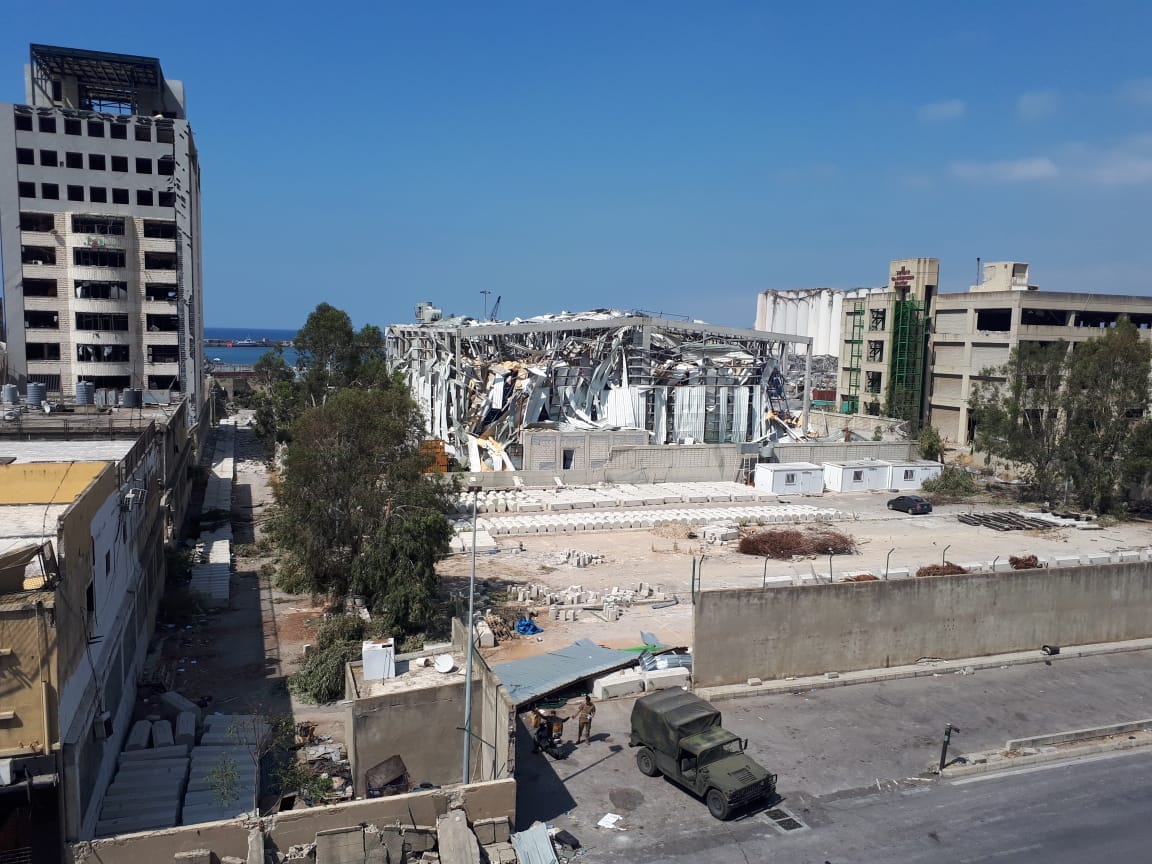
Lebanon has faced other sudden disasters. The explosions at the Port of Beirut on 4 August 2020 killed at least 180 people and injured more than 6,500, according to an OCHA report from 21 August 2020.
The AUB team sees a gap here. In a fast-moving crisis, people must piece together mixed signals from many channels. Mass alerts go to everyone at once, so they rarely tell a person what to do on their own street, and they give no easy way to say what help is needed (Source: ITU, AI for Good Innovate for Impact Interim Report 2026).
AI solution
The team, at AUB’s Humanitarian Engineering Initiative, calls its design a Disaster Support Agentic System. Everything below describes how it is meant to work, as set out in the team’s entry in the report of the International Telecommunication Union (ITU), the UN agency for digital technologies. None of it has been tested in public.
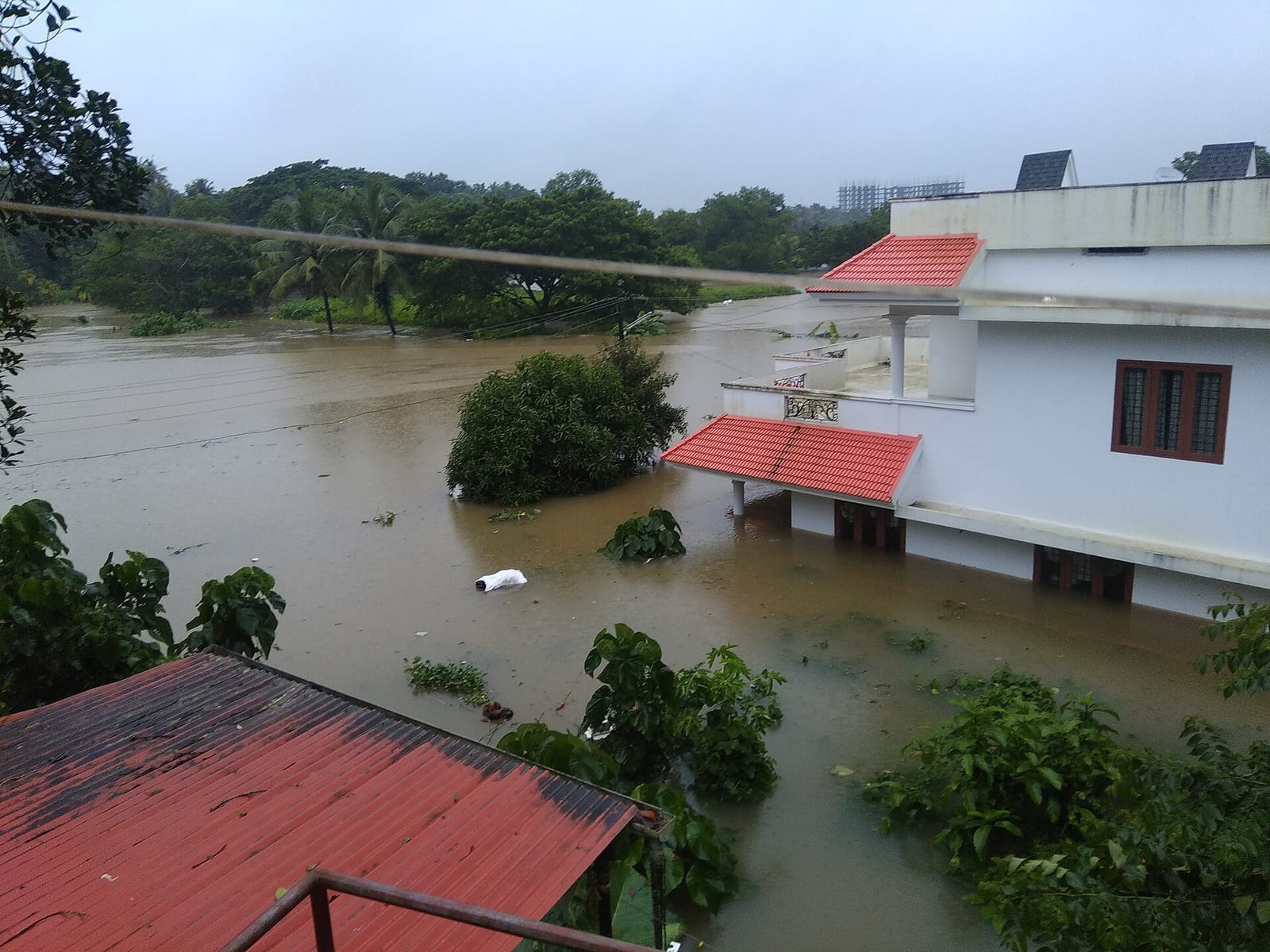
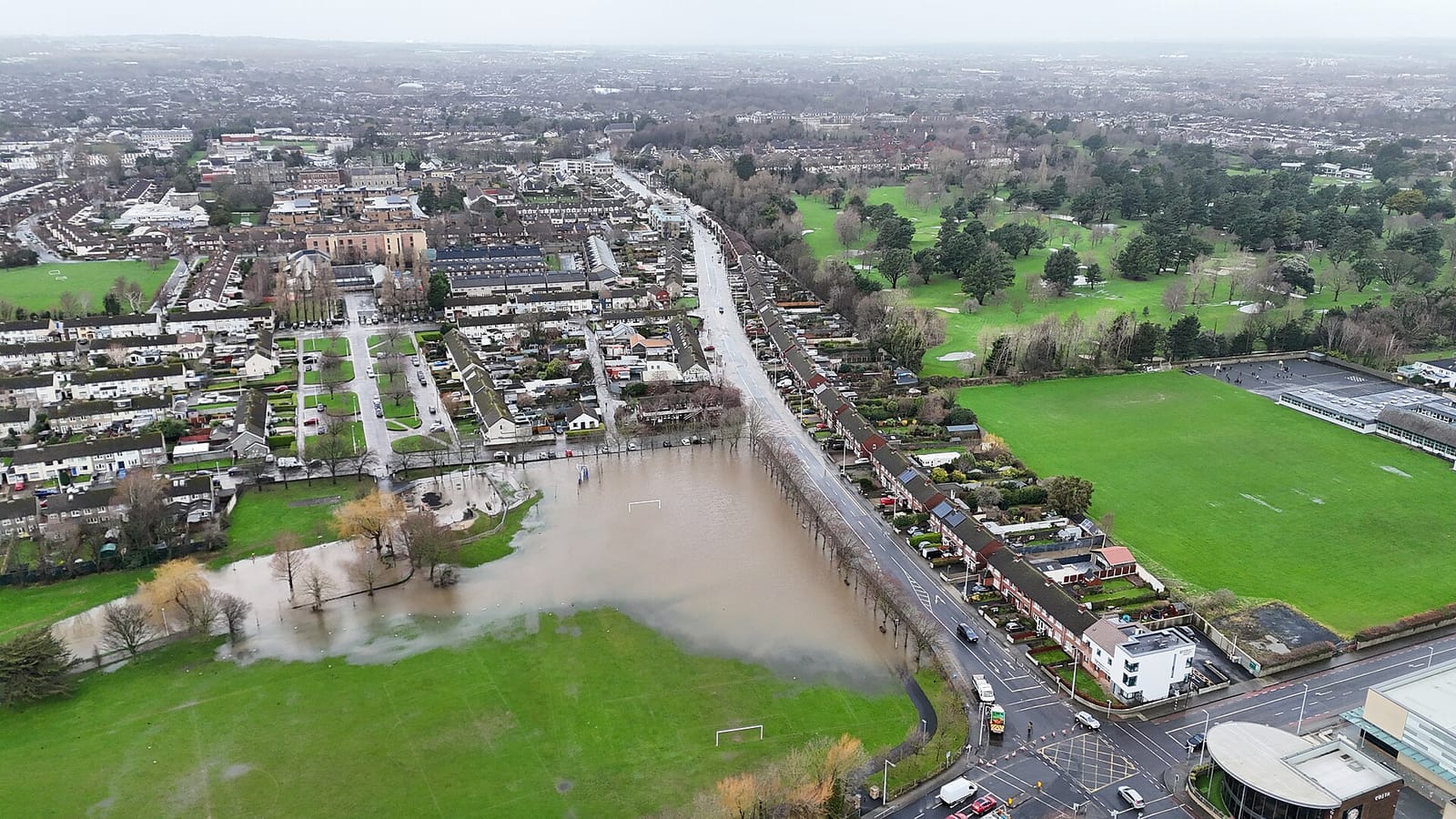
The idea is that a person caught in an earthquake, flood or conflict sends a text message, or uses a very light web page, asking what to do. The system would reply with a short answer for that place: the safe action, a destination, and the nearest support. It would also say how confident it is.
In the background, it would keep gathering warnings and bulletins from authorities, checked news reports, screened social media posts, and satellite and map products from public services such as the Global Disaster Alert and Coordination System and Europe’s Copernicus Emergency Management Service. Each item would be stored with a time, a place, the type of source and a reliability score.
Two smaller tools would sort that flow. One would tag reports by need, such as medical help, shelter or supplies. The other would act as a rumor filter, dropping duplicates and claims that no other trustworthy source backs up.
When a question comes in, the system would pull the most recent, relevant records for that place. It would hand them to a large language model, the kind of AI behind chatbots, which the team plans to train further on disaster reports and humanitarian guidance. The model would write a short reply grounded in those records.
The safeguards matter most here. If sources disagree, official alerts would win. If the conflict cannot be settled, or the system is unsure about something life-critical, the question would go to a human reviewer instead of getting an automatic answer. Every input and reply would be logged so it can be checked later.
The team chose plain SMS because it works on basic phones and weak networks. The system is also meant to work in reverse, turning messages people send in into a live picture of needs for emergency teams.
The team also wants each reply to fit the Common Alerting Protocol, an international standard for public warning messages, with added fields for the source, the confidence level and whether a human checked it.
Impact
There is no impact to report yet. The ITU entry lists the work as “Research Phase (Proof-of-Concept Prototype under development)”. No public pilot has run, and the code is private to the project team.
The next steps are planned in order. First, the team wants to replay archived timelines of past disasters through the system and measure its speed, whether its advice matches official instructions, and how well it filters rumors. Only then would come a controlled pilot with a civil protection agency or humanitarian group. The team also plans to release parts of the code that carry no security risk, such as data formats and test scripts.
We found no news, paper, demo or test result about the assistant beyond the ITU entry.
People
The Humanitarian Engineering Initiative was founded at AUB in 2017. It brings together the university’s health sciences and engineering faculties to respond to humanitarian and public health problems facing vulnerable people. Its earlier project, the HIBA health chatbot, answers health questions from curated sources.
The SMS assistant sits inside MEDAIGENCY, a project co-funded by the EU’s Interreg NEXT MED program to prepare Mediterranean health and emergency systems for crises. It runs from August 2025 to August 2028 with a budget of €2.5 million, 89 percent from the EU.
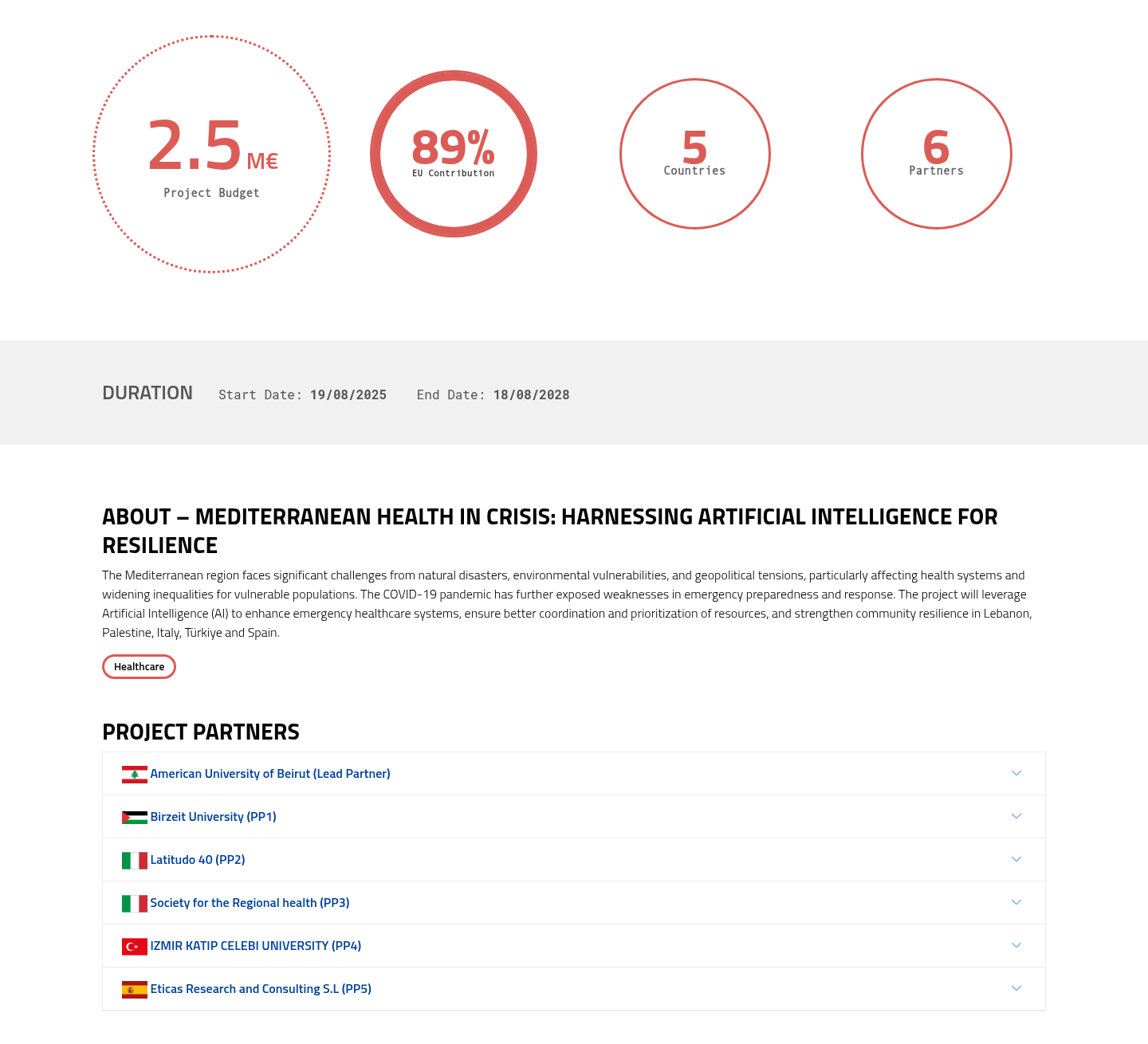
AUB leads the consortium. Partners include Birzeit University in Palestine, through its Institute of Community and Public Health and College of Engineering, and Izmir Katip Celebi University in Türkiye. Latitudo 40 (Italy), Eticas Research and Consulting (Spain) and So.Re.Sa., the regional health company of Italy’s Campania region, complete the list. The project plans six AI solutions, an ethics advisory board and training for more than 125 service providers and policymakers.
MEDAIGENCY is led by Imad Elhajj, a professor of electrical and computer engineering, as principal investigator, with Aline Germani of AUB’s Faculty of Health Sciences as co-principal investigator. The ITU entry does not name the researchers building the SMS assistant.
Why it matters
In a crisis, a wrong message can send people toward danger. Lebanon’s recent years show how fast trust in messages can break. This design does not ask people to trust an AI blindly: it puts official sources first, shows its confidence and hands hard cases to people. Whether it works will only be known once it is tested on real disaster records and, carefully, with a partner on the ground.
What we could not confirm (7)
- Whether a working prototype exists today, and how far the planned replay tests have gone.
- Who on the AUB team is building the assistant, and what Birzeit, Izmir Katip Celebi and the other partners each contribute.
- Whether the assistant is one of MEDAIGENCY’s six planned AI solutions. The project’s public material focuses on decision-support tools for health and emergency services.
- Which languages it will answer in. The ITU entry says English for now, and does not mention Arabic.
- Which civil protection agency or humanitarian group might run a pilot, and when.
- How the service would stop scammers from imitating its messages, a real risk given the fake warnings of 2024.
- How often its answers agree with official instructions. No accuracy figures have been published.
FAQs (5)
Can people in Lebanon use this SMS service today?
No. As of the ITU Interim Report 2026, it is a proof-of-concept prototype under development, with no public pilot and private code.
How would it avoid spreading rumors?
As designed, it would answer from collected and screened records, filter out duplicates and claims other trustworthy sources do not back up, let official alerts override other sources, and send uncertain life-critical questions to a human reviewer. None of this has been tested yet.
Why SMS instead of an app?
SMS works on basic phones and weak networks, which are common when disasters damage infrastructure or overload mobile data.
Who is behind it?
The Humanitarian Engineering Initiative at the American University of Beirut, within MEDAIGENCY, an EU-funded project with partners in Palestine, Türkiye, Italy and Spain.
When will it be tested?
The team plans replay tests on archived disaster timelines first, then a controlled pilot with a civil protection or humanitarian partner. No dates are public.
Sources (9)
Interreg NEXT MED, MEDAIGENCY project page, accessed November 22, 2026
AUB, Humanitarian Engineering Initiative, accessed November 22, 2026
L'Orient Today, 'Fake vs real Israeli evacuation warnings, how can one know?,' October 2, 2024
OCHA Lebanon, Flash Update #41, Escalation of hostilities in Lebanon, as of 4 November 2024
OCHA, Lebanon: Beirut Port Explosions Situation Report No. 6, August 21, 2020
Fact-checked against sources on November 22, 2026. Spot an error? Tell us.
This story supports