Problem
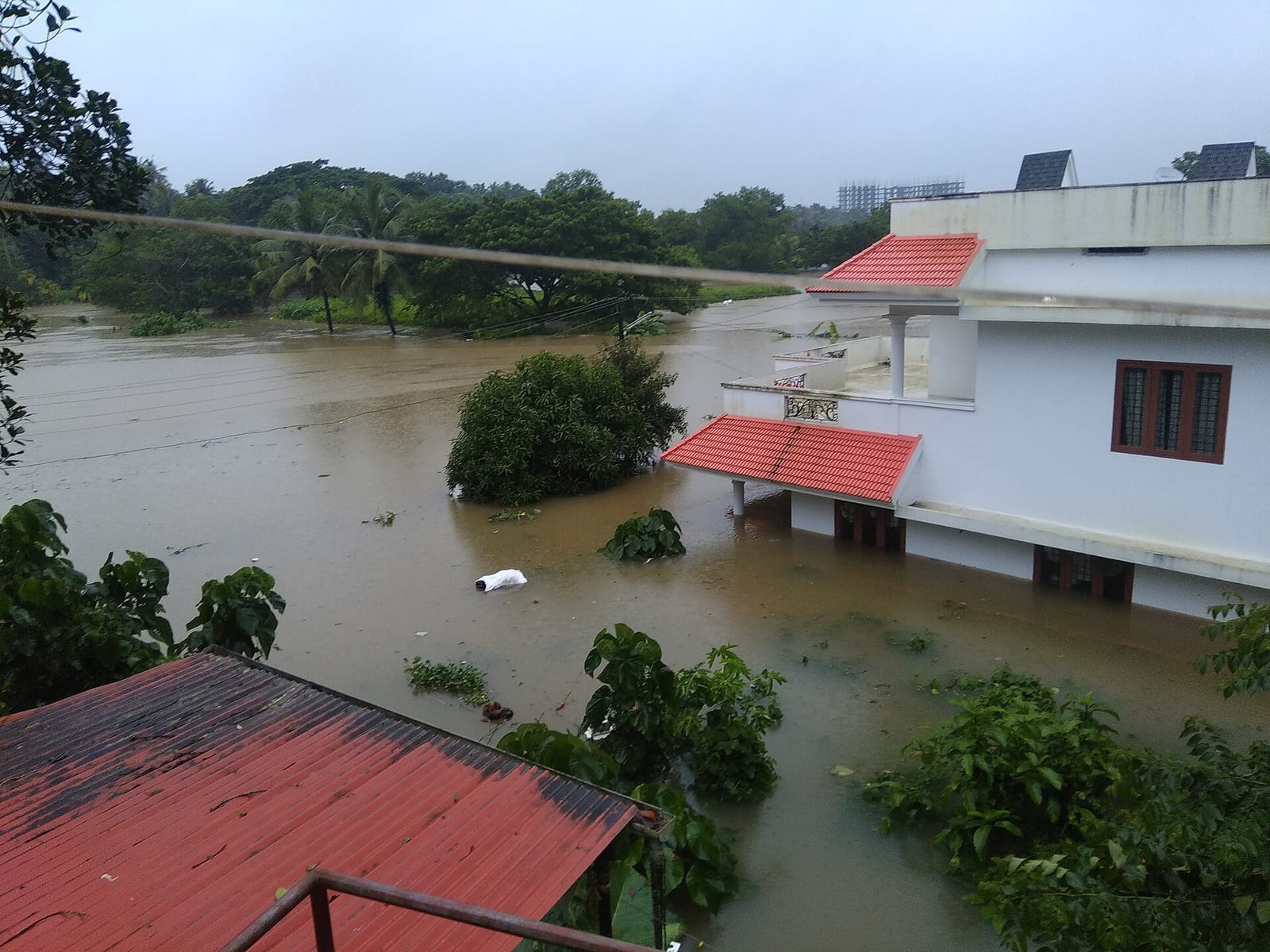
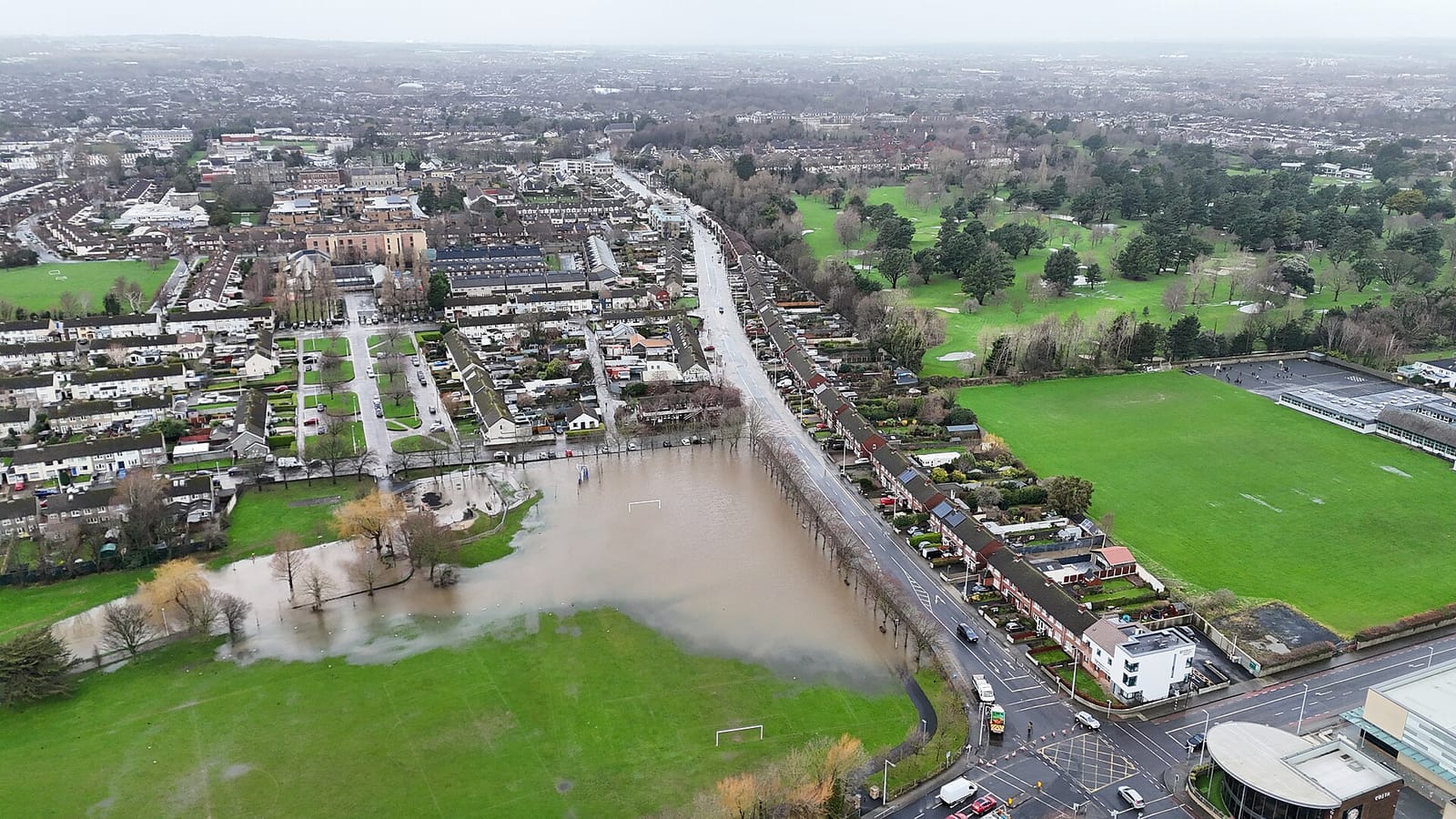
In January 2026, storm Chandra flooded homes, businesses and roads across Dublin, and several rivers broke their banks. Some of the worst-hit areas got almost half their usual January rainfall in a single 24-hour period. The Phoenix Park recorded 40 millimeters in one day, two-thirds of its average for the whole month.
There had been no rainfall warning for Dublin beforehand. Afterward, people asked whether the city’s flood warnings were good enough.
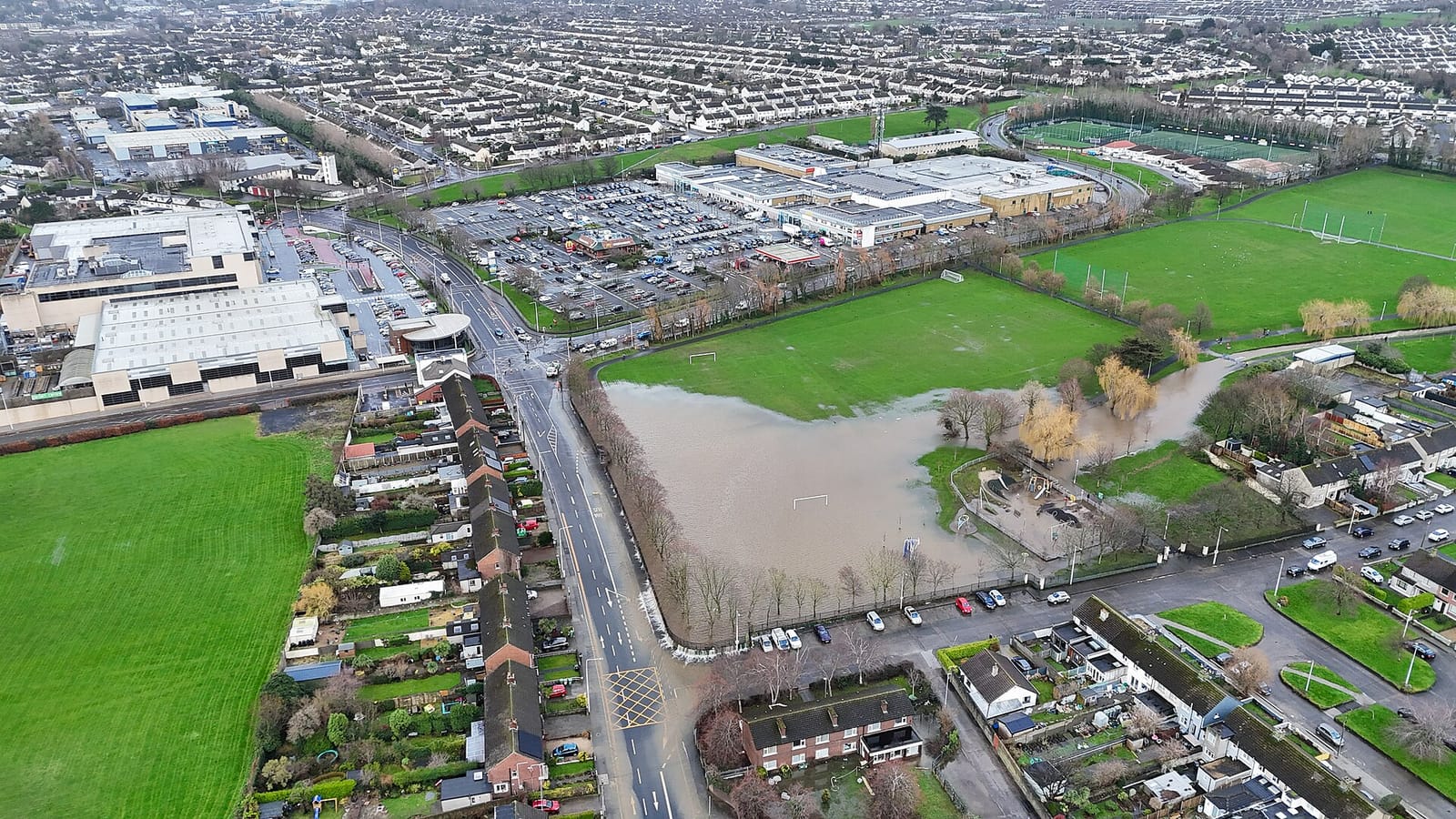
Floods cost the city money as well as homes. In 2017, the council’s Flood Advisory Office put flood damage to city infrastructure at between 2 million and 100 million euro a year, about 8 million euro in an average year, and said the figure was rising with sea levels and heavier rain. That is the most recent council estimate we found.
Dennis Keeley, the council’s assistant chief executive for climate and urban resilience, says time is what response teams most often lack: “One of the greatest challenges during flooding events is ensuring that our operational teams have sufficient time to deploy resources, protect critical infrastructure and respond effectively to emerging risks”.
AI solution
The council runs a network of rain gauges, river level monitors, tide monitors and weather stations, and EMR Integrated Solutions (EMR) has managed it since 2021. That year the network had 69 outstations, which are remote sensor sites, and it warned staff through preset alarm levels. Staff knew, for example, that if rainfall at certain spots kept going above 2.4 millimeters in 15 minutes, local flooding could follow.
For the pilot, EMR built a custom AI model using about ten years of readings from the council’s network: river levels, rainfall and tides, combined with data from Met Éireann, Ireland’s national weather service. EMR describes it as “almost 10 years” of data.
In plain terms, the model goes through the incoming data and picks out signals and patterns that could lead to serious flooding, then flags them to council staff. The council says the aim is to give staff earlier, more reliable warning. The partners have not said what kind of model it is, how they tested it, or how often it raises false alarms.
Experienced council staff review and interpret every alert before anyone acts, and all decisions about flood protection or public warnings remain with them.
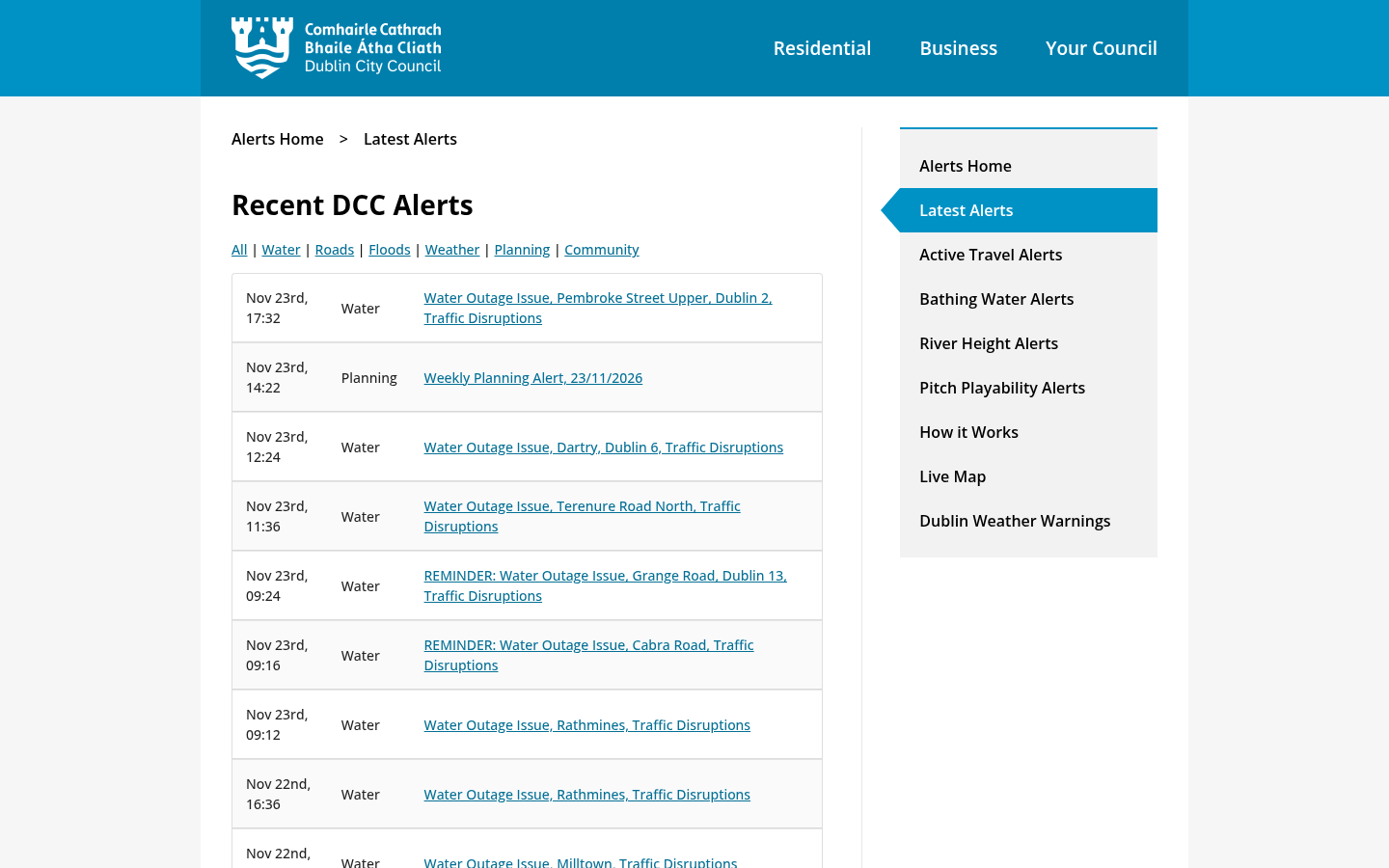
Residents can already sign up for flood alerts through the council’s MapAlerter service, and the new system will use it too, The Irish Times reported.
Impact
It is too early to know. The pilot was announced in mid-November 2026 and runs through the autumn and winter of 2026/27.
The only results so far come from tests on past floods. Run on historical events, the model showed potential warnings of 13 to 21 hours for some mountain rain-driven events. EMR describes these as rain-driven events that start in the Dublin Mountains.
The Irish Times wrote of alerts “up to 21 hours before severe weather events”. The council and EMR both limit the figure to some floods driven by mountain rain, and both call it potential warning time.
The announcement calls that window “valuable time during which the local authority can undertake preventive action rather than subsequent reactive clean-up”.
The partners have not published the model’s accuracy, how often it gets a flood wrong, or which rivers and neighborhoods it covers. The cost is not being disclosed during the pilot, and no independent group has evaluated the system.
If the pilot works, EMR says it could roll the system out in other catchment areas where data is already being collected, and the council hopes other Irish councils with flooding problems will use it in time.
People
The pilot pairs a city council with the company that has looked after its flood sensors for years. EMR first won a three-year contract to manage the network in 2021. It recently extended that contract by 12 months and provides a team of engineers who install, repair and calibrate the instruments.
Mark O’Connor, EMR’s chief commercial officer, was careful about what the system can do: “We know we can’t stop the rain, nor can we prevent every flood. But we can potentially give people something they cannot buy - time to prepare and prevent and time for the council to take action”.
At the council, chief executive Richard Shakespeare said the council is “committed to further embracing appropriate AI technology that helps protect our communities, homes and critical infrastructure”. Andy Walsh, the council’s executive manager for engineering, joined EMR at the launch at Government Buildings in Dublin.
Darragh O’Brien, Ireland’s Minister for Climate, Environment and Energy, welcomed the pilot. “The single most valuable thing we can give people is time,” he said, adding that he looks forward to seeing the results.
The council engineers and EMR field staff who will read the alerts this winter are not named in any source.
Why it matters
Citing the Central Bank of Ireland’s Flood Protection Gap Report, EMR says Ireland is likely to see more rain and more frequent extreme storms and flooding as the climate changes. Many councils already collect river and rain data. Dublin’s pilot tests whether an AI model can turn that data into hours of extra warning, with people deciding what to do, and the results will show whether other places should follow.
What we could not confirm (7)
- How well the system works in real conditions. The pilot only started in November 2026, and no live warning or result has been published.
- What kind of AI model it is, how it was tested on past floods, and how accurate it is. The 13 to 21 hours figure comes from the council and EMR, from tests on historical events, with no published method.
- How often it raises false alarms, or misses a flood.
- Which rivers, neighborhoods and types of flooding (river, coastal or surface water) the pilot covers.
- What the pilot costs and who owns the model. The cost is not being disclosed during the pilot.
- Whether the council will publish the results when the pilot ends.
- Whether any independent group will evaluate it.
FAQs (4)
What is Dublin's AI flood warning pilot?
A pilot by Dublin City Council and EMR Integrated Solutions, started in November 2026. An AI model trained on about ten years of the council's river, rain and tide sensor data, plus Met Éireann data, flags conditions that could lead to serious flooding, so council staff get earlier warning.
How much warning does it give?
In tests on past floods, the council says it showed potential warnings of 13 to 21 hours for some floods caused by rain in the Dublin Mountains. It has not yet been proven in a live flood.
Does the AI send warnings to the public?
No. Council staff review every alert, and decisions about public warnings stay with them. Public alerts go out through the council's existing MapAlerter service.
How long does the pilot run?
Through the autumn and winter of 2026/27. If it works, the partners hope to use it in other catchment areas and with other Irish councils.
Sources (7)
EMR Integrated Solutions, LinkedIn post on the pilot launch, 16 November 2026
Fact-checked against sources on November 24, 2026. Spot an error? Tell us.
This story supports