Problem
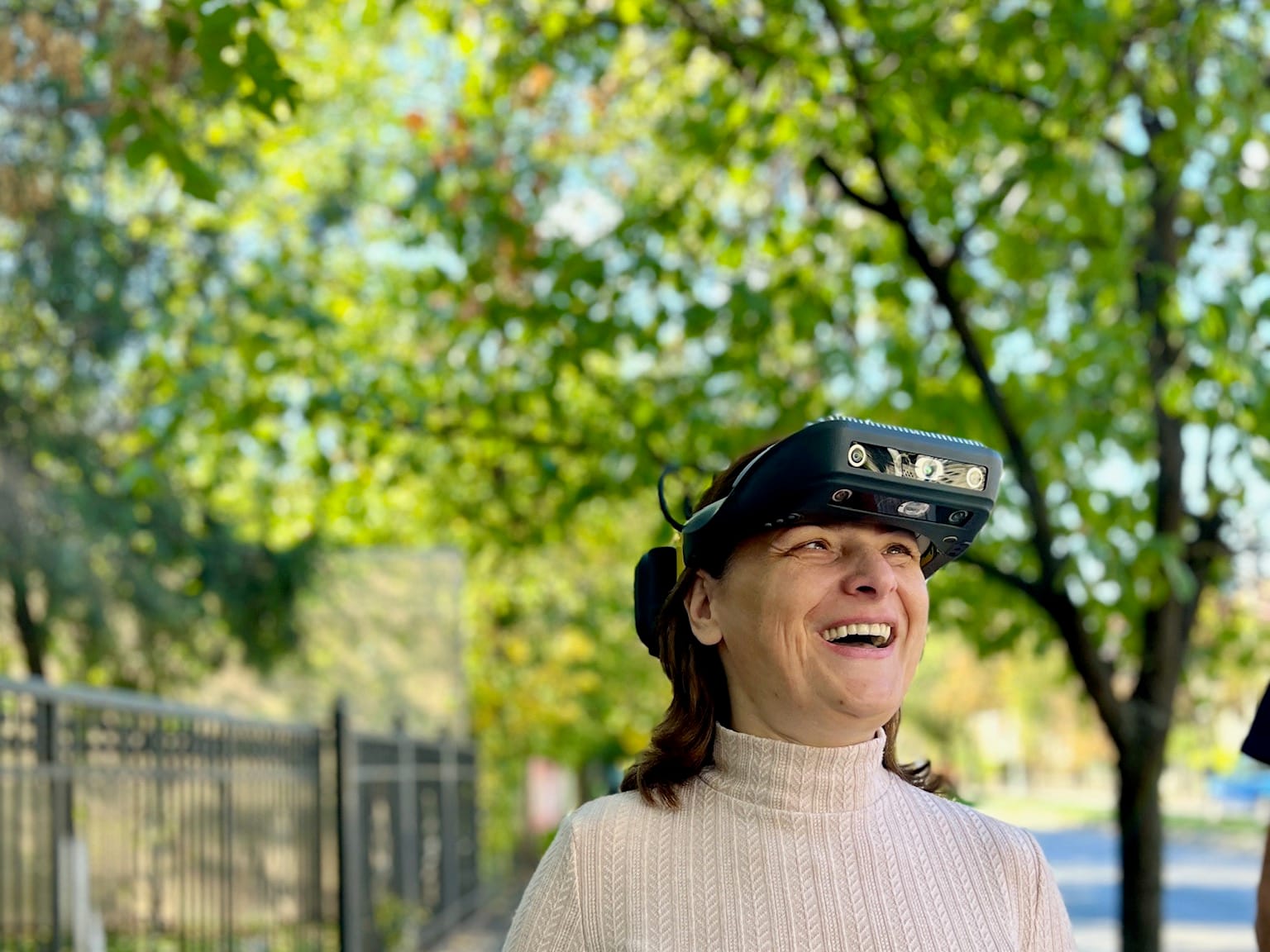
“I felt like myself again… For the first time in nine years, I walked on my own without depending on anyone,” Leonid Puha said after trying the headset. Puha, from Suceava in Romania, was one of more than 900 blind people who tested it on a tour of the country in 2026. His words come from .lumen’s own press release, so the company chose them.
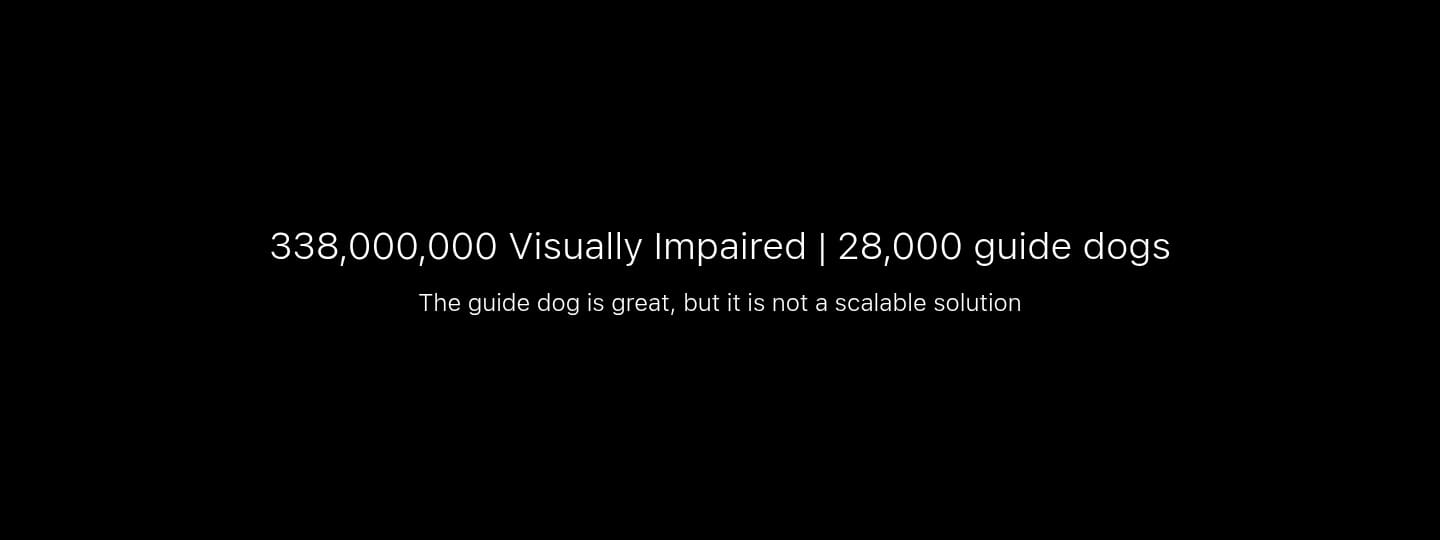
Romania has about 85,000 blind and visually impaired people, a figure .lumen attributes to official data, and only 21 active guide dogs, according to the company. Worldwide, the company counts 338 million people with visual impairment and about 28,000 guide dogs.
Guide dogs are expensive to train, though the estimates differ. .lumen puts the cost at about $70,000 per dog. SmartCompany, an Australian business news site, cited the charity Guide Dogs ACT/NSW at about $50,000.
AI solution
The company calls the product glasses, but it is a headset: a band of sensors on the forehead and a battery pack at the back, with no screen. In December 2025, the tech site New Atlas reported that it weighs about 1 kg, close to a half-face motorcycle helmet, and runs for up to two hours per charge.
On the front sit six cameras, two infrared projectors so it can see in the dark, three motion sensors and GPS. Software on the headset works out the safe space ahead about 100 times a second. It looks for obstacles above and below ground level and steers the wearer away from roads, puddles and mud.
The company sums up its design in one line: “The guide dog pulls your hand, the .lumen Glasses pull your head.” Small motors vibrate against the forehead to nudge the wearer’s head in the right direction, and speakers add audio guidance. Wearers can ask by voice for a saved place such as home or work. The company says the headset can pick out crosswalks, stairs, doors and bus stops.
The idea comes from self-driving cars, and .lumen calls its approach Pedestrian Autonomous Driving AI. Sidewalks are harder than roads in one way, founder Cornel Amariei told SmartCompany in 2024: “on the same street, you can have 20 different ways through it”. The headset needs no internet connection or ready-made map. The company says it processes everything on the device and does not store or send images. It has not published a peer-reviewed paper or an independent benchmark.
Impact
The headset was certified as a medical device under Europe’s CE marking on May 15, 2025, which lets it be sold across the European Economic Area. New Atlas reported a price of 9,999 euros, just under US$11,800, in December 2025. In October 2026, the Ukrainian tech site dev.ua gave the same price, including VAT, and said deliveries were possible only within Romania, three to six months after ordering.
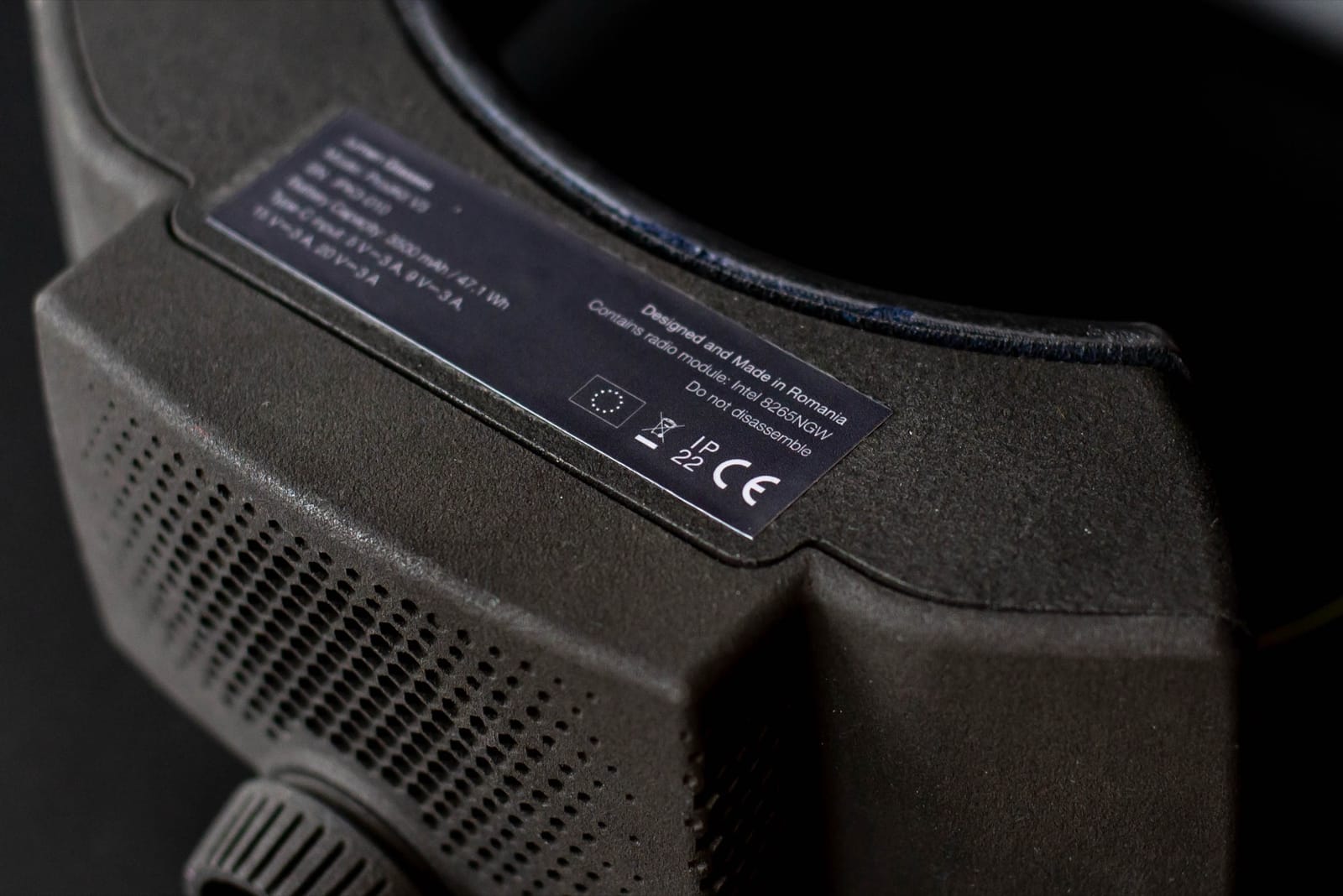
In Romania, a government program covers the cost for some users. In October 2025, the company said more than 1,500 blind and visually impaired people in Romania had preordered the headset within 10 days, free of charge, through a national government program. Those were applications, not delivered devices. By July 2026, .lumen said Romania was expanding public support for assistive technology through programs such as TechAssist, but that “demand still far exceeds the number of available vouchers”. The company has not said how many headsets have reached users.
A .lumen team spent 55 days in 2026 driving to 41 Romanian cities and offering free one-to-one sessions. More than 900 blind people, aged 7 to 92, tried the headset. These were one-off demonstrations, not long-term use.
The company’s wider tester counts most likely include these demonstrations. It said more than 400 blind people in over 40 countries had tested the headset by October 2025, more than 1,000 by August 2026 and more than 1,100 by late September 2026. In Japan, it reports more than 100 km of real-world testing in Tokyo and the Mount Fuji area in 2024, with support from the Toyota Mobility Foundation, and more visits in 2026.
Startup prizes have followed. At CES 2026, the big consumer technology show in Las Vegas, .lumen won the Consumer Technology Association Foundation’s pitch competition for accessibility, worth $10,000, and was named an Innovation Awards honoree. In September 2026, it won the post-certification category of Europe’s Best MedTech, a competition run by TUM Venture Labs, part of the Technical University of Munich. None of these is a clinical test. We found no independent trial and no published safety or injury data.
People
Amariei, a Romanian inventor, founded .lumen in 2020. The company is based in Cluj-Napoca and says it has more than 50 researchers, engineers and designers. In the company’s release on the CES award, he linked the work to his childhood: “I was born into a family where everyone except me had a disability. Years later, the technology we’re building is recognised here, on the CES stage, as the most innovative in its field. Feels like a full circle.”
Doru Tudor coordinated the roadshow. “Over those 55 days, we heard the same question hundreds of times: ‘When will I be able to go somewhere on my own?’” he said in the company’s release.
Diana Danciu, a blind advocate, tried the headset at the roadshow’s Cluj-Napoca stop and reviewed it on Facebook. According to the company’s summary, she called the difference from a white cane “huge”, and named cost as one of the biggest problems left: assistive technology needs wider reimbursement so people can afford it.
.lumen says it is now looking at public funding and reimbursement programs in other European countries.
Why it matters
The company’s own figures (338 million people with visual impairment, 28,000 guide dogs) work out to about one guide dog for every 12,000 people worldwide, and Romania has 21 active guide dogs in all. A hands-free headset that is certified, priced and partly paid for by the state offers a different route to walking alone. What it needs now is evidence from outside the company: how people fare after months of use rather than minutes, and how many headsets are actually on people’s heads.
What we could not confirm (8)
- Any independent evaluation of the headset’s safety or how well it works. We found no outside trial, peer-reviewed study, orientation and mobility expert review, or injury data. All figures in this story come from .lumen or from press articles based on its material.
- How many headsets have been delivered to users, in Romania or elsewhere, and how many TechAssist vouchers exist.
- Whether the “national government program” behind the 2025 preorders is the same TechAssist scheme named in 2026.
- The current weight and battery life, and whether the 9,999 euro price has changed. New Atlas reported about 1 kg and up to two hours in December 2025; the company may have changed the hardware since.
- The tester counts (400, then 1,000, then 1,100 people) include short demonstrations. We could not confirm how many people have used the headset for longer periods.
- The quotes from Leonid Puha and Diana Danciu were selected by the company. We did not read Danciu’s full Facebook review.
- The guide dog training costs ($70,000 from .lumen, about $50,000 from an Australian charity via SmartCompany) come from different sources and may be in different currencies.
- Claims about crosswalks and traffic come from the company. We found no independent test of how the headset handles busy streets.
FAQs (5)
What are the .lumen Glasses for the Blind?
A headset made by .lumen, a startup in Cluj-Napoca, Romania. Despite the name, it is not a pair of glasses. It sits on the forehead, uses six cameras and AI on the device to find a safe walking path, and guides the wearer with gentle vibrations and voice prompts.
How much does the .lumen headset cost?
The reported price is 9,999 euros (about US$11,800), including VAT. In Romania, a public assistive technology program supports the first deployments, but the company says demand far exceeds the available vouchers.
Does it need the internet or a map?
No. The company says it works offline, needs no pre-made map, processes everything on the device and does not store or send images.
Has it been independently tested?
Not yet, as far as we could find. It is certified as a medical device in Europe, and the company reports that more than 1,100 blind people have tried it, many in short demonstrations. No independent trial or peer-reviewed study has been published.
Where can people get it?
It is certified for sale across the European Economic Area, but as of October 2026 deliveries were reported only within Romania, where a public scheme supports the first deployments. The company also runs tests in Japan and is seeking reimbursement in other European countries.
Sources (12)
.lumen, Over 1,500 preorders for .lumen glasses in just 10 days, 2025-10-10
.lumen, Glasses for the Blind receive CE certification, 2025-05-15
.lumen, wins the CES 2026 Accessibility Award on the global technology stage, 2026-01-08
Consumer Technology Association, CES 2026 Innovation Awards, Glasses for the Blind (honoree)
.lumen, expands to Japan with support from Toyota Mobility Foundation, 2026-08-20
.lumen, named Europe's Best MedTech, 2026-09-29
.lumen, Glasses product page, accessed 2026-11-25
.lumen, home page, accessed 2026-11-25
Abhimanyu Ghoshal, AI-powered 'glasses' help the blind go places, safely, New Atlas, 2025-12-23
Fact-checked against sources on November 25, 2026. Spot an error? Tell us.
This story supports