By pillars
AI for inclusion
AI that opens doors for people too often left out: disabled people, speakers of small languages, women and girls. What works, what is still a pilot, and what nobody has proven yet.
Blind and low vision
3 stories
Accessibility · United States
You push, it steers: blind walkers take a wheeled AI guide onto their own streets
Glide, a two-wheeled robot guide from Seattle, reached its first blind users in September 2026. One early user says it lets him walk faster, and that his cane still does some jobs better. It is a pilot, not yet tested independently.

Accessibility · United States
Beeps from the left, beeps from the right: a Harvard phone app is tested as a walking guide for blind people
Mobilio reads the path through a phone camera and steers walkers with sound. In a study of 14 people it helped on an outdoor route and cut bumps on an obstacle course, though it slowed them down there. It is not yet available to download.

Accessibility · China
China has 17 million visually impaired people and about 400 guide dogs. A robot dog is in trials.
China Mobile's LingXi, a four-legged robot with a guide handle and open-ear headphones, has led visitors at a braille library and a national sports event. Its bigger claims have not been checked outside the company.
Speech and voice
5 stories
Accessibility · India
Nonverbal children in Manipur get AI voices made from their own hums and their family's accent
In a 10-child pilot at a parent-founded nonprofit in northeast India, an app turns each child's own sounds into a personal voice. The results come from the partners, and the app is not yet public.

Accessibility · Netherlands
A Dutch AI turns a whisper into a clear voice on the phone. Its makers are now building for device makers first.
Whispp, a startup in Leiden, built an app that turns a whisper or an affected voice into a natural one in real time, for people who stutter severely or have lost their voice to illness. A small pilot drew warm reviews. But the company is now focusing on licensing its technology to device makers, and says its assistive version is still in development.

Accessibility · Spain
In Spain, a patient group now helps people losing their speech get a free AI copy of their own voice
Since October 28, 2026, people with amyotrophic lateral sclerosis (ALS) in Spain can apply through the Spanish ALS Association for a free license to recreate their voice with ElevenLabs software. Speech therapists set it up at home. It is days old, and no one has published uptake numbers yet.

Accessibility · South Korea
Tap a picture, hear a voice: a free Korean app adds AI speech for people who find talking hard
For more than ten years, the NC Cultural Foundation has given away My AAC, a picture-symbol app that speaks for its users. Since 2024 it talks in AI voices they can tune by age and mood. The early numbers come from the foundation itself.

Accessibility · United Kingdom
Meet the paralyzed technologist who built an AI voice tool with his eyes
Bernard Muller designed SMF VoXAI using only eye tracking. It drafts replies in a conversation and speaks them in the user's own voice through an avatar. It is still a pilot, and no results have been published yet.
Women and girls
2 stories
Gender equality · Pakistan, Thailand
Pakistan's IT ministry signs up to host UN Women's AI School
Since 2024, UN Women's office in Bangkok has taught officials, advocates and young leaders across Asia and the Pacific to use AI with gender in mind. In July 2026, Pakistan agreed to run a national version. What graduates have built with it is still mostly untold.
Gender equality · Nigeria
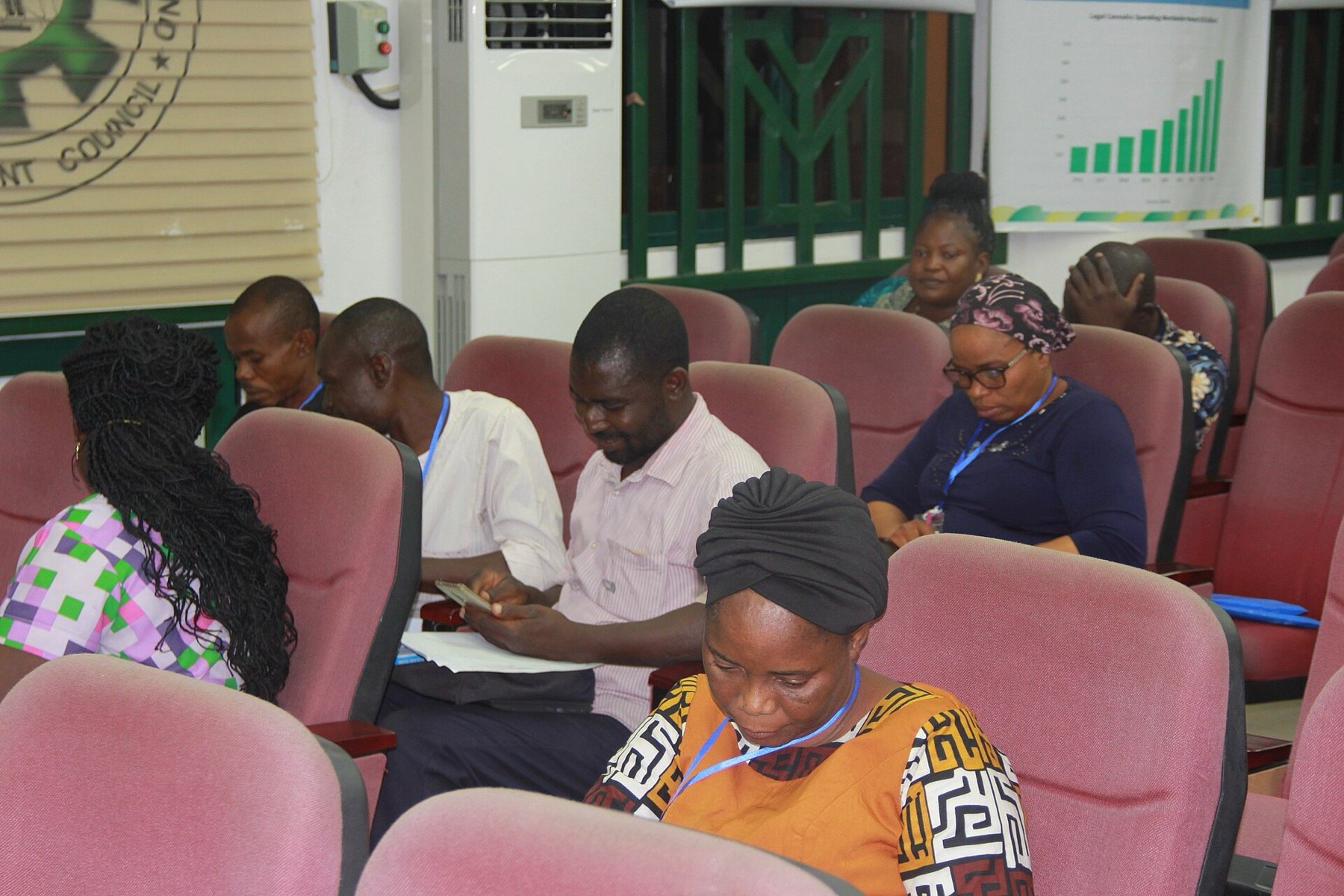
A former teacher's NGO brings AI to girls and teachers in Abuja's public schools
Rising Hope Girls has students turn their drawings into AI images about girls' rights. It also runs school computer labs, trains teachers and built ReadBuddy, a reading app that won an award from the UN's International Telecommunication Union (ITU) in July 2026. Its reach and reading results so far are self-reported.
More stories
2 stories
Digital inclusion · Canada
A Northern Cheyenne engineer is building language AI that tribes own and can take back
Michael Running Wolf and an Indigenous-led team at Mila, the Quebec AI institute in Montreal, are developing speech recognition that needs little recorded audio, plus an offline practice device for classrooms. The tribe keeps its data and can withdraw it at any time. The work is still in research, with no learner results yet.

Accessibility · South Korea
AI helps Korean care staff understand challenging behavior
In Seoul, cameras now keep the behavior logs that care staff once wrote by hand, so specialists can work out what lies behind a person's distress.