
Problem
On September 22, 2026, at China Mobile’s stand at the China International Information and Communications Exhibition, a four-legged robot walked ahead of a visitor, leading the way. It was a live demonstration of LingXi, a guide robot for blind and low-vision people, Zhejiang’s Tide News reported.
The gap it is meant to fill is large. About 17.3 million people in China live with visual impairment, according to the China Association of the Blind, and the country has only about 400 registered guide dogs. For almost all of them, a guide dog is out of reach.
A cane is a trusted tool, but it can only find obstacles within reach. Guide dogs cost a lot to raise and reach very few people. China Mobile’s robotics center made both points when it launched the robot in 2025.
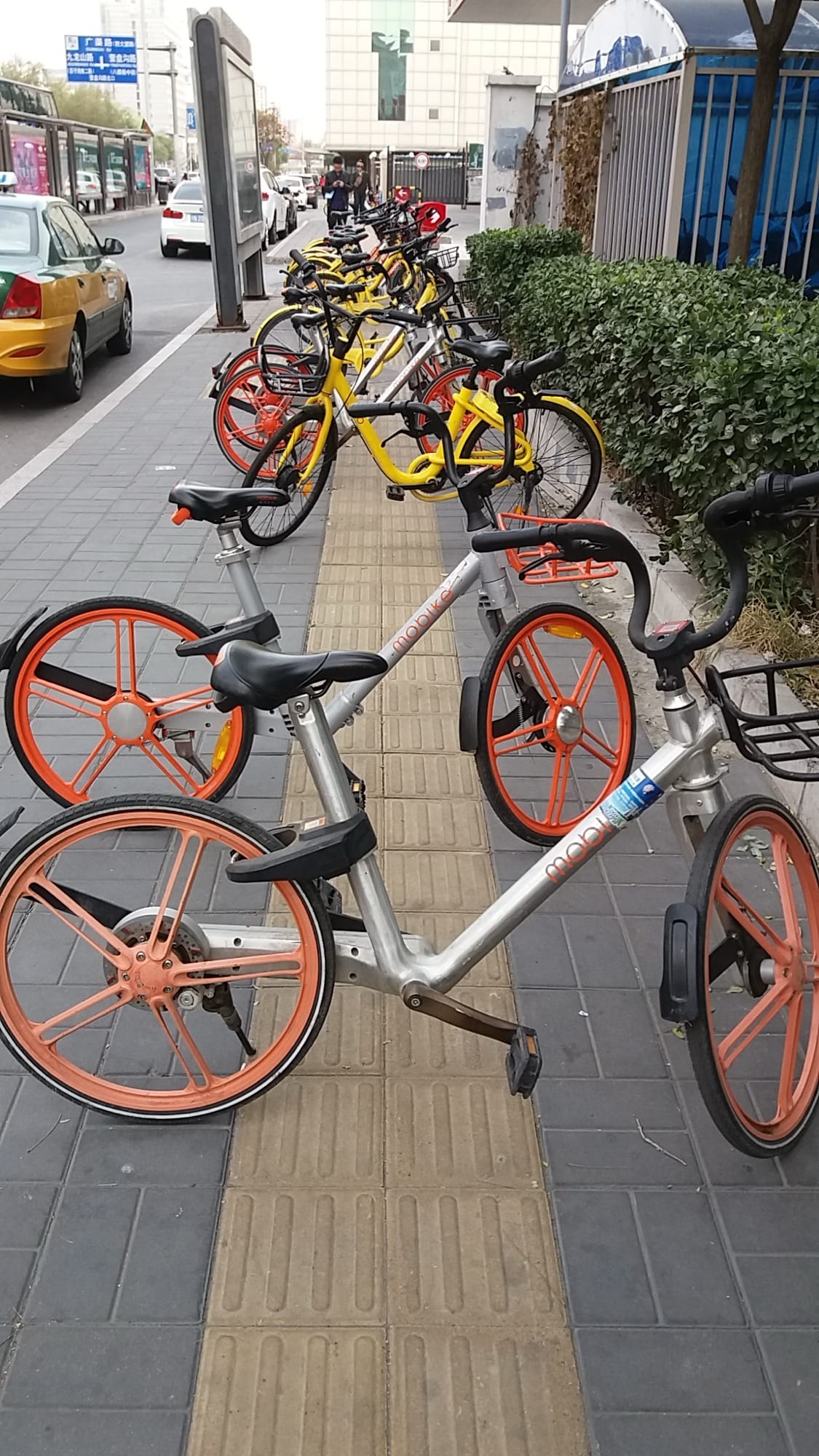
Many Chinese sidewalks have tactile paving, rows of raised yellow tiles that a cane or a foot can follow. In its entry for the ITU’s AI for Good report, China Mobile notes that these paths are often blocked, and that they cannot warn anyone about something that changes, such as temporary construction (Source: ITU, AI for Good Innovate for Impact Interim Report 2026).
AI solution
China Mobile’s Embodied Intelligence Industry Innovation Center, its unit for robots that sense and move in the physical world, launched LingXi in September 2025 at the China International Welfare Expo and Rehabilitation Exhibition in Beijing.
The user holds a guide cane that extends from the robot’s back. Through force feedback, the handle passes on the robot’s movements, so the user feels it turn, speed up, slow down or stop. Bone conduction earphones, which carry sound through the bones of the head instead of covering the ears, give short spoken updates while the user can still hear the street around them.
How it works
- 01 Map The robot builds a 3D map by combining a laser scanner with images from a single camera. Indoors it can also use a detailed map made in advance.
- 02 Guide It walks ahead and avoids obstacles. The handle tells the user when it turns, speeds up, slows down or stops.
- 03 Talk Short spoken updates reach the user through open-ear bone conduction headphones.
To know where it is, the robot builds a 3D map by combining a laser scanner with images from a single camera. China Mobile says the maps are accurate to the centimeter. Indoors, it works from a detailed map made in advance and can take someone straight to a chosen spot or lead a tour. Outdoors, it combines the laser, the camera and map navigation, and it avoids obstacles as it goes. In its ITU entry, the company adds China’s BeiDou satellite positioning and guidance across several floors of a building.
LingXi can also recognize objects and read text, in a supermarket or a station for example, and answer spoken questions using Jiutian, China Mobile’s own large language model (the kind of AI behind chatbots).
Some of the computing happens on a chip inside the robot and some in the cloud, over China Mobile’s own telecom network. The company said in October 2025 that the robot dog had gone through more than 40 versions.
China Mobile also markets the same robot as a family companion that can play with children and help with study. The multi-city user trials and home tests it has described were about that use, not about guiding blind people.
Impact
LingXi is a pilot. China Mobile says the robot has worked in real settings: at China’s national games for people with disabilities and Special Olympics, and at the China Braille Library. The news coverage does not say how often, or for how many people.
The larger numbers come from one place: China Mobile’s own entry in the ITU’s AI for Good Interim Report 2026. There, the company reports that LingXi has served more than 12,000 users, gives daily navigation at the China Braille Library, and is in adaptation talks with more than 50 airports, hospitals, shopping centers and museums. It also says the robot costs one-sixth as much as a trained guide dog. These figures are self-reported. We found no other source that repeats them, and no independent test of how well LingXi guides people.
The ITU entry also says the project is “transitioning from pilot to large-scale commercialization,” under a plan for public venues to lease the robots and individuals to buy them. The public record does not yet show this. Coverage of the September 2026 demonstration gives no price, no sales figures and no date for people to get one.
Other teams are trying the same idea. In July 2026, the business magazine Caijing counted several guide robot dogs in pilots across China, from companies, universities and city projects, and concluded that the whole field is still at the pilot stage. An expert it quoted listed the hurdles: keeping robots steady in crowds, old neighborhoods, rain and snow; cost; unclear rules on where robots may go in public; and training users.
People
The team behind LingXi works at China Mobile’s research and development center in Hangzhou. Cao Mengwan, a manager in its embodied intelligence product department, explained the aim to Tide News at the September 2026 demonstration:
“We make the guide robot dog not simply to replace guide dogs, but in the hope of using technology to fill the huge gap, so that more visually impaired friends dare to go out.”Cao Mengwan, China Mobile, to Tide News, September 2026 (translated from Chinese by AI for Kind)
Cao added: “Tech for good is not a slogan. We hope to make accessibility a widely available capability, so that visually impaired people can afford it and use it.” (translated from Chinese by AI for Kind)
According to the ITU entry, China Mobile works with the China Association of Persons with Visual Disabilities and the China Braille Library, and more than 100 visually impaired people helped design the robot’s outdoor safety rules. We could not find any of those users speaking about LingXi in public.
The government is pushing in the same direction. In 2026, China’s State Council committee on disability issued its plan for people with disabilities for the 15th Five-Year period, and it lists technology that helps disabled people as a priority.
Why it matters
China has roughly one guide dog for every 43,000 visually impaired people, so a guide that can be built in a factory could change who gets to travel alone. LingXi has already led people around a library and a national sports event. What the public record does not yet show is a price people can pay, safe guiding on busy streets, or blind users describing it in their own words.
What we could not confirm (6)
- The ITU entry’s numbers: more than 12,000 users, talks with more than 50 venues, more than 100 visually impaired co-designers, and a cost of one-sixth of a guide dog. They come only from China Mobile.
- Whether LingXi is on sale or for lease, at what price, and when people can get one. The ITU entry says the project is moving to large-scale commercialization; September 2026 news coverage mentions no price or rollout.
- Whether the China Braille Library uses LingXi every day, as the ITU entry says, or hosted it for a time. News coverage says only that the robot “served” the library.
- How LingXi compares with a white cane or a trained guide dog, and its safety record. We found no independent test and no blind user speaking about it publicly.
- An official LingXi product page. We link to China Mobile’s corporate site instead.
- There is no photo of LingXi in this story: we have no licensed image of it, so both pictures show the setting only.
FAQs (5)
What is LingXi?
A four-legged guide robot built by China Mobile for blind and low-vision people. The user holds a handle that signals turns and stops, and hears spoken updates through bone conduction earphones.
Can people in China buy or rent LingXi?
Not as far as we can tell. China Mobile's ITU entry describes plans for leasing and sales, but no price or rollout date has been published as of October 2026.
How many people have used it?
China Mobile reports more than 12,000 users in its ITU entry. No other source confirms this figure.
Does it replace guide dogs?
China Mobile says no. A manager on its product team describes the robot as a way to fill the gap left by the very small number of guide dogs in China.
Is LingXi the only robot guide dog in China?
No. Several guide robot dogs from companies, universities and city projects were in pilots in 2026, according to Caijing.
Sources (6)
Caijing (财经网, via NetEase), Guide robot dogs speed up: how far to wide use?, July 10, 2026
IT Home (IT之家, via ifeng), China Mobile releases LingXi electronic guide dog, September 16, 2025
ITU, AI for Good Innovate for Impact Interim Report 2026: Intelligent Robotic Guide Dog: Empowering Barrier-Free Mobility for the Visually Impaired, China Mobile (Hangzhou) Information Technology Co., Ltd., pp. 700–706
Fact-checked against sources on October 29, 2026. Spot an error? Tell us.
This story supports