Problem
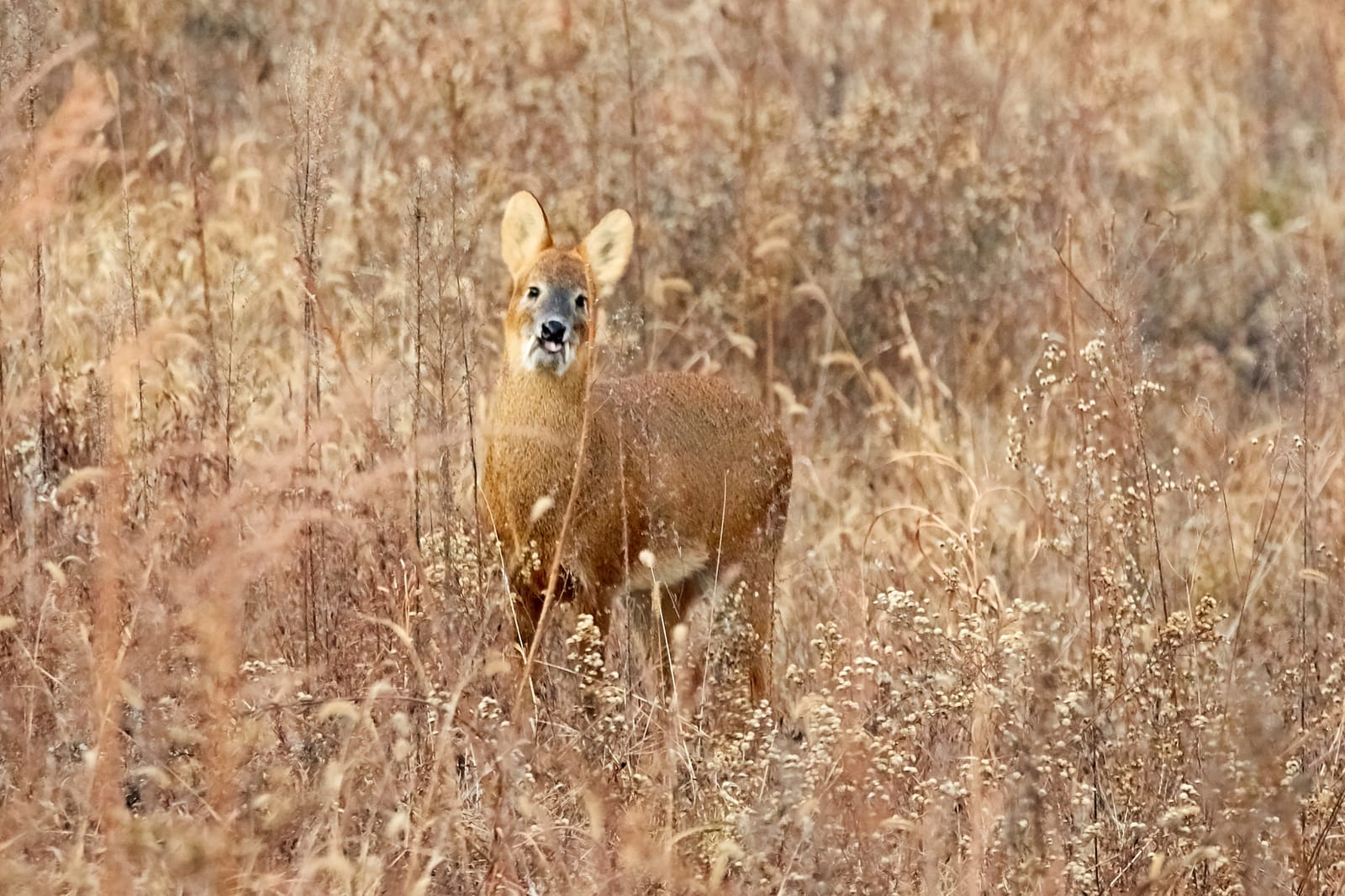
During a test in Yangpyeong, a county east of Seoul, a camera beside the road picked up a water deer, and the system warned the cars coming toward it. That is how South Korea’s Ministry of Climate, Energy and Environment described one moment from its pilot in October 2026.
Water deer, which Koreans call gorani, are the wild animal most often named in the country’s roadkill reports. In 2025 they appeared in 23,932 of them.
The total is much larger. Reported animal road accidents in South Korea rose from 15,107 in 2020 to 79,278 in 2023, 91,162 in 2024 and 119,862 in 2025, up 31.5 percent in a single year. Raccoon dogs, roe deer, badgers and wild boar are on the list too. In 2023, cats made up the biggest single group, at 38,143 reports.
Some of that rise reflects better counting. When the 2023 figures came out, the Seoul Economic Daily linked the jump to accidents that used to go unreported and are now filed. The October 2026 news report on the 2025 figures adds that changes in how cases are reported and counted have to be weighed too, so a rising total does not by itself show that the measures failed.
By the government’s count, work on the worst roads has paid off before. Under the first national plan, the 50 road sections with the most accidents went from 1,197 accidents in 2019 to an average of 346 a year from 2021 to 2023. Fences and wildlife bridges have cut deaths on long stretches of road. But at intersections and ramps, fences are hard to build, and that leaves gaps.
AI solution
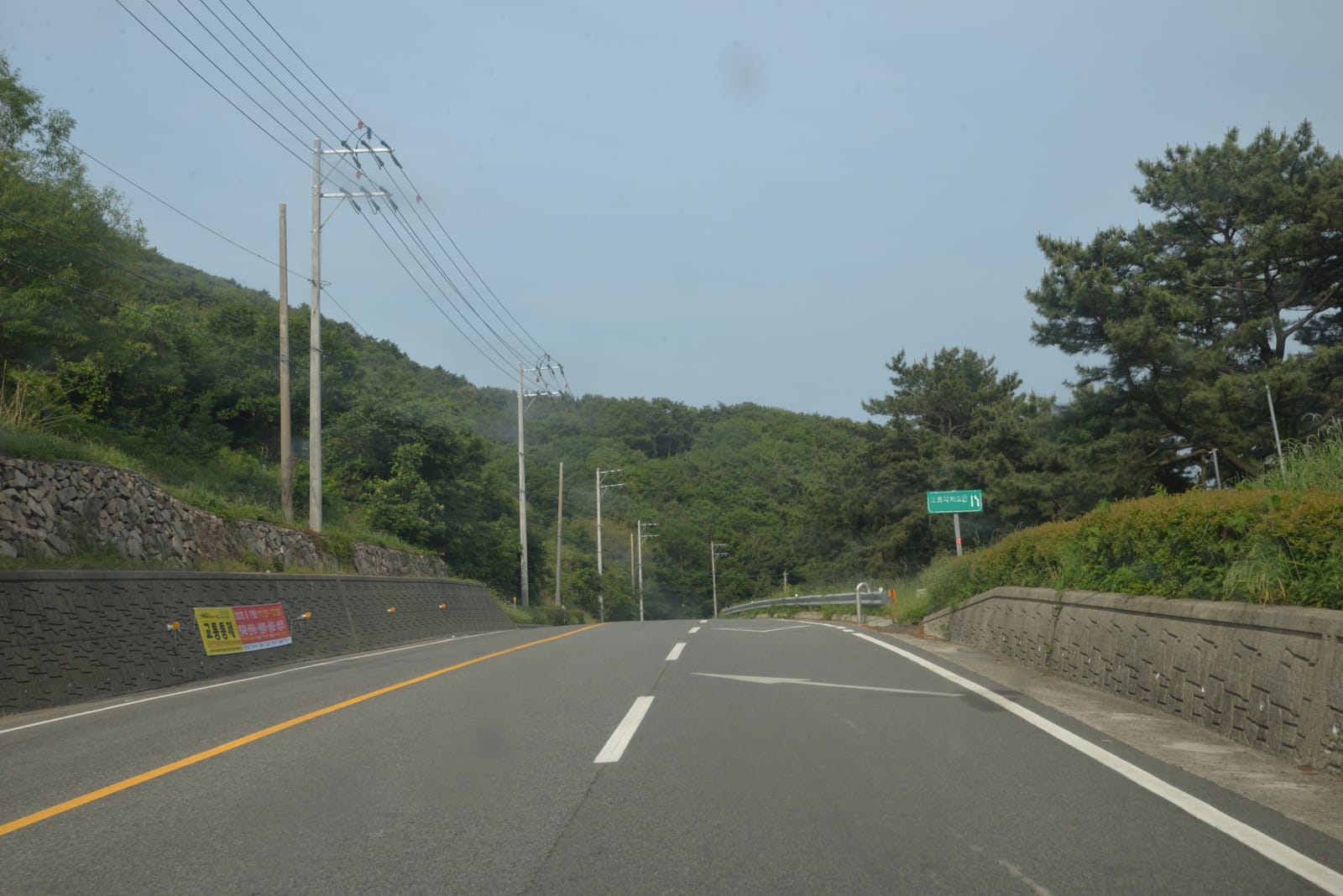
Fences and fixed warning signs already line many Korean roads. This system adds a warning that lights up only when an animal is actually there.
Cameras with built-in AI, which the partners call smart CCTV, watch a section of road. Next to them sit LiDAR sensors (light detection and ranging), which use laser pulses to measure where objects are in three dimensions. When something moves on or near the road, image-recognition software checks whether it is an animal. If it is, an electronic board ahead of the section lights up for drivers.
On the first trial road, video went to a control room at the park office, and boards at both ends of the section showed drivers information about the animal on the road. In the 2025 pilots, the boards read “Wild animal detected within 150 m ahead,” according to the Korea Herald. Official plans put the boards 200 meters ahead instead. The new Cheongju site adds flashing lights to the boards.
The software comes from POSCO DX, an information technology company in the POSCO Group whose AI had mostly worked in steel mills and other industrial sites. It adapted its in-house image system, VISION AI, to recognize wildlife. The company says it also trained the AI on which species appear and when, so it can estimate the chance of an animal turning up and warn earlier. The ministry repeated that claim at the 2025 launch, but no one has tested it in public.
Impact
This is an early pilot, and no one has yet shown whether it works.The first trial started on October 26, 2023, on about 350 meters of National Route 19 in Hallyeohaesang National Park, in Namhae. In December 2024 the ministry said that “so far no accident has occurred” on that road and called it a visible effect. That is a short-term statement about one short road, with no published animal counts or traffic figures to compare against.
The system then joined South Korea’s Third Animal Road Accident Reduction Plan for 2025 to 2027. The plan targets the 100 road sections with the most accidents, with measures such as guide fences, warning signs, speed cameras and voice alerts in car navigation. AI warnings go to just three of those sections. Trial operation began on April 9, 2025, starting with National Road 6 in Yangpyeong. Reports disagree on where the other early sites are, which we explain below.
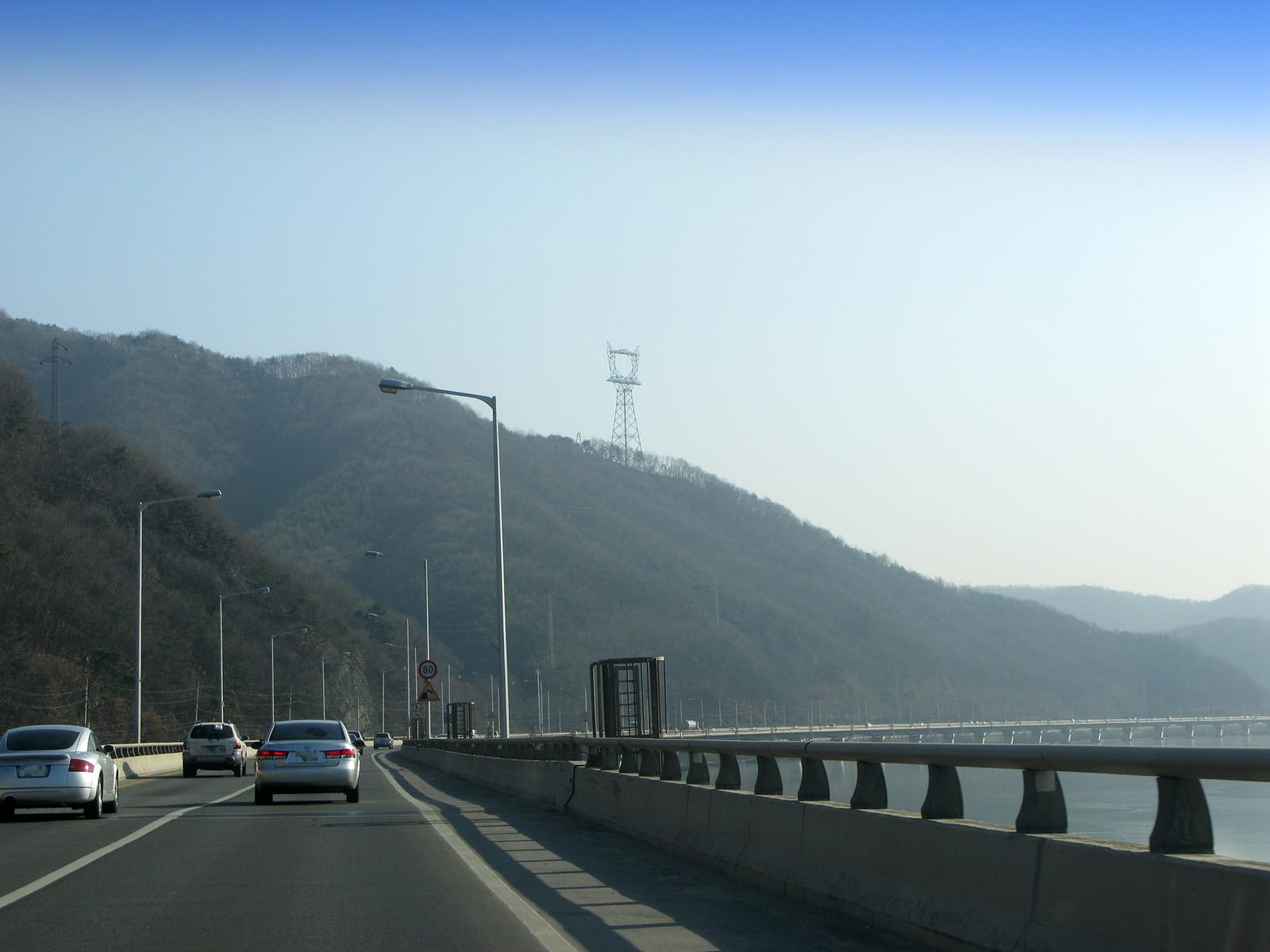
On October 27, 2026, the ministry announced the next site: National Route 17 in Cheongju, starting the following day, aimed at intersections and ramps where fences are hard to build. It plans one more high-risk site by 2027 and says it will study long-term collision data before deciding on any nationwide rollout.
Meanwhile, the national numbers have not gone down. Kim Wi-sang, an opposition lawmaker from the People Power Party, used the 2025 figures to ask whether the reduction plan works. Those totals cover the whole country, though, and say almost nothing about a few short stretches of road with AI on them.
People
The ministry leads the pilot. The Korea National Park Service ran the first trial and, with the National Institute of Ecology, a government research institute that keeps the national roadkill records, chooses sites and judges whether the system works. POSCO DX built and installed it. The four signed an agreement in July 2024, after the park service and POSCO DX had started working together in March 2023.
The money for the company’s part came from the POSCO Group’s social giving, through its Sepasi program and the POSCO 1% Sharing Foundation.
At the 2025 launch, Eom Gi-yong, head of management support at POSCO DX, said it was meaningful to use AI built for industry to help protect wildlife and drivers. Kim Tae-oh, then director of the ministry’s Nature Conservation Bureau, called it a collaborative approach and said the ministry wants more companies involved in protecting biodiversity.
In October 2026, Lee Chae-eun, director general of the same bureau, put the goal this way: “It is critical to actively leverage artificial intelligence technology to protect both wildlife and drivers”.
Why it matters
The ministry wants the system to protect drivers as well as wildlife. Fences have worked on long stretches of road, but they leave gaps at junctions and ramps, and that is where this pilot sits. If South Korea’s long-term collision data shows fewer crashes at those gaps, the idea could reach many more roads. The ministry has said it will look at that data before going further.
What we could not confirm (7)
- Any measured result at the AI sites: animal counts, crashes before and after, or changes in driver speed. The only claim is the ministry’s December 2024 statement that no accident had occurred so far on the first trial road, with no baseline.
- How accurate the detection is, how often it gives false alarms, and whether POSCO DX’s claim that the AI can estimate when animals will appear has been tested.
- Exactly where the 2025 pilots run. The Korea Herald names Yangpyeong and Pyeongchang. Korean reports of POSCO DX’s announcement name Yangpyeong and the Jingogae pass in Odaesan National Park (which lies in the Pyeongchang area, so the two may be the same site). The Korea Times and the Yonhap news agency list Yangpyeong, Hoengseong and Pyeongchang. The official plan named Yangpyeong, Hoengseong and Namwon; POSCO DX’s announcement put Hoengseong in 2025 and Namwon in 2026.
- How far ahead the warning boards stand: 150 meters in the Korea Herald, 200 meters in the official plan. It may differ by site.
- Whether the Cheongju system has started. The article announcing it was published the day before the planned launch. The Korea Times says it wrote that article with the help of generative AI, edited by staff.
- Which sites are running in late 2026. Yonhap reported on October 27, 2026 that the Yangpyeong, Hoengseong and Pyeongchang systems were still in pilot operation, but we found nothing on whether the Hallyeohaesang trial road is still in use, or on Namwon.
- We did not read the ministry’s own press releases (only news reports of them), and we found no comment from an independent wildlife or road safety expert.
FAQs (5)
What is South Korea's AI roadkill warning system?
A pilot led by the Ministry of Climate, Energy and Environment. Cameras with AI and laser (LiDAR) sensors watch a short section of road. When they detect a wild animal on or near it, an electronic board ahead warns drivers.
Where is it being tested?
It started in 2023 on about 350 meters of National Route 19 in Hallyeohaesang National Park. In 2025 it went to National Road 6 in Yangpyeong and other sites in Gangwon province, and a site on National Route 17 in Cheongju was announced for October 28, 2026.
Has it reduced roadkill?
That has not been shown. The ministry said in December 2024 that no accident had occurred so far on the first trial road, but published no comparison data. It plans to study long-term collision data before any national rollout.
Why are roadkill numbers in South Korea rising?
Reported cases rose from 15,107 in 2020 to 119,862 in 2025. Part of the rise comes from better reporting and changes in counting, so the figures do not show how much real collisions have changed.
Who built it?
POSCO DX, an IT company in the POSCO Group, built and installed it with social-contribution funds. The Korea National Park Service and the National Institute of Ecology help choose sites and judge results.
Sources (9)
Korea Times, "AI scans Korea's highways to keep wildlife, drivers safe," 2026-10-27
Korea Herald, "Smart roads to the rescue: New AI-based system aims to prevent roadkill," 2025-04-10
eToday, report on POSCO DX's roadkill monitoring system (in Korean), 2025-04-09
SR Times, report on POSCO DX's image-recognition AI for roadkill (in Korean), 2025-04-09
Dailian, report on the Third Animal Road Accident Reduction Plan (in Korean), 2024-12-26
Seoul Economic Daily, report on 2023 roadkill figures (in Korean), 2024-12-26
Edaily, report on the Hallyeohaesang National Park AI trial (in Korean), 2023-10-25
World Disability Love News, report on 2025 roadkill figures (in Korean), 2026-10-15
Yonhap News Agency, report on the Cheongju AI roadkill system (in Korean), 2026-10-27
Fact-checked against sources on November 8, 2026. Spot an error? Tell us.
This story supports