Problem
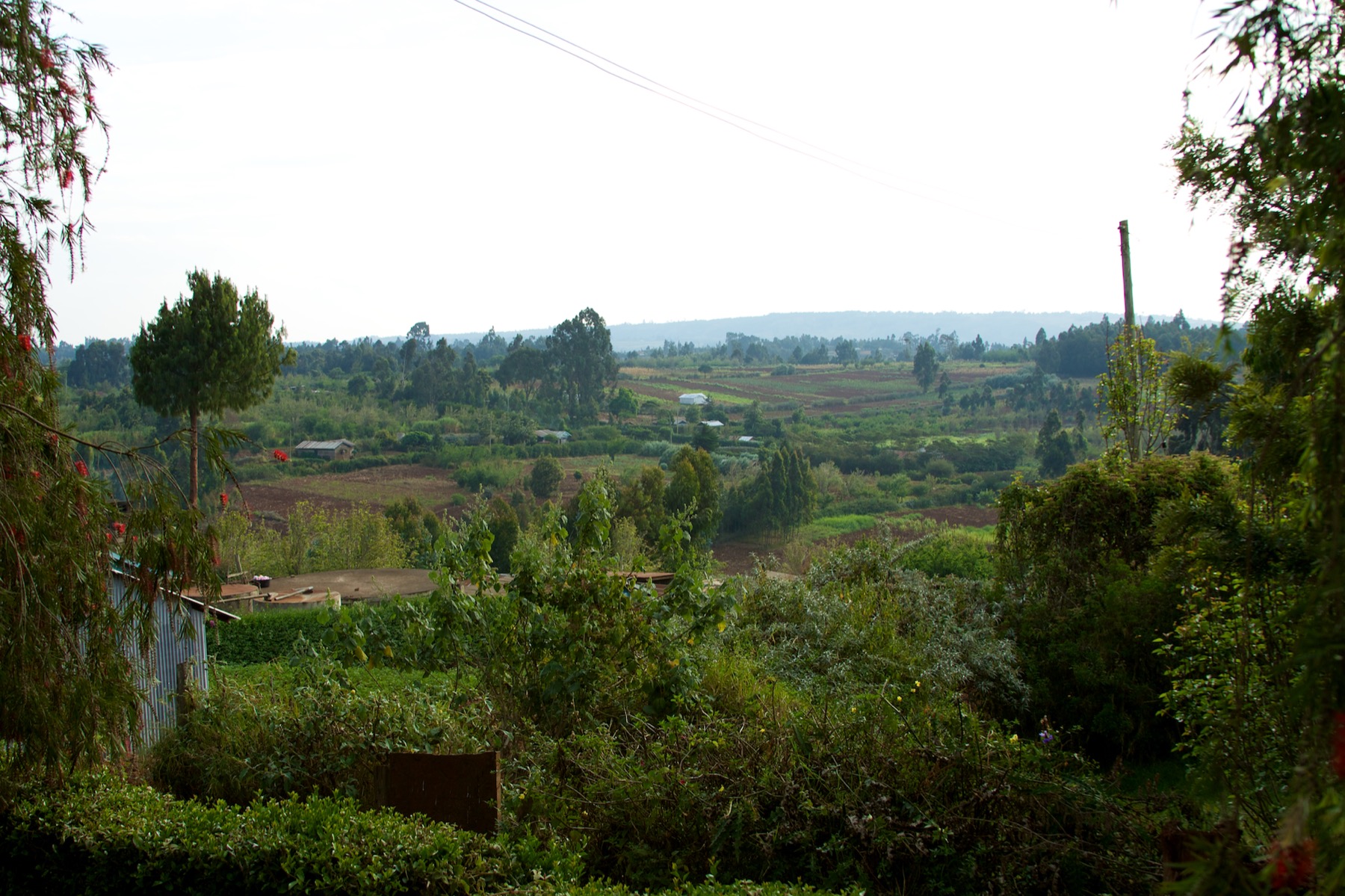
Esther Kimani is the eldest of four girls in a farming family from a village on the slopes of the Aberdare Mountains in Kenya. Like many families nearby, hers could lose a third or nearly half of its crops to pests and disease. For a farming household, a lost harvest can mean school fees and health care go unpaid.
Kimani counts about 7 million smallholder farmers in Kenya and says they can lose up to half of what they grow to pests and disease each season. Catching an outbreak early is expensive. By her figures, a drone scan can cost up to $100 an hour, and a private agronomist or a lab test about $60, which is more than many small farmers earn in a day.
Then there is the question of who gets the warning. “Men in rural communities tend to have smartphones, while women rely on basic feature phones,” she told Global Citizen in 2025. An app-based tool would miss many of the people tending the crops.
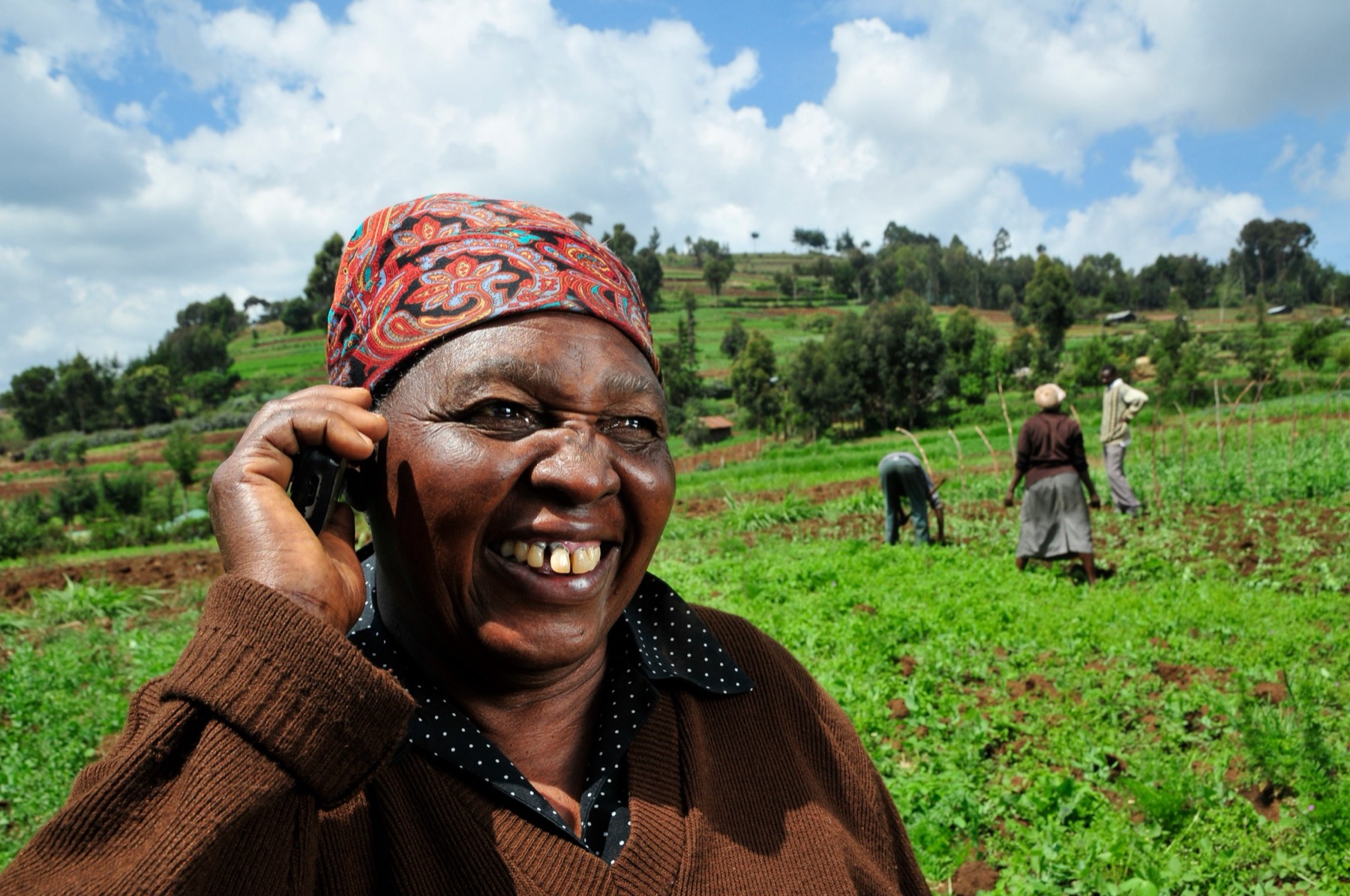
Kimani became the first girl from her village to attend the University of Eldoret, where she studied computer science.
“I knew I was leaving home to change home.”Esther Kimani, founder of Farmer Lifeline, to Global Citizen, 2025
AI solution
Farmer Lifeline installs a small solar-powered device on the farm, where it stays all season. Its camera photographs the crops, and an AI model checks each image for signs of pests, plant disease or missing nutrients. When it finds a problem, the farmer gets an SMS that names it and suggests a treatment or fertilizer. The messages also carry weather forecasts.
The AI is a convolutional neural network, a kind of model that learns to recognize patterns in pictures. The team started with models trained on crop photos from around the world, then taught them local conditions using more than 80,000 labeled local images, according to the company’s entry in an ITU report. The system also draws on a global database of pests and diseases covering many crop species. Advice is translated into simple language; at the time of the ITU entry it was available in English and Kiswahili.
How it works
- 01 Watch A solar-powered camera stays in the field all season and photographs the crops.
- 02 Check An AI model looks for signs of pests, disease or missing nutrients.
- 03 Text The farmer gets an SMS naming the problem and a suggested treatment, on any phone.
“We’ve simplified AI so that farmers don’t need to understand machine learning,” Kimani said. “They just read an SMS, something they already use every day.”
Farmers pay $3 a month by mobile money. Global Citizen reported in 2025 that the camera goes in at no upfront cost; the company’s website also offers devices to lease or to buy. In October 2025, one camera covered about four to five farmers, and Kimani hoped to stretch that to nearly 30.
The technology still has limits. In October 2025, Kimani said the team was moving from pretrained models to building its own, and that the models ran on a laptop and could take weeks to process. Cisco engineers were helping her look at faster computing options.
Impact
Farmer Lifeline is deployed at small scale in Kenya. The company has paying subscribers, and ITU’s 2026 Interim Report lists it as an operational pilot. Throughout 2025 it installed more devices and reached more than 4,000 smallholder farmers, alongside training and field visits on pest management, according to its funder One Young World. As of October 2025 it operated only in Kenya, and Kimani hoped to expand into East Africa.
The results so far come from the company itself. In April 2025, Kimani said 78% of farmers who had used the technology reported yield increases of over 36%. The company has also described a six-month pilot on 400 farms in Kajiado County, which it says a monitoring and evaluation consultant documented, but that report is not public. Other sources give different loss and yield figures, none with a published method, and field accuracy is not public.
In testimonials collected by the company and posted on its website, farmers describe what the alerts mean to them. Marion Mburu, who farms in Ruku, Kiambu County, said the device “advises me on my phone on what I should apply and where I can buy it which is very good.” She added: “From the profits in my farm, I have educated my children, the areas where I would harvest 100 pieces (kales), now I get almost 500 pieces (kales).”
Boniface Kimani, 19, farms with his family in Kabete. He said the device has helped them “detect crop pests and diseases, and advises us on the chemicals that we can apply, forecasts the weather for us.”
People
Kimani is the founder and CEO. She paid her early team from her own savings, and refining the models took several years after work began in 2020. She designed the service around the women who do much of the farming. “We thought about a technology that would serve them, so that when they’re still working in their homes, they can get a notification,” she told SiliconANGLE. “They don’t have to be on the farm. An SMS is enough for them to take action and save their crops while there’s still time.”
Women also help run the network: the company’s Food Planet Prize profile, updated in September 2026, says 141 women have been trained to distribute and maintain the devices. It works with local agricultural extension offices and 17 farmer groups.
Kimani won the $250,000 Cisco Youth Leadership Award in 2025 and a $50,000 Lead2030 grant from One Young World, supported by Deloitte. In December 2025, Farmer Lifeline won Qualcomm’s Wireless Reach Social Impact Fund, which comes with funding and technical support.
Her goal is 1 million farmers by 2030. Set against the 33 million smallholders she counts across Africa, she calls that “a drop in the ocean.”
Why it matters
Farmer Lifeline sends its advice by SMS to the basic phones many women farmers already use, so the person tending the crops hears about a pest while there is still time to act. The results still need independent checking. The idea is simple enough for others to borrow: put the AI in the field and the advice on the phone people already have.
What we could not confirm
- The latest public update we found is the company’s Food Planet Prize profile, updated in September 2026. The company’s website lists 5,100 monthly customers, but the page is undated.
- The yield figures come from the company. The report on its 400-farm pilot in Kajiado County is not public, and neither is the AI’s accuracy in the field.
- In April 2025, Kimani said the technology had been piloted in five African countries. In October 2025, SiliconANGLE reported that it operated only in Kenya.
- The farmer stories in this article come from testimonials the company collected and published.
Questions people ask
What is Farmer Lifeline?
A Kenyan social enterprise founded by Esther Kimani. It installs solar-powered AI cameras on small farms that detect pests, plant disease and nutrient problems, then text the farmer advice.
Do farmers need a smartphone?
No. Alerts arrive as ordinary SMS messages, which work on basic feature phones. Kimani chose SMS so that women farmers, who are more likely to have basic phones, are included.
How much does it cost?
Farmers pay $3 a month by mobile money, according to the company.
Is it proven to work?
Results so far are self-reported. Kimani said in 2025 that 78% of users reported yield increases of over 36%. The company's pilot evaluation has not been published.
Where does it operate?
In Kenya. It reached more than 4,000 smallholder farmers there in 2025, and the company hopes to expand in East Africa.
This story supports
Sources (9)
ITU, AI for Good Innovate for Impact Interim Report 2026, Farmer Lifeline use case, pp. 634–639
One Young World, Farmer Lifeline Technologies impact profile, June 2026
One Young World on Facebook, Lead2030 Challenge supported by Deloitte
Farmer Lifeline Technologies, home page and farmer testimonials (accessed October 25, 2026)
Food Planet Prize, Farmer Lifeline initiative profile (updated September 15, 2026)
Echoing Green, Esther Kimani (Esther Wanjiru) Global Fellow profile
Fact-checked against sources on October 25, 2026. Spot an error? Tell us.