Problem
In much of eastern DR Congo, news travels by radio. Few people are online, and radio remains the main source of information, Fondation Hirondelle says in its ITU entry. Across many crisis-hit areas of sub-Saharan Africa, most people trust radio above any other news source, according to researchers at ETH Zurich’s Development Economics Group.
That trust matters when a station carries a rumor or a call to hate. Tools that track harmful content on social media cannot hear what goes out on air, and checking radio by hand is slow: stations broadcast in several languages, often without fixed schedules, and there were no automated tools for offline audio, the ETH team writes.
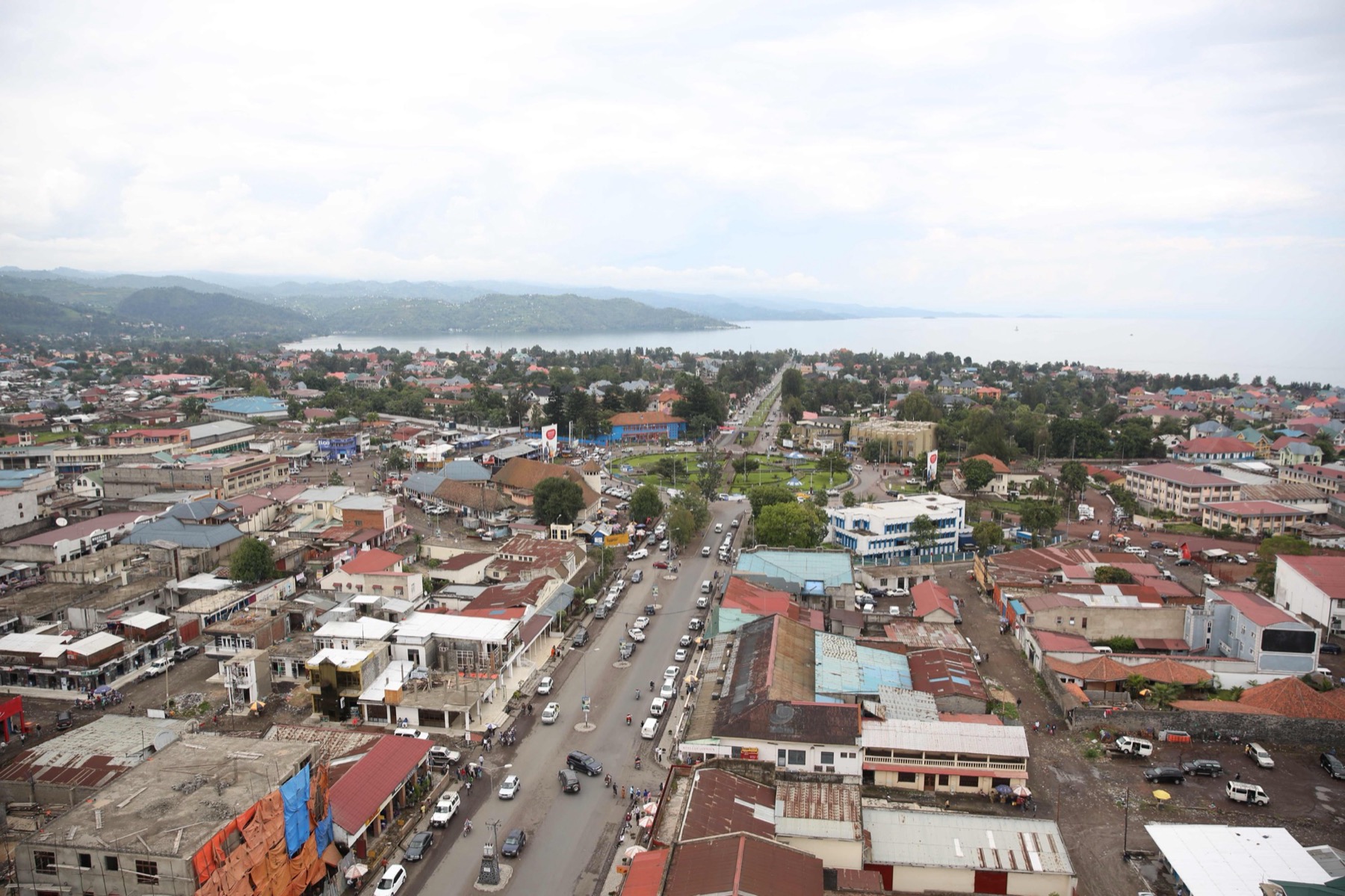
The pilot ran in a region in crisis. According to the UN’s 2026 humanitarian response plan for DR Congo, published by OCHA and its humanitarian partners in January 2026, the AFC/M23 armed group took control of Goma at the end of January 2025 and of Bukavu in February 2025. Hundreds of people were killed during a week of fighting in Goma, the plan says. OCHA reports that more than 5.35 million people in the country were displaced in 2025. Fondation Hirondelle says the fighting deepened tensions between communities and left Congolese media, already short of resources, exposed to manipulation.
AI solution
Fondation Hirondelle, a Swiss nonprofit, has run a Congolese newsroom, Studio Hirondelle-RDC, since 2014. Its pilot was funded by the European Commission’s Service for Foreign Policy Instruments (FPI).
The tool records and digitizes broadcasts and transcribes the speech into text. Natural language processing, the branch of AI that lets computers sort and search written language, then scans the transcripts for violent speech and hate speech. In its entry to the ITU’s 2025 Innovate for Impact report, the foundation says it used commercial speech-to-text and language models, paid per use, without training its own.
How it works
- 01 Record Broadcasts from community stations are recorded, digitized and transcribed into text.
- 02 Flag Natural language processing scans the transcripts for violent speech and hate speech.
- 03 Check and respond Local experts, journalists and media partners check what it flags; Studio Hirondelle-RDC makes programs in response.
The AI only flags; people decide. The ITU entry describes local experts, journalists and media partners checking what the system produces, to catch mistakes and invented output. The foundation’s AI directive for its newsrooms points the same way. “AI can amplify disinformation; we therefore wanted to guarantee that any use within our media is transparent and responsible,” editorial lead Jacqueline Dalton said in December 2025 (translated from French by AI for Kind). She added that AI tools “produce plausible answers, but not necessarily true ones” (translated by AI for Kind).
When the team found hate speech, Studio Hirondelle-RDC produced programs in response and broadcast them to strengthen social cohesion. The studio also runs a fact-checking show, Vunja Uongo (“breaking the lie” in Swahili); the foundation has not said whether the responses aired there. The ITU report and ETH Zurich call the project Radiolytica.
Impact
This is a pilot, and its results are not public. Fondation Hirondelle confirms that ten community radio stations were monitored in 2025, in Goma and Bukavu, but has not published how much audio the system processed, how much it flagged, or how often reviewers agreed. No public example shows a flagged rumor and the program made in reply. No source explains how the work ran once both cities came under AFC/M23 control.

The Paris Peace Forum selected the pilot for the AI Action Summit in Paris on February 10 and 11, 2025, and on July 10, 2025, it won an ITU “Innovate for Impact” award in Geneva. These are recognitions, not evaluations of the tool’s effect on listeners.
In a July 2025 testimonial that the foundation published without a name, a partner radio manager in Goma said: “The debate programs and magazines that we broadcast played an essential role in managing and preventing tensions within our communities” (translated by AI for Kind). The comment is about the studio’s programs, not the AI tool.
A research phase runs from November 2025 to October 2027 with ETH Zurich’s Development Economics Group, funded by an ETH4D grant. It focuses on health and epidemic misinformation, and will test whether partnerships between local radios and humanitarian groups improve what goes on air. The timing matters: DR Congo declared an Ebola outbreak in Ituri province on May 15, 2026 (ReliefWeb), and OCHA’s country page, checked in October 2026, calls it rapidly expanding in the east. Fondation Hirondelle says it plans to extend monitoring to about 100 stations (its documents give figures from 100 to 150); no public update shows that this has started.
The project so far
- 2025Pilot monitors ten community radio stations in Goma and Bukavu
- February 10 and 11, 2025Selected by the Paris Peace Forum for the AI Action Summit in Paris
- July 10, 2025Wins an ITU Innovate for Impact award in Geneva
- November 2025 to October 2027Research phase with ETH Zurich, focused on health and epidemic misinformation
The approach also raises questions the team’s public materials do not answer. In a December 2025 article in the journal RadioMorphoses that cites this project, researcher Anne Marijnen notes that callers agree to be broadcast, but not necessarily to be recorded, transcribed and analyzed, and that speakers can be identified from context even when names are removed. To keep such tools from becoming instruments of surveillance and repression, she writes, UN programs share only analyses with governments and keep the listening kit away from governments and political factions. She adds that men’s voices dominate such data and that accuracy can be weaker in less-spoken languages; UN Global Pulse reported a 43% recognition rate for software it set up in Somalia. These are general warnings, not findings about this tool.
People
At Fondation Hirondelle, Gilles Magnin, program manager for Central Africa, has been the public face of the pilot. In a February 2025 Paris Peace Forum video, he said he hopes AI stays inclusive and shares his organization’s values (paraphrased from an auto-generated transcript). General director Caroline Vuillemin and Sacha Meuter are the foundation’s partners on the ETH research.
At ETH Zurich, Fritz Brugger leads the team with Isabel Günther, David Etienne and Max Morel.
Studio Hirondelle-RDC’s journalists and fact-checkers make the response programs. In 2025 the studio’s programs aired on 88 partner radio stations in five languages, and the foundation counted 1.8 million weekly listeners in 2024. The foundation has not named the Congolese journalists involved, and AI for Kind does not identify stations, callers or local reporters in areas under armed group control.
The work builds on what community radios already do. A July 2026 Studio Hirondelle-RDC report describes a North Kivu station where a residents’ committee prepares a weekly program against hate speech. The report does not mention AI.
Why it matters
Most tools against hate speech and false information watch the internet, while most people in eastern DR Congo hear their news on the radio. This pilot pointed AI at the radio, with people reviewing what it flags. The ETH research now has to show whether it works, and how it protects the people whose voices it records.
What we could not confirm
- The latest public sign of the AI monitoring is Fondation Hirondelle’s 2026 plan to extend it to 100 radios; we found no update showing that this has started. The ETH research is listed as running to October 2027.
- The foundation has not published how much audio the pilot processed, how much it flagged or how often reviewers agreed.
- Its documents give expansion targets from 100 to 150 stations.
- No public source explains how the pilot ran after AFC/M23 took Goma and Bukavu, or how staff and stations were protected.
- The foundation’s public materials do not say how it handles callers’ consent, anonymity or data security.
Questions people ask
What is Radiolytica?
An AI system from Fondation Hirondelle that records and transcribes community radio broadcasts in eastern DR Congo and flags possible hate speech and misinformation for people to review.
Does the AI decide what counts as hate speech?
No. According to Fondation Hirondelle's ITU entry, local experts, journalists and media partners check what it flags. Studio Hirondelle-RDC journalists produce the response programs.
Has it worked?
The 2025 pilot covered ten stations in Goma and Bukavu. No figures on flags, accuracy or listener effect, and no evaluation, have been published.
Which languages does it handle?
Fondation Hirondelle says the pilot transcribed broadcasts in Swahili; its ITU entry describes speech-to-text tuned for French and Swahili. The ETH research phase plans to transcribe Swahili and French broadcasts into English.
This story supports
Sources (17)
Fondation Hirondelle, Mis- and disinformation expertise page, undated
Fondation Hirondelle, Intervention de Gilles Magnin sur TV5Monde, February 18, 2025 (in French)
Fondation Hirondelle, An Award-Winning Project at AI For Good, July 10, 2025
Paris Peace Forum, Contrer la désinformation avec l'IA, project page, 2025 (in French)
ETH Zurich Development Economics Group, Radiolytica, project page
Engineering Humanitarian Action (ETH Zurich and EPFL), Radiolytica: Addressing Harmful Information
ETH4D, Security and Crisis Response, Radiolytica entry
OCHA, Democratic Republic of the Congo country page, checked October 25, 2026
ReliefWeb, Central/Eastern Africa: Ebola Outbreak, May 2026, disaster page, checked October 25, 2026
Fact-checked against sources on October 25, 2026. Spot an error? Tell us.