Problem
Sarah’s family sends her photos in WhatsApp groups “all the time without any context,” she said in a user comment Be My Eyes published in 2023. On Twitter, she added, “very few people add descriptions or alt text” (short text that describes a picture). She had started using Be My AI, the app’s photo describer, on those pictures and on images in magazines.
Be My Eyes and its new foundation put the number of people living with blindness or low vision at about 340 million. Mike Buckley, who chairs the foundation’s board, points to inaccessible consumer electronics and to digital services that cannot be navigated with assistive technology such as screen readers. “The barriers blind people face are human-made,” said Bryan Bashin, the foundation’s president.
Be My Eyes began with Hans Jorgen Wiberg, a Danish craftsman with low vision. Working with the Danish Association of the Blind, he saw how often people needed a small bit of sighted help. His idea was a global network of volunteers on video.
AI solution
The app offers two kinds of free help. The first is human: a blind user taps a button and is connected by live video to a sighted volunteer, any time of day. The volunteer hears the user’s voice and sees only what the phone camera shows.
The second is Be My AI. The user takes a photo, and the AI writes back a detailed description. They can then ask follow-up questions about the picture. At launch, written answers came in 29 languages and could be read on a braille display (a device that turns text into raised dots). A human volunteer stays one tap away.
Be My AI launched on GPT-4, a model from OpenAI that can look at an image and answer questions about it in plain language. The foundation describes the tool as “built with OpenAI”. More than 19,000 blind and low-vision beta testers helped shape it before it began rolling out to all iPhone users in late September 2023, and to Android users from December 4, 2023.
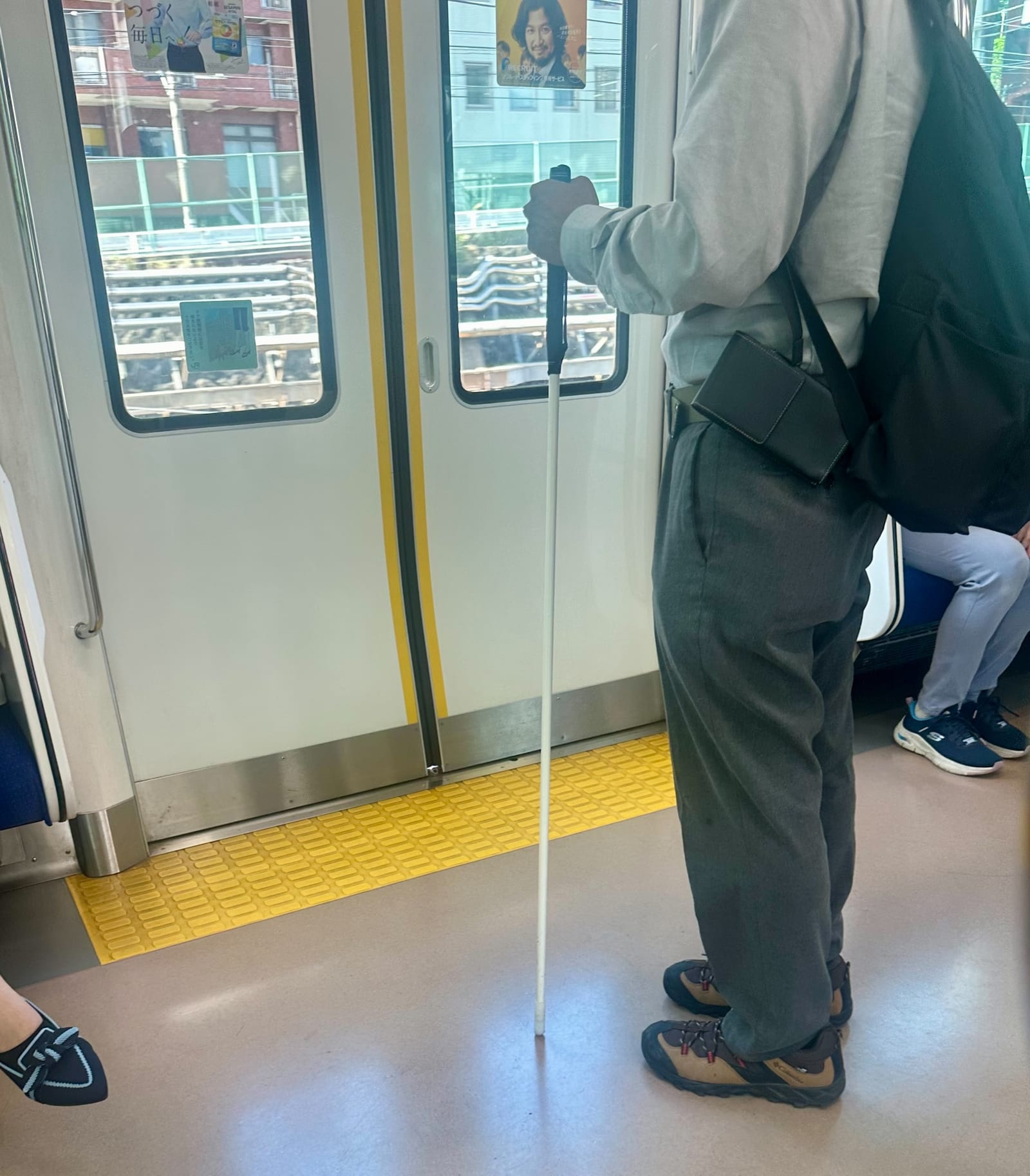
When the company opened Be My AI, it told users they might still get “hallucinations, occasional wrong answers” (an AI hallucination is when it confidently describes something that is not there). It also said the AI “does not and should not replace a white cane, guide dog, or other mobility aid”.
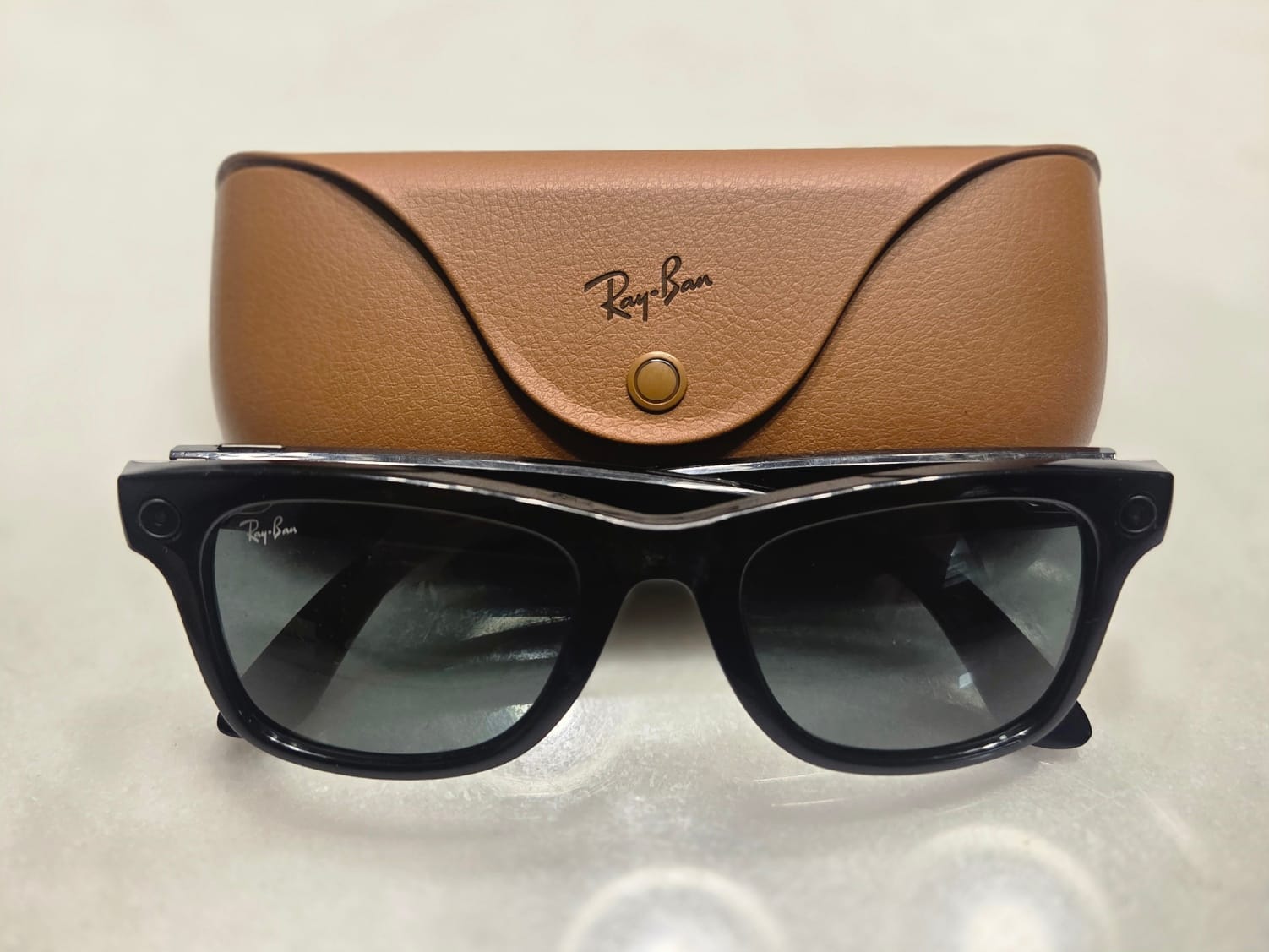
Be My Eyes also works on smart glasses. In March 2026 it announced two new features for Meta Ray-Ban and Oakley glasses: private group calls with trusted contacts, and hands-free voice access to company support lines such as Microsoft’s.
Impact
Nearly all the numbers on Be My Eyes come from the company itself.
On November 23, 2026, the live counter on the company’s website showed 1,127,939 blind and low-vision users and 11,479,048 volunteers, in more than 150 countries and 180 languages. The foundation’s website showed lower figures the same day: 1,076,565 users and 10,773,460 volunteers. Neither site says what its counter measures; the totals look like running counts of sign-ups, not of people who use the app every week.
In March 2026, CEO Mike Buckley told Double Tap, a show where blind people talk tech, that the app had passed one million users and ten million volunteers in 163 countries, with about 16,000 new users joining each month. In 2023 the company counted 6.9 million volunteers.
The foundation’s website says blind people have asked for AI descriptions 100 million times “this year alone,” without giving dates. We could not check that figure.
Independent research is thin. A 2024 study followed 14 visually impaired people using tools “like Be My AI.” Participants used them for household, spatial and social tasks. The researchers found the tools were not goal-oriented, and they called for more reliable, real-time help. We found no published accuracy test of Be My AI itself.
People
Wiberg’s idea took off fast: 10,000 volunteers signed up within 24 hours of the 2015 launch. Buckley credits him with having “dented the universe”.
The volunteers, more than ten million by the company’s count, are the other half of the story, along with the blind users who tested Be My AI. One user, Aimee, said in a comment the company published in 2023 that she was “actually looking forward to organizing my closet because I won’t need human help”.
Be My Eyes is also a business. Its business arm sells accessibility services to companies, including support calls that blind customers can make by video, workplace programs and corporate volunteering. Its website features a case study on Microsoft’s Disability Answer Desk. Keeping the app “free for end-users” is one of its stated values.
The Be My Eyes Foundation was announced on March 12, 2026, at the 41st CSUN Assistive Technology Conference, run by California State University, Northridge. It is a US 501(c)(3) public charity, a tax-exempt nonprofit status. Its president, Bryan Bashin, said the aim is “to ensure that blind people everywhere have access to the best accessibility tools available,” whatever their location or their ability to pay. Its board is chaired by Mike Buckley, who also runs the company.
The foundation pledges it “will never charge the individual blind user.” Its six early priorities include more languages in the global south, simpler apps, including for deafblind users, blind people mentoring each other, and making sure future AI and computing costs never land on blind users. Live video AI description is an early goal, and it hopes to reach 50 million blind users by 2035.
The foundation is still building its board and a Founder’s Fund. Its website says it is “now seeking base funding” and expects to accept funding proposals from early 2027. Double Tap reported that it is “backed initially by Microsoft and OpenAI,” with no amounts given.
Why it matters
AI description now sits inside a free app with more than a million blind users by the company’s count. The foundation says keeping such services going at global scale “will require significant infrastructure and computing resources”. Buckley has warned of “a digital divide” if lower-income users end up with worse AI tools. The foundation is trying to make free access permanent, though it has not yet shown how it will pay for it.
What we could not confirm (9)
- How many people use the app today. The user and volunteer figures come from live counters on the company and foundation websites, read on November 23, 2026. The two sites show different numbers, neither says what exactly it counts, and neither shows active users.
- Who funds the foundation, and with how much. Double Tap reported initial backing from Microsoft and OpenAI. The foundation’s site lists no donors and says it is seeking base funding. We found no amounts.
- How independent the foundation is. Its board chair is also the company’s CEO, and its board is not yet complete. We could not confirm how money will flow between the foundation and the company.
- The “100 million descriptions” figure. It comes from the foundation’s website and has not been independently checked.
- How accurate Be My AI is. We found no independent test of Be My AI itself. A 2026 study of a similar AI description app (the study summary does not name it) found wrong answers in 22.2% of cases; it may not be about Be My AI.
- Which AI model runs Be My AI today. It launched on GPT-4; current sources do not say whether it has changed.
- The new smart-glasses features. Double Tap reported them as coming in March 2026; we did not confirm that they have launched.
- Privacy. The foundation calls Be My AI “completely private.” We did not check how photos are stored or used.
- The company’s business figures. Be My Eyes publishes marketing claims for its business services but no revenue figures.
FAQs (5)
What is Be My Eyes?
Be My Eyes is a free app for blind and low-vision people. It connects them by live video to sighted volunteers, and it includes Be My AI, which describes photos and answers follow-up questions.
Is Be My Eyes free?
Yes, for blind and low-vision users. The company earns money by selling accessibility services to businesses. The Be My Eyes Foundation pledges never to charge individual blind users.
What is the Be My Eyes Foundation?
A US nonprofit (501(c)(3) public charity) announced on March 12, 2026. It aims to fund free accessibility technology for blind people worldwide. Bryan Bashin is its president, and it is still raising base funding.
Can Be My AI make mistakes?
Yes. The company warns it can give wrong answers or describe things that are not there, and says it does not replace a white cane or guide dog. A human volunteer is one tap away.
How many people use Be My Eyes?
The company's website counter showed 1,127,939 blind and low-vision users and 11,479,048 volunteers on November 23, 2026. The counters do not show how many people use the app actively.
Sources (8)
Be My Eyes Foundation, home and Mission Impact pages, accessed November 23, 2026
Be My Eyes, home, About Us and Be My AI pages, accessed November 23, 2026
Be My Eyes, Business and press pages, accessed November 23, 2026
Be My Eyes, 'Announcing Be My AI,' September 25, 2023 (updated for Android)
Xie et al., study of visually impaired users of AI visual assistants, arXiv 2407.08882, 2024
Fact-checked against sources on November 23, 2026. Spot an error? Tell us.
This story supports