Problem
Bhadai Tharu remembers the time exactly: around 1 p.m. on January 6, 2004, a tiger attacked him and he lost the sight in his left eye. He is 59 now and chairs the Gauri Community Forest on the edge of Bardiya National Park, and he still speaks up for the animal. “Tigers have their role in the ecosystem, and both people and tigers should coexist,” he told Mongabay in October 2026.
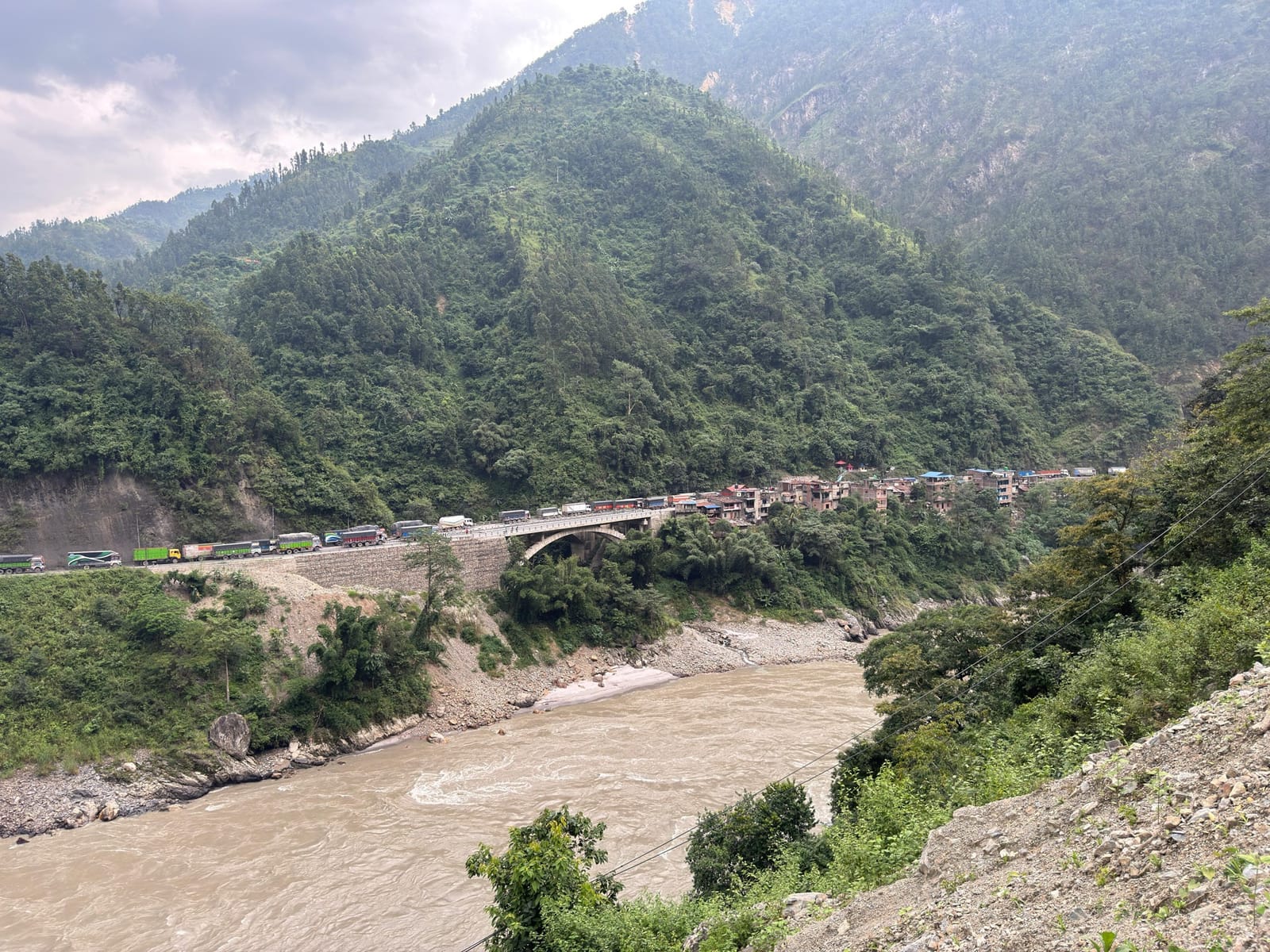
Families here go into the forests for firewood, fodder and fiddlehead ferns, and to graze livestock, in places that tigers, leopards, elephants and rhinos also use. “They keep pigs and goats, and their livelihoods depend on the forest,” Tharu said.
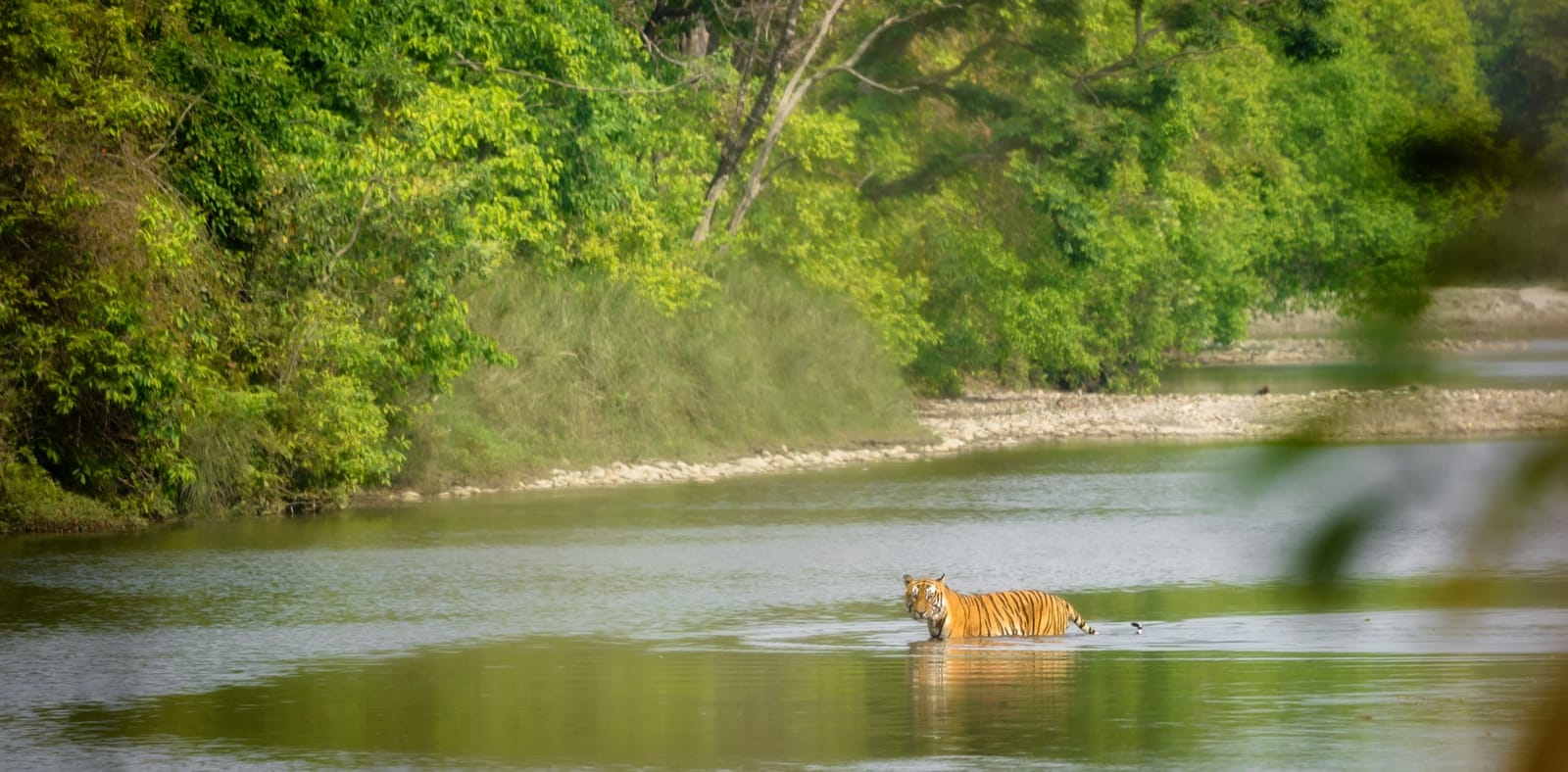
Nepal now counts a record 429 tigers, 112 of them in Bardiya. In two municipalities next to the park, tigers killed 18 people and injured 10 between 2019 and 2023, a 2025 study found.
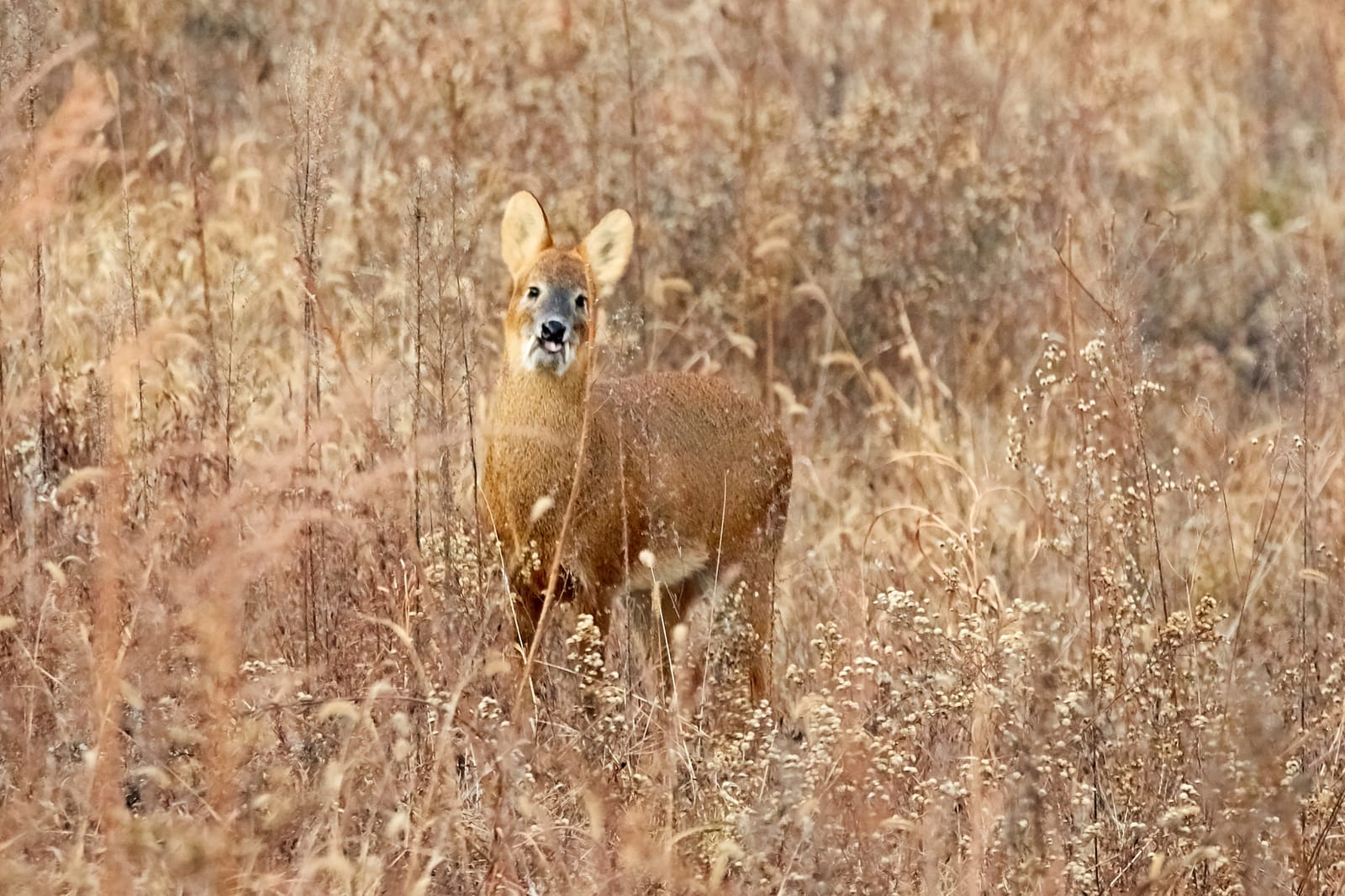
A tiger seldom gives itself away by sound, so people listen to its prey. “Footprints, scat, and alarm calls from deer, langurs, red monkeys all tell us that a tiger may be nearby,” Tharu said. Local nature guides, forest guards and residents commonly read these calls, says Ramjan Chaudhary, a field biologist with the Bardia Nature Conservation Club.
AI solution
“In many ways, we were teaching a computer to recognize something those people already understood.”Casey Anderson, US-based wildlife filmmaker who led the deployment, to Mongabay, October 2026
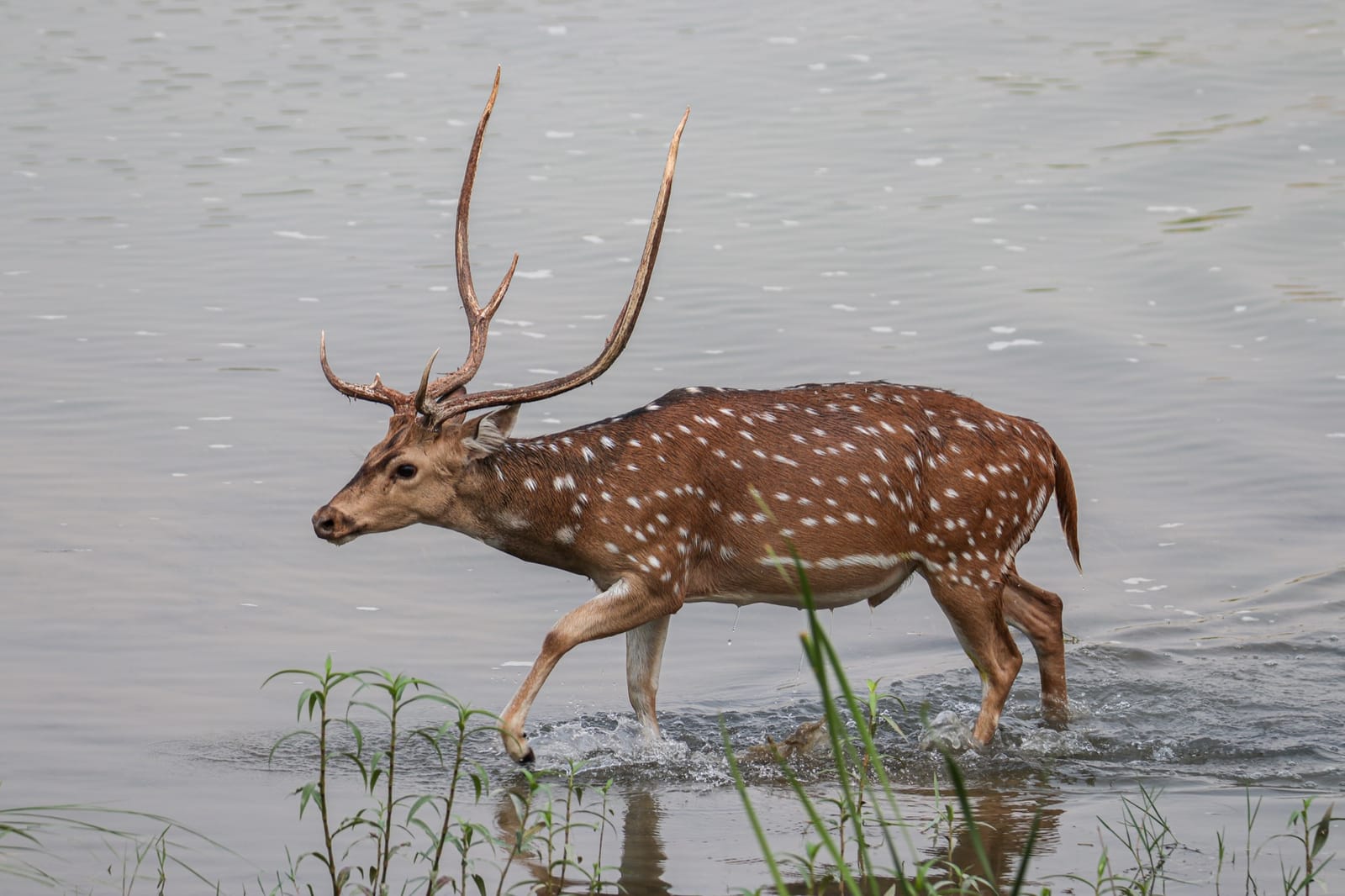
The team first approached deer and monkeys, sometimes wearing a fake tiger skin, to check that prey really do raise the alarm. Of 79 attempts, 30 were abandoned because the animals spotted the team setting up and slipped away silently. All 14 groups of chital deer, rhesus macaques and grey langurs that saw the “tiger” gave alarm calls. Without the costume, an animal called only once in 35 tries, a single short call from a chital.
Each sensor is an open-source recorder called CARACAL, run by a 20-watt solar panel with a backup battery. On board sits a tiny neural network, a kind of AI that learns from examples, with only about 1,000 adjustable settings, trained on 992 recorded chital alarm calls. Because it is small enough to run on a cheap chip, each sensor sends a short message instead of hours of sound.
How it works
- 01 Listen A solar-powered sensor in the forest listens for chital deer alarm calls with a tiny on-board AI model.
- 02 Relay A short message hops by radio between devices to a relay with a mobile link, then to a base station.
- 03 Map The base station draws a heat map of where a big cat may be, with older alarms fading over time.
Rangers could use the map to tell villagers which areas to avoid for now. From December 2024 to March 2025, ten sensors listened in Dalla Community Forest, next to the park.
Impact
The results come from the team’s own peer-reviewed study, published in February 2026 in Remote Sensing in Ecology and Conservation. The authors call the work “a proof of concept”.
They scored the detector with an F1 score, a number from 0 to 1 that rewards catching real calls and penalizes false alarms. It reached 0.91 on training recordings and 0.72 in the forest. At its most sensitive setting it caught 20 of 23 bouts of alarm calling. False alarms ran at 2.5 an hour at the best balance, and up to 4.1 an hour.
The field figures rest on a small sample. The sensors recorded about 11,000 hours of sound. Checking 10 percent of the daytime files by hand, the team found 360 chital alarm calls in ten one-hour files, and scored the detector on those ten files.
The authors spell out the limits. In over a third of attempts, animals fled without calling. The authors cannot say whether they had spotted the researchers or sometimes flee a predator silently, so the calls may underestimate the risk. Alarm calls cannot tell a tiger from a leopard, which the authors count as useful because leopards also hurt people. The relay shut down around midday every day, probably from overheating, and the monsoon was never tested. False alarms must come down, they write, or the people watching the alerts may start to tune them out.
Thenghchu Tharu, 60, a forest guard who helped monitor the pilot in Dalla, compared the alerts with signs on the ground. “It matched exactly,” he told Mongabay. “We would tell people there is a tiger there and not to go because it could be dangerous.” That is one person’s account. No study or report shows that the system prevented an attack.
“As the initial project’s resources began to run out, we weren’t able to establish the local staffing and university involvement necessary to keep it operating,” Anderson said. The equipment went to India, where the team could keep developing the idea. “We expected it would still be implemented, but it never happened,” Bhadai Tharu said.
Sabnam Pathak, information officer at Nepal’s Department of Forests and Soil Conservation, is more cautious: new conservation technologies, Pathak said, should be deployed only “after a thorough study”.
People
Arik Kershenbaum of the University of Cambridge led the 10-author study, with Angela Dassow of Carthage College in Wisconsin, both part of the Bioacoustics Research Group, which studies animals through sound. Co-authors also came from the universities of Oxford and Lincoln, the Zoological Society of London (ZSL) and VisionHawk Films, the Montana film company Anderson works with.
Ramjan Chaudhary of the Bardia Nature Conservation Club co-wrote the paper and helped run the fieldwork. He says local people were “enthusiastic about seeing this new technology in action”. The paper also thanks two local rangers, Thengchu and Sukhna. The Big Cat Initiative of the Great Plains Foundation paid for the work.
Shyam Kumar Thapa, a program manager at ZSL Nepal, worries most about deadly attacks and the revenge killings of tigers that can follow. Tools like this, he told Mongabay, could help people act before danger instead of after.
Anderson puts the AI in a supporting role: “It’s artificial intelligence helping us listen more effectively to the natural intelligence that has always been there.”
Why it matters
With a record number of tigers in Nepal, the people who depend on the forest share it with more big cats. This pilot showed that a $60 sensor can learn a warning sign villagers have trusted for generations, and its authors were open about its limits. Whether it keeps anyone safer will depend on local staff, steady funding and a test that measures what happens to the people who walk into the forest.
What we could not confirm (6)
- Whether the system prevented any attack or encounter. Neither the study nor Mongabay reports such data.
- Whether villagers got warnings regularly during the pilot. Thenghchu Tharu describes telling people to stay away, but the study does not report villagers using the maps. The funder’s undated blog says local people use the maps to decide where to go; the peer-reviewed paper and Mongabay do not say this.
- Where in India the equipment went, whether testing continues there, and who funds it.
- Any plan or funding to restart in Nepal. The funder’s blog mentions training researchers with Tribhuvan University in Kathmandu, but Anderson told Mongabay the team could not establish the university involvement it needed.
- The formal role of the community forest user groups that manage Dalla and nearby forests. No source describes it.
- How accurate the detector is across the whole recording, beyond the ten one-hour daytime files used to score it, and in the monsoon season.
FAQs (5)
How does the AI know a tiger is near?
It does not hear the tiger. A tiny AI model on each solar sensor recognizes the alarm calls chital deer make when they see a predator, and the system maps where those calls happen.
How accurate was it?
In the forest, it scored 0.72 on a 0-to-1 scale (F1) and caught up to 20 of 23 bouts of alarm calling, with 2.5 to 4.1 false alarms an hour, according to the team's 2026 peer-reviewed study.
Did it stop tiger attacks?
No one has shown that. The study tested whether the sensors could detect alarm calls, not whether attacks went down.
Is it still running in Nepal?
No. The three-month pilot ended in March 2025, and in October 2026 Mongabay reported that the equipment had moved to India after the project's resources ran out and the team could not set up local staffing and university involvement.
How much does a sensor cost?
About $60 each, according to the study, running on a 20-watt solar panel.
Sources (4)
Fact-checked against sources on October 30, 2026. Spot an error? Tell us.
This story supports