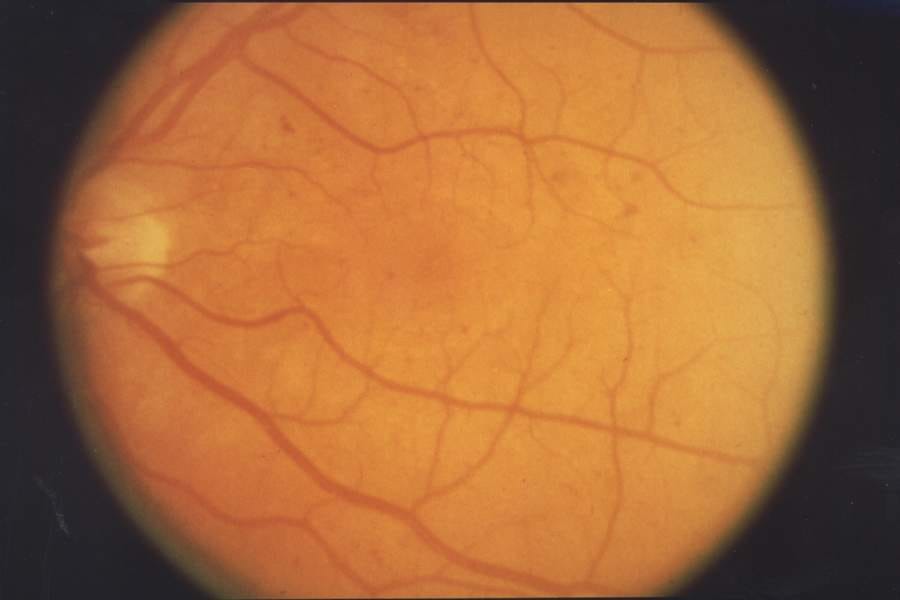
Problem
One night in an emergency department, a medical student watched a 65-year-old man with stomach pain being sent home. The man died the next day. That student went on to found Curans, and he tells the story in the first person on the company’s profile on VC4A, a startup network. He writes that he does not blame the doctor, but he still wonders whether the death could have been prevented if the doctor had seen a similar case before.
Medical students read a great deal, yet they get few chances to make real decisions about real patients, because practicing on people carries risk. In its entry for the 2026 report of the International Telecommunication Union (ITU), Curans points to research on this gap. One study it cites, published in 2025, surveyed 300 medical students in Brazil: 73% had received some teaching on breaking bad news, but only 17% felt prepared to do it.
His answer borrows from aviation: “So, just as pilots use simulators to practice flying, we are teaching medical students how they should treat their patients with our virtual patient simulator, powered by AI.”
AI solution
Curans began in November 2021 as a “virtual clinic” idea from two third-year medical students at the University of Jordan, Abdullah Hamdan and Taha Nidal al-Nabresi, according to a 2022 profile in the Jordanian daily Al Ra’i. Hamdan said the name comes from the Latin for “doctor”.
Today it is a web platform. A student opens a case and talks to an AI patient: they ask about the complaint and the history, examine, order tests, reach a diagnosis and decide on treatment. An algorithm scores each step and explains the mistakes.
The AI patient runs on a GPT-based language model, the family of AI behind ChatGPT, which the team has fine-tuned and steers with written instructions and structured case logic. A 2025 company profile says it is hosted on Microsoft’s Azure OpenAI service. Voices come from ElevenLabs, and Twilio, a phone service, carries simulated calls.
The calls are for difficult conversations. Curans says students can practice breaking bad news and handling phone calls from stressed colleagues, and that the platform scores these conversations as they happen; that is the company’s own description.
For teachers, Curans offers a case editor, tracking of each student’s performance and an exam mode for the Objective Structured Clinical Examination (OSCE), a practical exam. An instructor builds a checklist, enters a student’s ID and starts a timer; each student then gets a score, a list of missed steps and feedback.
The platform works in English and Arabic, and it supported French in the past. For students paying on their own, there is a free tier with ads and two trial cases, a $10 plan with 25 cases and a $15 plan with 60.
Impact
Curans is a live, deployed product: anyone can sign up, and students can buy case packs today. The ITU report lists its status as operational.
In that entry, Curans reports 35,000 registered users, two paid pilots and two more in the pipeline. On September 13, 2026, Hamdan wrote that Curans “now has more than 35,000 learners”. Both figures come from the company, so they count as one claim, not two. Curans has not said which institutions run the pilots.
The World Summit Award lists Curans as a 2025 winner in its Learning and Education category, and a 2025 company profile in TechNVST, a startup directory, lists Curans in a Microsoft and Nvidia startup cohort.
We found no study of whether students who practice on Curans gain skills, confidence or better exam results. The website says students who practice first feel more confident, but it does not show data. We also found no published testing of how accurate or safe the AI patients are.
People
Hamdan is now a medical doctor and describes himself as the founder of Curans. Back in 2022, as a student, he told Al Ra’i that the aim was to train students on international guidelines so they would make fewer medical errors and order fewer unnecessary tests. At the time he called the project “in its first stages” and hoped to launch it officially at his own medical school, then at other universities.
The University of Jordan backed the idea early. The project won third place in a competition for public universities and the second-largest grant from the university’s Innovation and Entrepreneurship Center. A 2023 company pitch deck says the university’s Queen Rania Center for Entrepreneurship and Jordan’s National Center for Innovation incubated it.
Enad Abu Zaid supports technical development. The World Summit Award entry also names Dr. Zaher Ashour and Mohammad Malhas as producers, without giving their roles.
Why it matters
Every doctor makes a first diagnosis and delivers bad news for the first time at some point. Curans, started by students at a public university in Jordan and with paid plans of $10 to $15 for 25 to 60 cases, lets students try those moments with an AI patient before they meet a real one. The platform is live and people are signing up. Curans has not yet shown that students who use it become better doctors.
What we could not confirm (12)
- Any evidence that students’ skills, confidence or exam scores improve with Curans. We found no study.
- The 35,000 figure. It comes only from Curans, which calls it “registered users” in one place and “learners” in another. We could not confirm how many people use the platform regularly, or how many are in Jordan.
- Which universities run the two paid pilots. The University of Jordan appears on the Curans site as a logo, with no detail.
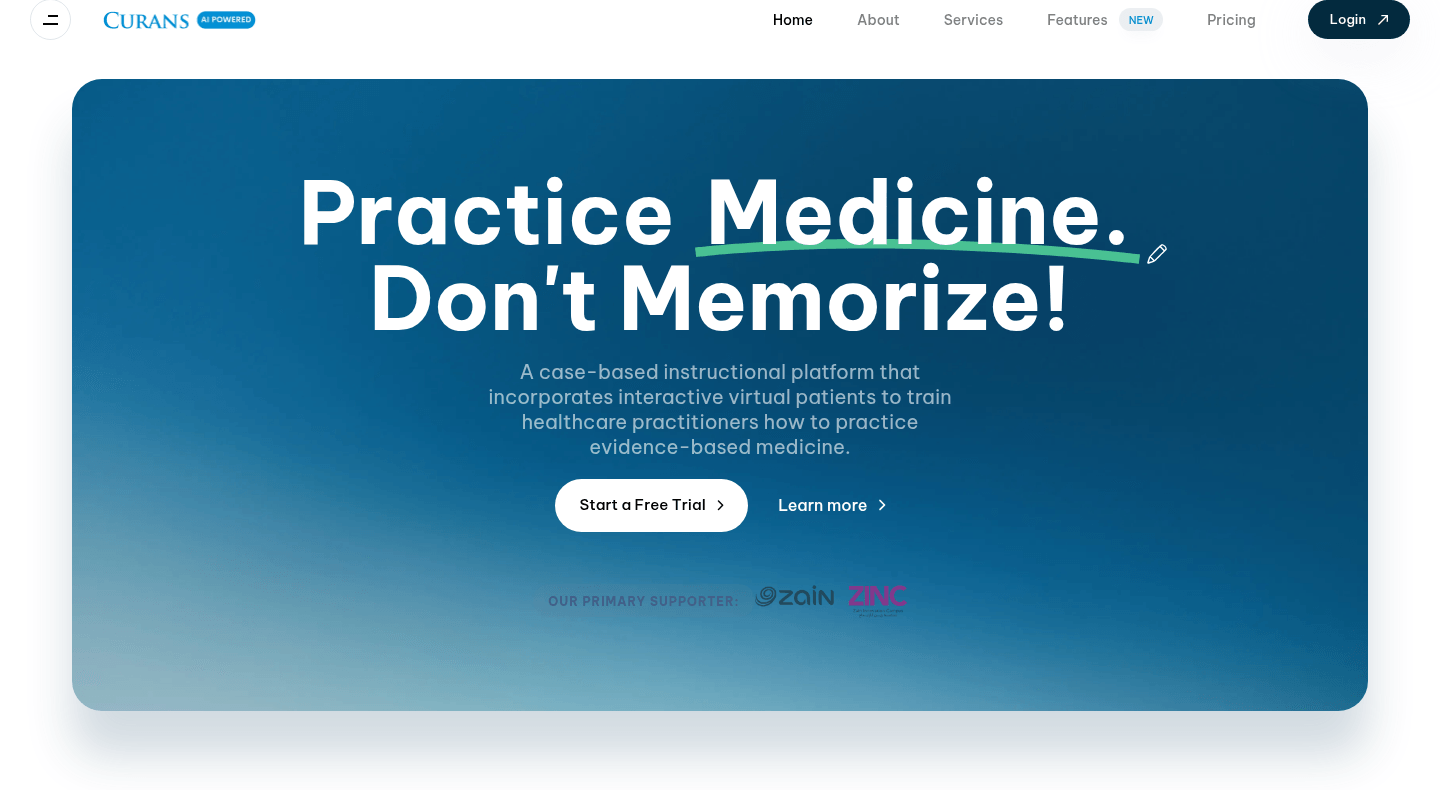
- What the logos on the Curans homepage (including the telecom company Zain, labeled “Our primary supporter”, and ZINC, the Zain Innovation Campus) mean today: funding, sponsorship or past incubation.
- Whether the $10 and $15 plans are one-off case packs or subscriptions. The pricing page does not say, and also states “Free for a limited time.”
- How accurate and safe the AI patients are, and whether doctors review each case. We found no published testing.
- The founding date. A 2022 newspaper profile says the idea began in November 2021; a 2025 company profile says Curans was founded in 2023. We say it started in 2021.
- Which company hosts the AI model. The ITU entry describes a fine-tuned OpenAI GPT-based model; a company profile says Azure OpenAI. Both can be true.
- Whether the Curans phone apps are live. The site mentions phone apps, but an App Store link we found returned an error on 2026-11-01.
- Whether the 2025 World Summit Award was a national or a global prize. The award page lists the category as Learning and Education, while its description text mentions the Health and Well-Being category.
- The founder’s emergency department story. It is his own account, with no date or place, and the VC4A page does not name which founder wrote it.
- We could not reach a student or teacher who uses Curans.
FAQs (5)
What is Curans?
Curans is a startup from Amman, Jordan, that runs a web platform of AI virtual patients for medical students. Students take a case from the first complaint to diagnosis and treatment and get feedback on each step.
How does Curans use AI?
A fine-tuned GPT-based language model plays the patient and answers students' questions. The platform scores each step, and voice and phone tools let students practice difficult conversations, such as breaking bad news.
Who started Curans?
Two third-year medical students at the University of Jordan, Abdullah Hamdan and Taha Nidal al-Nabresi, launched the idea in November 2021. Hamdan, now a medical doctor, describes himself as the founder.
How much does Curans cost?
Students can start free with ads and two trial cases. Paid plans cost $10 for 25 cases or $15 for 60 cases, according to the Curans pricing page in November 2026. Universities can use a case editor and an exam mode.
Does it work?
Curans says more than 35,000 people have signed up and that it has two paid pilots. No study has yet shown whether students learn more with it.
Sources (11)
ITU, AI for Good Innovate for Impact Interim Report 2026, use case AI Virtual Patients for Safer Medical Training (Curans)
Curans, homepage, seen 2026-11-01
Curans, Features page, seen 2026-11-01
Curans, Pricing page, seen 2026-11-01
Al Ra'i (Sana al-Shobaki), profile of the virtual clinic, in Arabic, 2022-03-07
VC4A, venture profile: Curans, 2025
World Summit Awards, Curans, 2025 winner, Learning and Education
TechNVST Community, Curans profile (Microsoft and Nvidia cohort), 2025
Manifund, Using AI to find testable medical research questions (Abdullah Hamdan), 2026-09-13
Fact-checked against sources on November 1, 2026. Spot an error? Tell us.
This story supports