Problem
Dr. Selwa Al-Hazzaa is an ophthalmologist, an eye doctor, who has practiced for decades. In 2024 she told Arab News: “By the time many patients come to me, it’s already too late and they’re blind.”
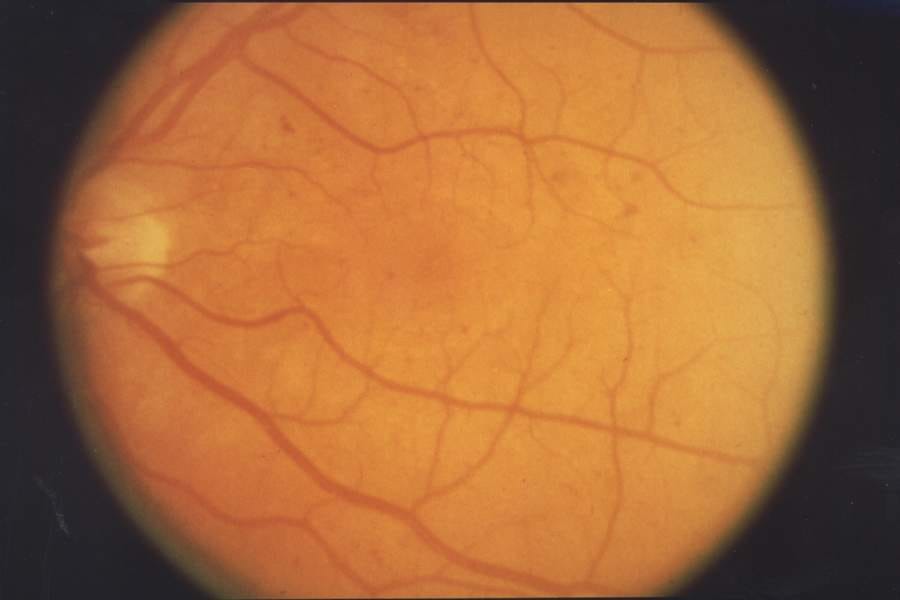
The condition she means is diabetic retinopathy, damage to the retina caused by diabetes. It usually causes no symptoms until harm is done, so regular screening is how sight is protected.
In Saudi Arabia, many people with diabetes miss that check. In 2024 Arab News cited a World Health Organization estimate of 7 million people with diabetes in the country, and an estimate that only about 24% had been screened for diabetic eye disease. A 2026 profile put the number of adults with diabetes at 5.3 million and said studies suggest a quarter to half of them skip annual retinal screening.
Diabetes clinics seldom have an ophthalmologist. Before SAARIA, Al-Hazzaa said, retina photos taken in a clinic were saved until an eye doctor visited, maybe once or twice a month.
AI solution
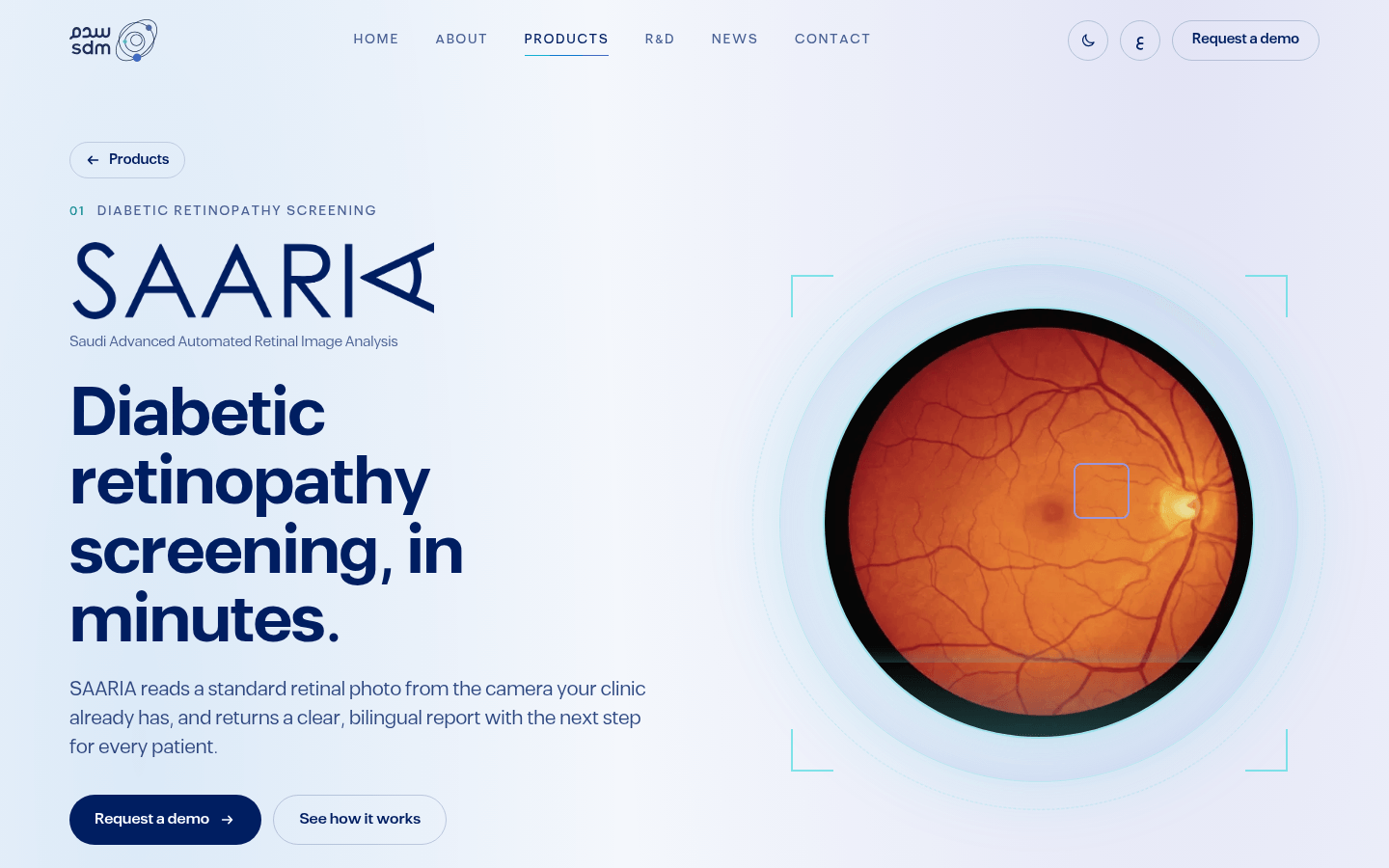
SAARIA, short for Saudi Advanced Automated Retinal Image Analysis, moves that first reading into the clinic. A trained technician takes a photo of the retina with a fundus camera, the kind of eye camera many clinics already own. The image travels over a secure cloud connection to the AI, and a report comes back within minutes.
The software uses deep learning, a type of AI that learns patterns from large numbers of example images, to spot signs of disease. It checks each eye on its own for diabetic retinopathy and for diabetic macular edema, a swelling at the center of the retina that threatens sharp vision. SDM says the model was trained on data from Saudi patients.
The report, in Arabic and English, ends with one of three next steps. If the AI finds no sign of disease, the person comes back in 12 months. If it finds signs of severe disease or swelling, it recommends an urgent referral to an eye specialist. If the photo is too blurry to grade, it says so and recommends a referral, “rather than guessing,” in the company’s words.
“It is totally run by technicians, photographers, nurses, even primary care physicians,” Al-Hazzaa said. The tool does not make the final diagnosis. The SFDA describes SAARIA as a clinical support tool that helps find patients who may need a specialist, and warns against relying on its output alone.
Impact
On September 10, 2026, the SFDA announced that it had granted SAARIA marketing authorization after reviewing its technical documentation and clinical evidence. SDM went through the regulator’s Innovative Medical Devices Pathway, ran local clinical studies in Saudi Arabia, and committed to following the tool’s performance after launch. The SFDA called SAARIA and a dental tool, Dental IQ, the first Saudi-developed AI medical software in ophthalmology and dentistry to receive this authorization. The regulator did not publish accuracy figures.
The usage numbers come from the company, and they have grown over time. In May 2024 the founders said SAARIA had been used for more than 30,000 patients in more than 13 centers over two years, sometimes more than 150 people in a day. At the LEAP technology conference in Riyadh in 2026, Al-Hazzaa said it had screened more than 70,000 people with diabetes in various regions of Saudi Arabia. None of these figures comes with a counting method.
Accuracy is also self-reported. In 2024 Al-Hazzaa said SAARIA found over 95% of cases with disease, a measure called sensitivity, compared with 93% for Al-Hazzaa herself. SDM’s website now states above 90% sensitivity, specificity (correctly clearing people without disease) and accuracy. We found no published study behind either figure.
The founders say screenings run with their charity partners are free for patients. SDM works with charity associations and health providers to reach places such as Jizan, Hail, Rafha and Tabarjal. “Everything is free. No one pays anything,” co-founder Naif Al-Obaidallah said in 2024. SDM also worked with Saudi Arabia’s Council of Health Insurance to create a billing code for AI screening that hospitals and insurers can use.
In September 2026 SDM announced an agreement, signed at the LEAP conference, with Dr. Soliman Fakeeh Hospital to use SAARIA for eye screening there. In October it announced an agreement with Visiora to bring it to more patients.
People
Al-Hazzaa left hospital work to build the company with her son, Naif Al-Obaidallah, who came from investment banking and government advisory work and is now the company’s managing director. The company’s Arabic name, سدم, means “nebulae”.
SDM (Saudi Digital Medicine) has about 50 employees, according to a 2026 profile, and many of them are women. Supporters named by the founders include NEOM, Saudi Arabia’s Ministry of Communications and Information Technology, King Abdullah University of Science and Technology (KAUST) and the telecom company stc.
Al-Hazzaa sees the AI as help for eye doctors. “It’s going to augment physicians, not replace them,” she said at the World Economic Forum in Davos in January 2026. With routine checks done in clinics, she said, “We can now give doctors the patients who need surgery on a silver platter.” She also described the company’s priorities: “We look at it as a service first, business second.” SDM is a commercial company, and her son has said openly that it aims to be commercialized and become a viable business.
Why it matters
Diabetic eye disease does its damage before people notice it, and in Saudi Arabia many people with diabetes still miss their yearly eye check. SAARIA lets clinic staff do the first reading on the spot, and it has passed a national regulator’s review. A published study of how well it performs would let others judge it too.
What we could not confirm (9)
- How many people SAARIA has screened. The company has given different figures: more than 30,000 patients (May 2024), “saved the sight of 40,000 patients” (January 2026) and more than 70,000 screened (2026). All are company-reported, and none says how people were counted.
- How accurate it is. Claims of over 95% sensitivity (2024), over 96% sensitivity (attributed in search summaries to a World Economic Forum video from October 2026, which we could not view) and above 90% sensitivity, specificity and accuracy (company website) come from SDM. We found no peer-reviewed study, and the SFDA did not publish the results of the local clinical studies.
- When it was first approved. In 2023 Al-Hazzaa said the company had already received “Saudi FDA approval.” The SFDA itself announced marketing authorization on September 10, 2026. We use the SFDA date.
- Who pays for the free screenings, and whether patients outside charity programs, for example at partner hospitals, pay. The free service is reported by the founders, and SDM has also helped create an insurance billing code for AI screening.
- The year SDM was founded. Arab News (2024) and a 2026 profile say 2018; the company’s website says 2019.
- How many of SDM’s staff are women. A 2026 profile said about 90%; Al-Hazzaa told Arab News in January 2026 that it was 36%.
- When the Dr. Soliman Fakeeh Hospital agreement was signed. SDM says it was signed at LEAP 2026 and announced it on September 8, 2026.
- What the Visiora agreement covers. SDM’s announcement gives no details.
- We found no patient or independent clinician speaking about using SAARIA.
FAQs (5)
What is SAARIA?
SAARIA is AI software from the Saudi startup SDM that reads photos of the retina and flags signs of diabetic retinopathy and diabetic macular edema. It returns a report in Arabic and English within minutes, with a next step for each patient.
Is SAARIA approved in Saudi Arabia?
Yes. The Saudi Food and Drug Authority announced marketing authorization on September 10, 2026, after reviewing technical documents and clinical evidence from local studies. It is authorized as a clinical support tool, not a replacement for a doctor.
How accurate is SAARIA?
SDM says its sensitivity, specificity and accuracy are above 90%. These figures are company-reported; no peer-reviewed study has been published.
Who can use it?
Trained technicians, nurses and primary care doctors in diabetes clinics, hospitals and community screening programs. They take a retina photo with an existing fundus camera, and SAARIA reads it.
Is screening with SAARIA free?
The founders say screenings run with charity associations and health providers are free for patients. We could not confirm who pays for them.
Sources (9)
SDM, SAARIA product page and home page, accessed November 6, 2026
Arab News, From Riyadh to orbit (interview at Davos), January 20, 2026
CairoScene, SDM is Decoding the Body's Secrets Through the Retina, February 14, 2026
Startup Researcher, SDM Screens 70,000 Diabetic Patients With AI Eye Platform, 2026
World Economic Forum, AI detects eye disease (video), October 27, 2026
Fact-checked against sources on November 6, 2026. Spot an error? Tell us.
This story supports