Problem
Moses Eyaru, a radiographer at Bududa Hospital, works in a district of steep hills. In 2024 he described the X-ray kit he takes to villages: “The tools are portable and solar-powered. The backpack weighs about 35 kg and can be transported by car, boat or motorcycle” (Gavi VaccinesWork).
About 250 people in Uganda fall ill with TB every day, and about 30 die of it, the Ministry of Health said in December 2025. In March 2026 it estimated about 96,000 cases a year, nearly 30,000 of them undiagnosed or unreported.
The usual first check, asking about a cough and other symptoms, can miss up to half of cases, experts said, the newspaper New Vision reported. “Traditional screening methods are inefficient. Many people are only diagnosed when the disease has already advanced,” said Dr Henry Luzze, assistant commissioner at the National Tuberculosis and Leprosy Program (NTLP).
AI solution
“Ordinarily you require an expert or a radiologist to interpret an X-ray image, but with artificial intelligence, the programme will interpret the image,” Dr Deus Lukoye of the US Centers for Disease Control and Prevention in Uganda said in 2024.
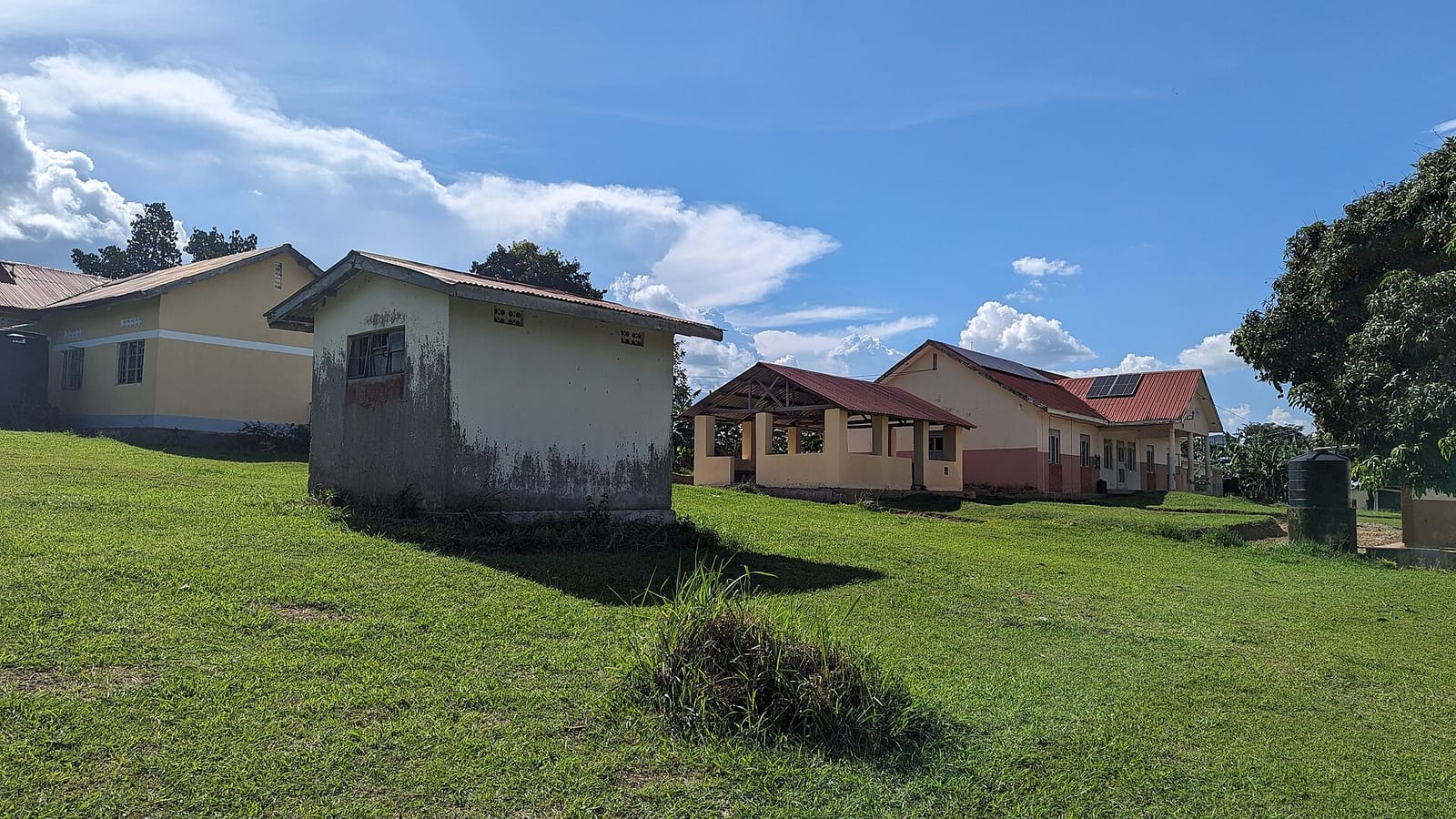
Village health teams spread the word before a screening day. A radiographer, a clinician, a TB nurse and a lab technician then set up in a village hall, a church or a health center. Each person gets a chest X-ray, and within seconds computer-aided detection software scores the image for signs of TB. People it flags give a sputum sample (mucus coughed up from the lungs) for GeneXpert, a molecular lab test that confirms TB, and those who test positive are referred and started on treatment. The software decides who gets the test, and the lab test usually confirms the diagnosis. When the test misses TB, clinicians can still start treatment based on the X-ray and symptoms.
How it works
- 01 X-ray A team sets up a portable digital X-ray in a village hall, church or health center and takes a chest image of each person.
- 02 AI read Software scores each image for signs of TB within seconds.
- 03 Lab test People flagged give a sputum sample for a GeneXpert test, and those who test positive are referred and start treatment.
“Because we are using AI to interpret the images, we can screen more than 150 people in a day,” said Dr Aldo Burua, who coordinates X-ray services at the NTLP. Teams focus on groups at higher risk, such as household contacts of TB patients, people living with HIV, refugees and prisoners.
The 2024 backpack kits ran CAD4TB software from Delft Imaging. The 14 units added in December 2025 pair hardware from MinXray, a US company, with software from Qure.ai, a company based in India.
Some teams travel in vans that carry both an X-ray and a GeneXpert machine, so people get their results on the spot, Health Minister Jane Ruth Aceng said in March 2026.
Impact
In 2024, Uganda had 22 digital X-ray systems: five vans and 17 backpack kits. The US government provided 48 more units in 2025, for 65 in total, and on December 15, 2025, the ministry commissioned 14 more along with mobile clinics. That brought the country to 95 mobile X-ray and AI platforms, covering more than half of all districts, the US ambassador said at the event.
Officials report results, and the figures differ by source:
- The 65 US-supported units “have already helped screen over 150,000 people and identify more than 4,600 TB cases,” the ambassador said in December 2025, without giving a time period.
- In March 2026 New Vision reported that AI-supported systems screened more than 190,000 people between 2021 and 2025. About 30% showed abnormalities, and more than 6,000 people were confirmed to have TB after further testing.
- The 14 units from December 2025 screened more than 14,000 people and found 237 TB cases, and 83% of those diagnosed started treatment, according to the October 2026 launch reported by Nile Post.
In a research trial in eight communities on the edges of Ugandan towns, 49,452 people had a valid AI-read X-ray. The AI flagged 15.2% of them, and 89.8% of those flagged gave a sputum sample.
The software scores each X-ray, and a cut-off score decides who gets a lab test. In a 2023 analysis of 15,375 people screened with Qure.ai’s qXR software, the maker’s standard cut-off of 0.5 caught an estimated 75.8% of TB cases. With a lower cut-off for men (0.35) and a higher one for women (0.8), the estimate rose to 81.3%, and false alarms stayed at about the same rate. Separate cut-offs by age did not help. These are modelled estimates from a conference abstract.
On October 30, 2026, the Joint Medical Store (JMS), a Ugandan medical supplier, launched 10 portable systems for private health facilities, a US$1 million program supported by the US Department of State. Half of each unit’s revenue stays with the facility, 10% pays for insurance, and 40% goes into a revolving fund that JMS manages. The fund buys new units at cost, and JMS projects 10 to 11 more systems over seven years.
People
The work depends on field teams like Eyaru’s and on the village health teams who bring their neighbors to be screened.
“When we bring services closer to communities, especially those that are underserved, we reduce delays and save lives,” Dr Diana Atwine, permanent secretary of the Ministry of Health, said in December 2025. At the JMS launch she said the ministry would be interested in studying whether the clinic model is affordable and sustainable.
Dr Bildard Baguma is executive director of JMS. The ministry, JMS and four Medical Bureaus chose the 10 facilities: three Catholic, three Protestant, two Muslim, one Orthodox and one private for-profit. Private not-for-profit facilities deliver about a third of Uganda’s health services. “This is trade over aid in practice,” said Jessica Healey, acting deputy chief of mission at the US Embassy.
Dr Peter James Kitonsa of the Uganda Tuberculosis Implementation Research Consortium (Walimu) led the paper on sputum collection, from a trial run with Makerere University and Johns Hopkins. More than 51,000 people agreed to take part in it. In 2024 he said he wants screening for children expanded.
Why it matters
Uganda has taken AI screening for TB to more than half its districts, though its official numbers are hard to line up. The clinic fund will show whether the program can grow on its own revenue. As one NTLP official put it, “Diagnostics must be linked to treatment, follow-up and strong community engagement. Without that, cases will still be missed.”
What we could not confirm (9)
- All program results are official and self-reported. We found no independent evaluation of how many TB cases the national program has found, or how many people flagged were tested, confirmed and treated.
- The two screening totals do not match: over 150,000 screened and 4,600 cases (US Embassy, December 2025, no time period) and over 190,000 screened and 6,000 diagnoses for 2021 to 2025 (New Vision, March 2026, source of the figure not named). They may cover different systems or years.
- Results for the 14 units are given for “October 2025 to April 2026”, but the units were commissioned on December 15, 2025.
- The split of the 95 platforms is not stated. 65 plus 14 makes 79 X-ray units, so the total likely includes mobile clinics.
- Sources give different yearly case counts for Uganda: about 96,000 with nearly 30,000 undiagnosed or unreported (ministry, March 2026), and about 90,000 with about 8,000 undiagnosed (New Vision, May 2026).
- We do not know whether the national program uses separate cut-offs for men and women.
- We do not know who pays the fees that feed the clinic fund (patients, insurers or programs), or what a screening costs a patient.
- Our field quotes are from 2024, when teams used different software. We could not find health worker or patient voices from 2025 or 2026.
- A reported US pledge of 110 more mobile units appeared only in a search summary, so we left it out.
FAQs (5)
How does AI help find tuberculosis in Uganda?
Portable digital X-ray units take a chest image, and software scores it for signs of TB within seconds. People it flags give a sputum sample for a lab test that confirms TB, and those who test positive start treatment.
How many people has it screened?
Officials report more than 150,000 people (US Embassy, December 2025) and more than 190,000 between 2021 and 2025 (New Vision, March 2026). These figures are self-reported and may cover different systems or periods.
Does the AI diagnose TB?
No. It decides who should get a lab test. A molecular test (GeneXpert) usually confirms the diagnosis, though clinicians may start treatment based on the X-ray and symptoms when the test misses TB.
What is the clinic revolving fund?
Launched by the Joint Medical Store in October 2026, it places 10 AI X-ray units in faith-based and private clinics. Forty percent of the revenue goes into a fund that buys more units at cost.
Why use different AI cut-offs for men and women?
In a 2023 Ugandan study, a lower cut-off for men and a higher one for women raised the estimated share of TB cases caught from 75.8% to 81.3%, with a similar false-alarm rate.
Sources (9)
New Vision, AI-powered tools transform TB detection in Uganda, May 2026 (yearly case estimate only)
Qure.ai, Expectation vs. Reality of TB Active Finding, March 7, 2024 (vendor page)
Fact-checked against sources on November 4, 2026. Spot an error? Tell us.
This story supports