Problem
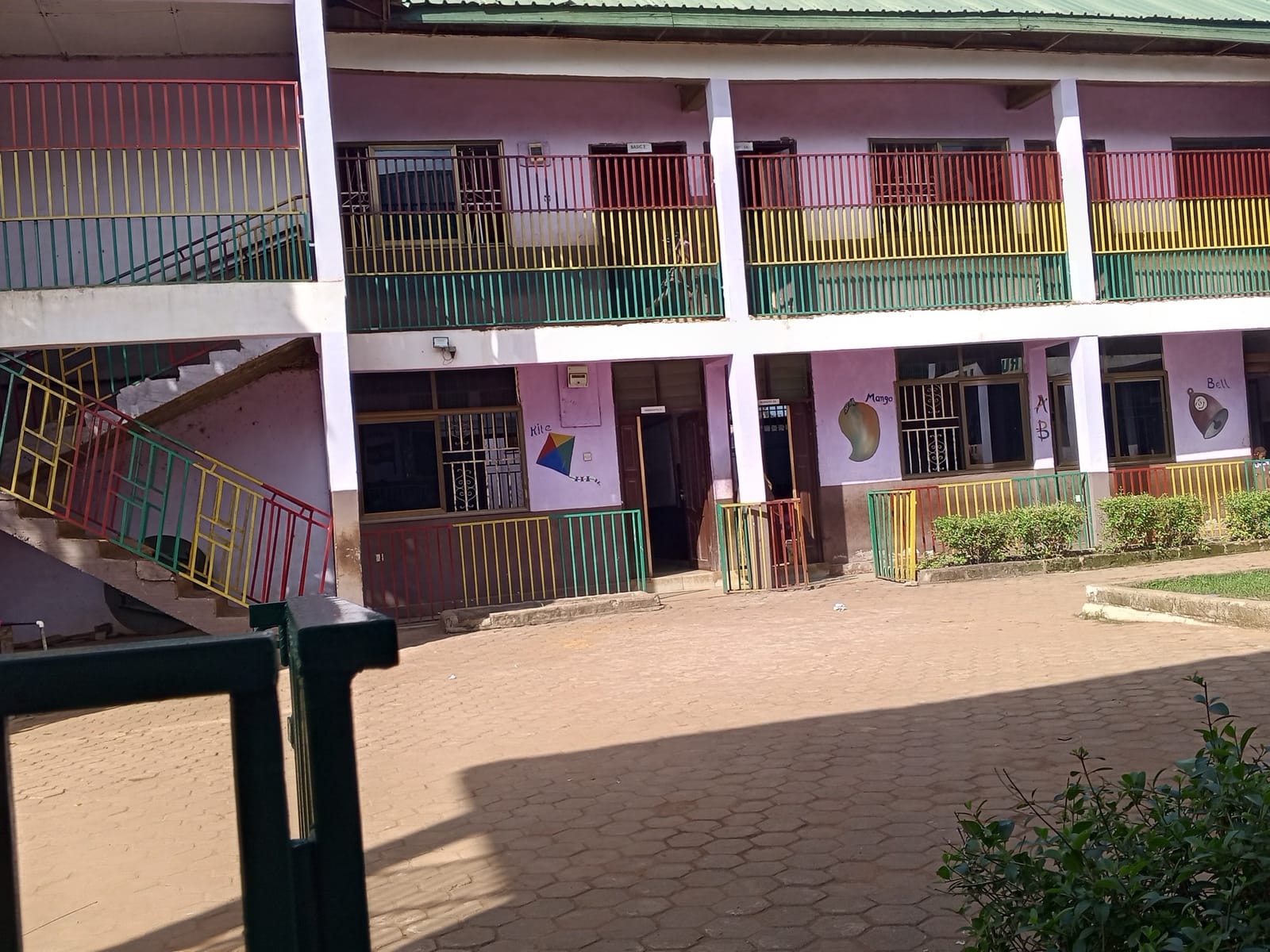
Twice a week in 2023, during study hall, students at five Rising Academies schools in Ghana picked up a phone handed out for the session and opened a chat. For 30 minutes, on their own, they worked through short math lessons with Rori. A teacher stayed in the room, but only to help with technical problems.
The study’s authors cite figures showing that fewer than 15% of students in Africa reach minimum proficiency in math by the end of middle school. Classes are big, and students get little feedback or one-to-one tutoring. Across Africa, schools are also badly short of teachers.
AI solution
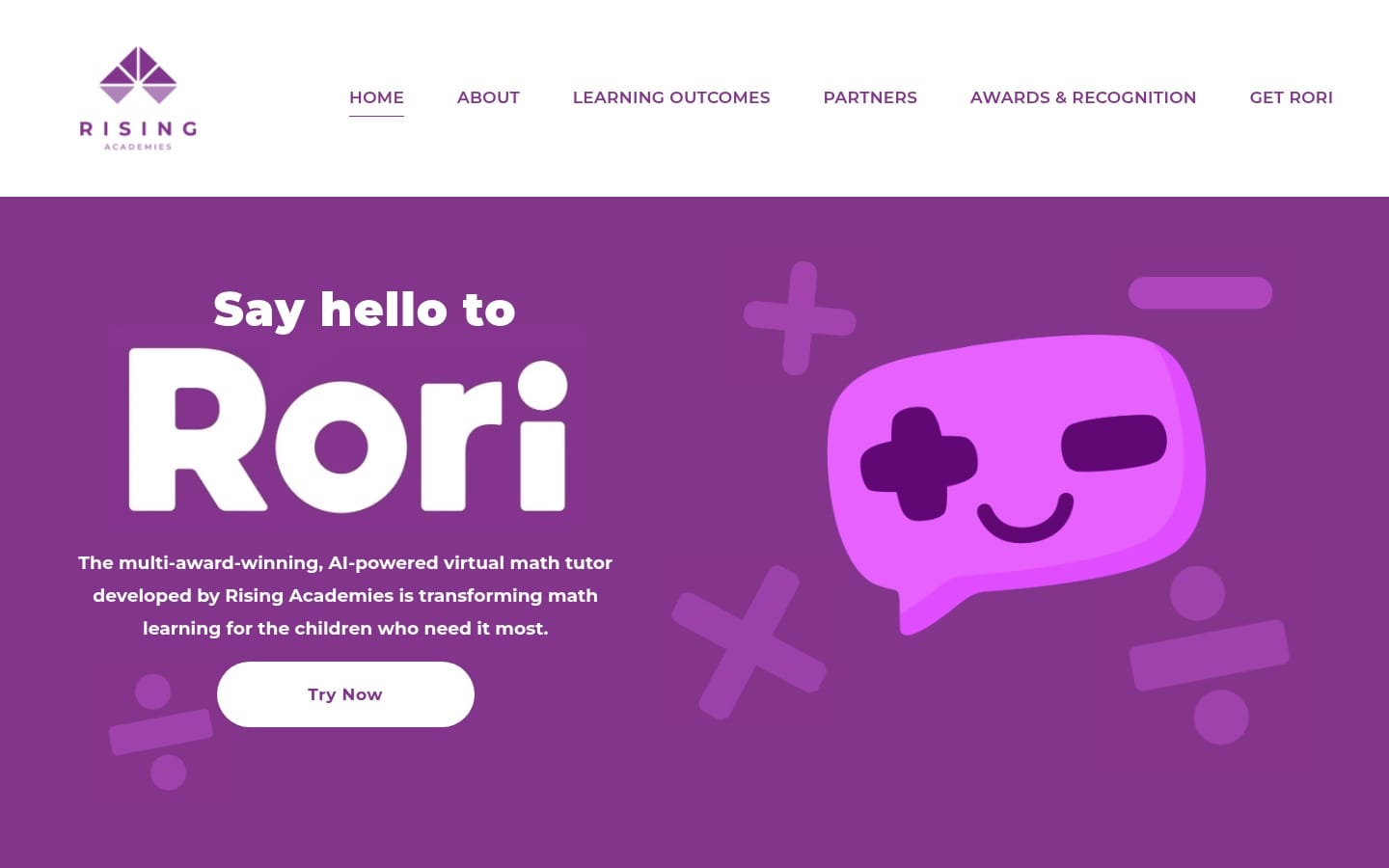
Rori grew out of the radio and text-message lessons Rising ran when COVID-19 closed schools. Today it lives inside WhatsApp. It is free to students, mostly text-based, and designed for basic smartphones and weak mobile networks.
The tutor has more than 500 short lessons, each on a single skill, based on the Global Proficiency Framework, a set of shared benchmarks for what children should know in math at each grade. Each lesson gives a brief explanation and then practice questions. When a student gets stuck, Rori offers a hint first, and only then a worked solution.
Math experts write the questions. The AI’s job is to make sense of what students type. “Students work through problems, they don’t paste a question and get an answer back,” said Hannah Horne-Robinson, Rori’s research and assessment manager. “Rori interprets what they wrote and gives feedback, and if they’re stuck, they get a hint first and a chance to try again.”
Large language models (the kind of AI behind chatbots) read students’ free-text answers and recognize correct ones written in different ways. When a student asks something off-topic, Rori uses a technique called retrieval-augmented generation, which grounds the AI’s reply in prepared material, and steers the student back to learning, with safety guardrails for young users. These details come from a case study by Anthropic, whose Claude model Rori uses.
Before a child starts, Rori asks a parent for consent in the chat, and it reminds students that it is a chatbot. A sister tool, Tari, supports teachers on WhatsApp.
Impact
Rori is deployed, but its evidence is still thin: one study, which its own authors call preliminary.
In that study, researchers randomly chose five of 11 Rising Academies schools in Ghana to use Rori, and six to carry on without it. All students kept their regular math lessons. They took the same 35-question test in February and again in August 2023.
Of the 637 students who took the first test, 477 took the second. Students with Rori gained 5.13 points on average, against 2.12 points for students without it. Researchers express that gap as an effect size of 0.36 standard deviations, a common yardstick for comparing studies, and the authors say it “might be equal or greater than a year of schooling”.
The authors also estimate that Rori could cost “as low as $5 per student” a year, including the AI service, a device and mobile data. They have not measured that cost; it is a projection.
The authors are open about the limits. It was one year, in Rising’s own schools. Students may have tried harder simply because they were being studied. One test covered all grades, and some older students got full marks at the start. Some 160 students dropped out between tests, mostly because they attended school irregularly, and those who stayed had higher starting scores, a gap the authors say needs investigating. The paper is a preprint, and its authors include Rising Academies staff, so it is not a fully independent evaluation.
Rising says that in September 2026 it began a new outside trial across 100 government schools in five Ghanaian districts, with the University of Ghana, the Abdul Latif Jameel Poverty Action Lab (J-PAL) and Innovations for Poverty Action (IPA). It follows students in grades 6 to 8 over a full school year. African Business also reports a larger five-district trial. No results are out yet.
Rori is also moving into government schools in Sierra Leone, Liberia, Rwanda and Ghana, according to Semafor. Reach is harder to pin down: Rising’s own figures range from more than 40,000 users in mid-2023 to more than 150,000 students in an undated case study.
African Business points to the limits: fewer than a third of Africans use mobile internet, and promising trials often do not repeat their results at scale. The magazine also flags the risk of students handing their thinking to a machine, and questions about how children’s data is used. Admire Mare of the University of Johannesburg warns of bias in AI tools built on data that does not represent Africa.
People
Rising Academies was founded in Sierra Leone in 2014 and says it now supports more than 1,400 schools. Rori’s website says the tutor is developed with teachers, parents and students across more than 90 schools in Ghana, Sierra Leone, Kenya, Rwanda, Liberia and The Gambia.
The study was led by Owen Henkel of the University of Oxford, with Horne-Robinson among the co-authors. Anthropic’s case study describes Henkel as a product manager at Rising. Horne-Robinson says “Teachers and students will still be at the centre.” She adds: “What I hope is that in ten years, the school you happen to attend doesn’t determine whether you get quality, personalised support.”
Shabnam Aggarwal, Rising’s chief technology officer, told Semafor that many parents across Africa see AI as a way to “give their kids a leg up”.
On Rori’s website, two adults from a Rising Academy school in Ghana give testimonials. School leader Victor Appiah says: “It has built my confidence and helped my enrollment drive.” Parent Christiana Menseh says: “With all this technology, we can really go a long way.” The organization chose both quotes.
Why it matters
AI tutors are reaching African classrooms faster than the evidence about them. Rori is one of the few with a published experiment, and its makers are now putting it through a much larger outside test in ordinary government schools. If the result holds, a free chat on a basic phone could bring some personal math help to children whose school alone cannot.
What we could not confirm (8)
- How many students use Rori today, and how often. Rising’s figures differ by source and date and are self-reported.
- Results of the 100-school trial that began in September 2026. Its details come from Rising’s own website.
- Whether the 2023 preprint has been peer reviewed, and whether the gains last or hold for harder topics.
- How much the 160 students who left the study between the two tests, mostly because of irregular attendance, change the result.
- Which figures are final: the paper’s latest abstract on arXiv gives an effect size of 0.37 and about 1,000 students, while its results section, which we use, reports 0.36 and 637 tested students.
- Who pays for phones and data when Rori runs in government schools, and Rori’s share of the cost.
- How children’s chat data is stored and protected.
- We found no independent account from a Ghanaian teacher, parent or student; the quotes from users come from Rori’s website.
FAQs (5)
What is Rori?
A free AI math tutor from Rising Academies that students use through WhatsApp on basic smartphones. It teaches through short lessons, practice questions, hints and worked solutions.
Does Rori improve math learning?
One 2023 experiment in 11 Rising Academies schools in Ghana found that students who used it for two 30-minute sessions a week gained more than students without it, an effect size of 0.36. The authors call the result preliminary, and some of them work for Rising.
How much does Rori cost?
It is free to students. The study's authors project that it could cost as little as $5 per student a year, including a device and mobile data, but that is an estimate.
Is there a larger study of Rori?
Yes. Rising says a trial across 100 government schools in five Ghanaian districts began in September 2026, with the University of Ghana, J-PAL and Innovations for Poverty Action. No results have been published yet.
Where is Rori used?
Rori's website lists schools in Ghana, Sierra Leone, Kenya, Rwanda, Liberia and The Gambia, and Semafor reports it is expanding into government schools in Sierra Leone, Liberia, Rwanda and Ghana.
Sources (8)
Stanford SCALE Initiative, publication listing of the same paper
Zoe Schiffer, Across Africa, parents embrace AI math tutor, Semafor, October 28, 2026
Rising Academies, Our Impact (accessed November 2, 2026)
Rori home page (accessed November 2, 2026)
HundrED, Rori, updated June 2023
Fact-checked against sources on November 2, 2026. Spot an error? Tell us.
This story supports