Problem
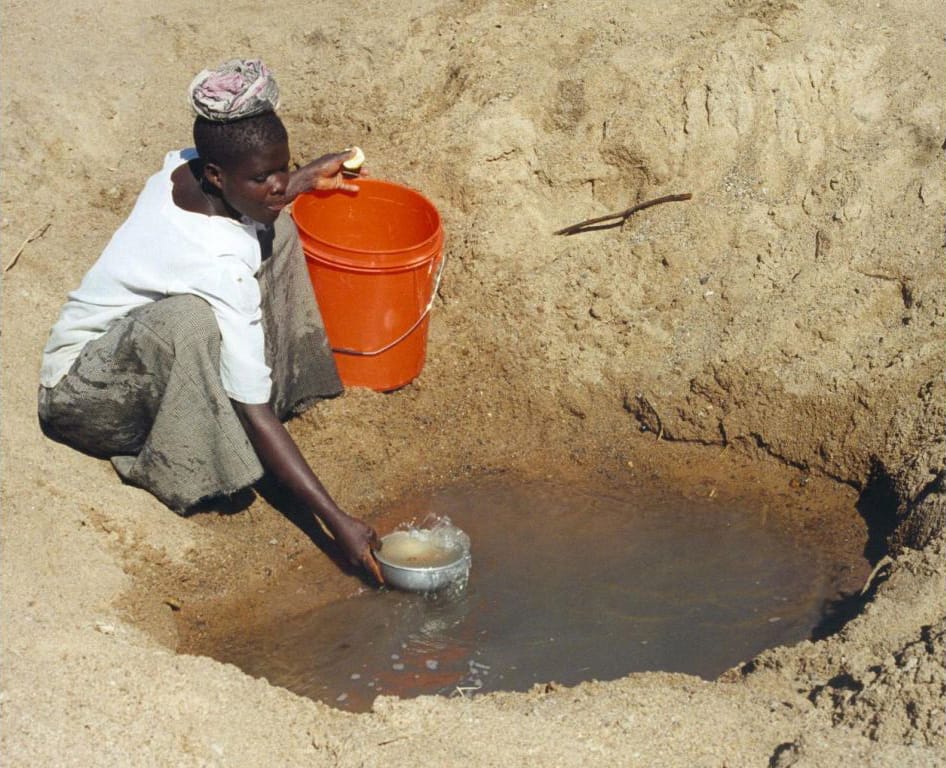
When SafeSip opened its first water station, the team put up a poster with a QR code and the words “Get clean water, quick quick.” People walked straight past. Then a man on a bicycle stopped. “I pass here every day,” he told them, “but I thought this was a premium product for rich people,” co-founder Costantine Edward recalled in a 2026 interview with the African tech site TechCabal.
Costantine Edward and his brother Herman grew up drinking from contaminated rivers in rural Tanzania. Later, on a university internship in a village in Dodoma, they met children sick with waterborne diseases that clean water could have prevented. Their co-founder and CEO, Faith Kuya, has a similar story: “As a child, I often fell ill from waterborne illnesses, missing school and falling behind.”
The founders see a second problem: water points that exist but stop working. They say traditional kiosks, which rely on government-built boreholes and hand pumps, “break down within one to two years”. The Royal Academy of Engineering, which runs the Africa Prize for Engineering Innovation, writes that kiosks often fail “within months” because maintenance is patchy and fees are poorly collected. In dry areas, deep boreholes can also give water too salty to drink.
“The issue is supervision,” Costantine Edward told TechCabal. “Most of these projects are delivered as aid. The money runs out, and there’s no way to maintain the system.”
AI solution
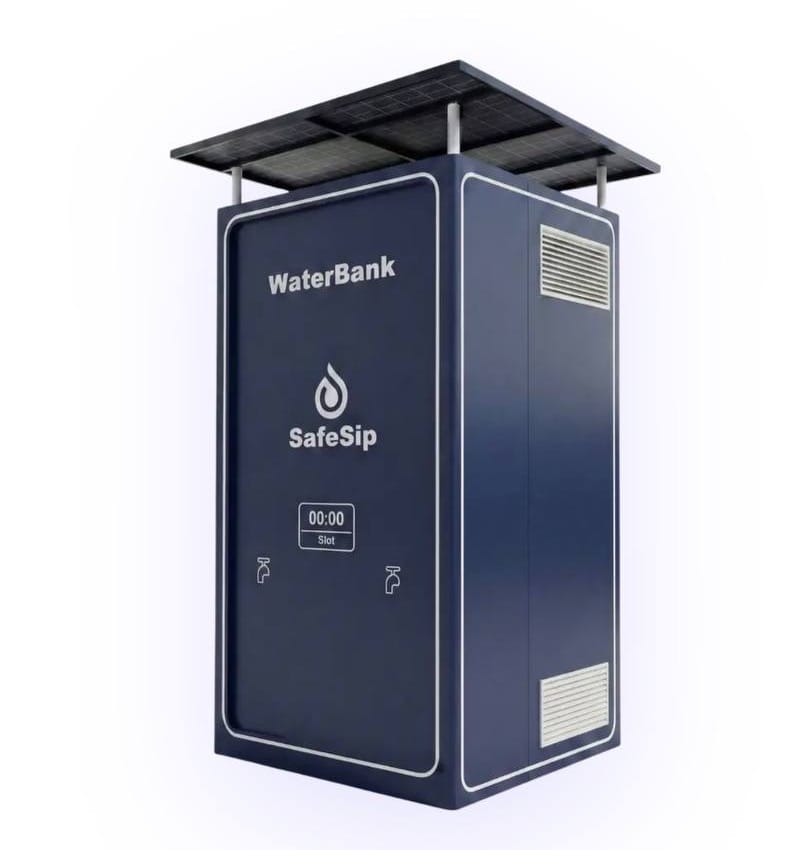
SafeSip’s answer is the WaterBank, which Costantine Edward calls “kiosk 2.0”. Each one runs on solar power, filters local river or borehole water on site, removes salt where the water is salty, and dispenses it day and night with no attendant. People tap a prepaid card to fill their jerrycans and top up the card by mobile money.
The AI’s main job is maintenance. Think of the warning lights on a car dashboard. The station keeps track of readings such as water pressure and flow. When they drift in a way that points to trouble, for example a filter starting to clog, the system sends an alert, and SafeSip calls a local technician.
“If the filters are starting to clog, it sends an alert. We then call a local technician to fix it before it breaks,” Costantine Edward said. According to the Africa Prize profile, repairs are usually done within two to three hours of an alert; SafeSip’s website advertises one-hour response times.
How it works
- 01 Sensors The station tracks readings such as water pressure and flow.
- 02 Alert When the readings drift in a way that points to trouble, such as a clogging filter, the system sends an alert.
- 03 Repair SafeSip calls a local technician, who fixes it before the station stops.
SafeSip has not published which sensors it uses, what kind of model makes the call, or how often it catches a fault in time.
AI shows up in two more places. Households farther away can order water on WhatsApp, where an AI agent the team calls “Maya” coordinates deliveries by small branded motorised tankers. SafeSip says the chat service also predicts when each customer will run low and sends a reminder in Swahili.
Every card tap is logged, and a cloud dashboard shows the team live water volumes, users and payments.
Price caused the founders’ biggest debate: some wanted 1,000 shillings a jerrycan, others 500. After testing, SafeSip settled on 250 shillings at the station and 500 for home delivery.
Impact
All the numbers below are SafeSip’s own; we found no independent evaluation.
Scale. The Africa Prize page, from around March 2026, listed 4 working WaterBanks serving more than 6,000 users a month. By October 21, 2026, SafeSip said it ran 12 hubs that had dispensed 18.5 million litres of water with 98 percent uptime. Its website counter now reads “72K+ individuals served” across three countries. Monthly users and people served to date measure different things, so the figures cannot be compared directly.
Health. The team reports that waterborne illness fell by more than 30 percent in the communities it serves, and that local surveys found 43 percent fewer cases of diarrhea. It also reports that 76 percent of users keep coming back and 84 percent would recommend the service. No outside body has checked these figures.
Livelihoods. Costantine Edward says that near the stations, some people buy water at 250 shillings and resell it at 500, and others have opened car washes.
Funding. SafeSip began in 2023 with a $10,000 grant from Social Shifters for an earlier idea, a filtering straw. By early 2026 it had raised more than $150,000 in grants and seed investment. In October 2026, Faith Kuya won a $20,000 Global Citizen x PayPal award, and SafeSip announced it was one of 25 winners of the Emerging Climate Champions Award, a $1 million gift each, managed by the nonprofit Lever for Change. SafeSip plans to use it to grow from 12 to 50 hubs in two years and reach 75,000 people.
People
Faith Kuya is an environmental engineer who worked in municipal water services and at WaterAid. The WaterBank began as her university final-year project. According to Costantine Edward, she is still studying while serving as CEO. In 2026 she was shortlisted for the Africa Prize and named an Echoing Green Fellow.
Costantine Edward, the chief operating officer, says that before SafeSip he and others ran an agriculture project for a year or two; it did not scale, so they shut it down. TechCabal also interviewed his brother Herman Edward as a co-founder; SafeSip’s own team page does not list him.
The website names the rest of the core team: Kibhuli Mwita (finance), Ella Avraham (technology), Samwel Mdenye (marketing) and Leila Isaya, a water quality analyst. The company, based in Morogoro, grew from 6 to 12 staff. Local technicians answer the alerts.
Faith Kuya met her co-founders through a network of social entrepreneurs, and their first product was much smaller: by August 2024 they had distributed more than 3,200 filter straws.
“Africa doesn’t have a water problem,” Costantine Edward says. “It has an infrastructure problem.” After the $1 million award, Faith Kuya put it this way: “It gives us the backing to reach more families who still walk kilometres for water they cannot trust.”
Why it matters
Many water projects are judged on the day they open. SafeSip is betting that a water point which earns its own money and asks for repairs early will still be running years later. Its next two years, from 12 hubs toward 50, will test that bet, and independent data on uptime and health would show whether it holds.
What we could not confirm (8)
- All figures on users, uptime, litres and health come from SafeSip or from its application to the Africa Prize. We found no independent evaluation.
- How the AI works: SafeSip has not published which sensors it uses, what model it runs or how many faults it has caught early.
- Scale: the Africa Prize page (around March 2026) gives 4 units and 6,000+ users a month; SafeSip’s October 2026 figures give 12 hubs and 72K+ people served. We could not confirm how “individuals served” is counted, where the 12 hubs are, or which three countries the website counter refers to.
- Price: we use the 250 shillings per 20 litres the founders gave TechCabal in August 2026. The Africa Prize page gives about $0.04 per 20 litres, and SafeSip’s website $0.005 per litre. The website also advertises “Free Delivery”, while the founders told TechCabal delivery costs 500 shillings.
- The $1 million award: we confirmed the award itself (25 gifts of $1 million, Lever for Change) but could not reach Lever for Change’s awardee list, so SafeSip’s place in it rests on SafeSip’s own announcement.
- Team: sources list different co-founders. TechCabal names Herman Edward; the Royal Academy of Engineering names Samwel Mdenye and Ella Evrahim (spelled Avraham on SafeSip’s site). We could not confirm Herman Edward’s current role. TechCabal spells the chief operating officer’s name “Constantine”; we use SafeSip’s spelling, Costantine.
- Technical details on SafeSip’s website differ in places (three- or four-stage filtering, 16,000 or 20,000 litres a day).
- There is no image of a SafeSip station or its app in this story: we have no licensed photo of one.
FAQs (5)
What is a SafeSip WaterBank?
A solar-powered water station in Tanzania that filters local river or borehole water and sells it by prepaid card, 24 hours a day, without staff on site.
What does the AI do?
According to SafeSip, it watches readings such as pressure and flow and sends an alert when something looks wrong, such as a clogging filter, so a technician can fix it before the station stops. A WhatsApp agent also handles delivery orders.
How much does the water cost?
The founders told TechCabal in August 2026 that it costs 250 Tanzanian shillings for 20 litres at the station and 500 shillings delivered.
How many people use it?
SafeSip reported 12 hubs in October 2026 and says more than 72,000 people have been served. In early 2026 it reported 4 units with over 6,000 users a month. These are the company's own figures.
Is it still growing?
Yes. In October 2026 SafeSip received a $1 million Emerging Climate Champions Award, which it plans to use to reach 50 hubs within two years.
Sources (6)
SafeSip, SafeSip Named an Awardee of the Emerging Climate Champions Award, October 21, 2026
Because International, Faith Kuya (SafeSip Straws), August 6, 2024
Fact-checked against sources on October 29, 2026. Spot an error? Tell us.
This story supports